






Decoding the Colours of the Monsoon
The India Meteorological Department (IMD) acts as the nerve centre for weather-related information, issuing colour-coded alerts that serve as the foundation for disaster preparedness. These warnings are not just general advisories but are tailored for specific
districts, offering granular detail on expected weather. The system uses four primary colours: Green (All is well), Yellow (Be aware), Orange (Be prepared), and Red (Take action). An Orange alert, for instance, signals extremely bad weather with the potential to disrupt road and rail transport, while a Red alert indicates a significant risk to life and mobility. This system's purpose is to give state and local authorities a clear, standardised way to understand the impending severity and activate their response plans accordingly.
Managing Urban Arteries and Roads
When the IMD issues an Orange or Red alert for a district, municipal corporations and traffic police initiate a cascade of pre-planned actions. These warnings, which are increasingly route-specific, allow authorities to move beyond reactive measures. In cities like Mumbai, a yellow 'nowcast' for heavy spells can trigger immediate advisories for commuters, especially concerning chronically waterlogged areas like the Andheri subway. Based on the forecast, disaster management teams are deployed to vulnerable low-lying areas, ready with de-watering pumps. Traffic police may plan to divert routes prone to flooding and issue public service announcements through social media and radio to guide commuters. This proactive stance, powered by IMD's impact-based forecasts, aims to prevent the gridlock that paralyses cities during intense downpours.
Keeping India's Railways on Track
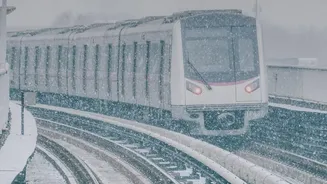
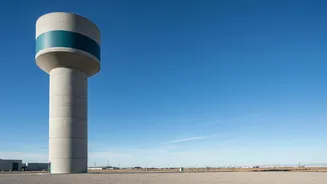
Indian Railways, the lifeline of the nation, has a robust protocol that is deeply integrated with IMD's monsoon forecasts. Coordination with Regional Meteorological Centres is a formal part of their monsoon preparedness. An alert for heavy rain triggers several safety measures. Special patrolling is initiated on tracks in vulnerable sections, particularly those near cuttings or on bridges. In coordination with the IMD, railways have installed Automatic Weather Stations (AWS) and water level monitoring instruments at critical locations to get real-time, localized data. This information allows officials to make crucial decisions, such as imposing speed restrictions on trains or, in extreme cases, temporarily suspending services on a specific route to prevent accidents caused by landslides or inundated tracks.
The Challenge of Hyper-Local Precision
Despite significant advancements in forecasting, challenges remain. A district-wide alert, while useful, cannot always capture the micro-climates and hyper-local realities that determine which specific street or railway underpass gets flooded. India's weather patterns, often driven by chaotic convection rather than predictable frontal systems, make precise location-specific forecasting difficult. Furthermore, the effectiveness of a great forecast depends on ground-level infrastructure. As railway officials have noted, even with perfect preparedness on their part, blocked municipal drains can cause rainwater to flow back onto tracks, causing disruptions. The gap between a large-scale forecast and the last-mile reality is a constant challenge that authorities work to bridge.
A Safer, More Predictable Commute
The collaboration between the IMD and transport authorities translates into tangible benefits for the daily commuter. While no forecast can completely eliminate monsoon disruptions, this data-driven approach significantly mitigates the impact. Better forecasts mean fewer instances of passengers being stranded for long hours due to sudden cancellations. Proactive measures, such as deploying pumps and clearing drains ahead of a predicted downpour, can reduce the duration and severity of waterlogging on key roads. For rail passengers, it means a reduced risk of derailments or other accidents in weather-vulnerable sections. The entire system is geared towards making travel during the monsoon not necessarily dry, but safer and more predictable.