



What Makes a Planet 'Superhabitable'?
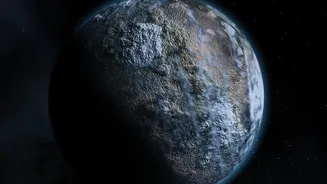
The idea of a superhabitable planet, first detailed by scientists René Heller and John Armstrong in 2014, challenges the assumption that Earth is the peak of planetary hospitality. They proposed that a world could exist with conditions even more conducive
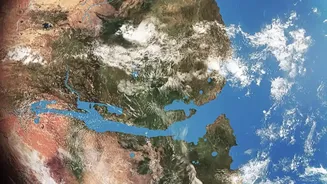
to the flourishing of life. These theoretical planets would likely be slightly older, larger, warmer, and wetter than Earth. A planet up to 1.5 times Earth's mass could retain its atmosphere more effectively and would have stronger gravity, leading to a flatter topography with more shallow seas and archipelagos—environments thought to be rich in biodiversity. A slightly warmer average temperature and higher moisture content could create lush, stable climates across the globe, avoiding the vast, arid deserts and icy polar caps seen on our own world.
The Trouble with a Sun-Like Star
Our sun, a G-type yellow dwarf star, has served life well, but it's far from perfect from a cosmic perspective. Its biggest drawback is its relatively short lifespan of about 10 billion years. With our sun already halfway through its life, complex life on Earth had a limited window to evolve. Hotter, more massive stars burn through their fuel even faster, making them poor candidates for hosting complex life. For life to not only emerge but to evolve into a rich, complex biosphere, a long and stable history is invaluable. This is where our sun comes up a bit short, pushing researchers to consider stars that offer the gift of more time.
Why Not the Common Red Dwarfs?
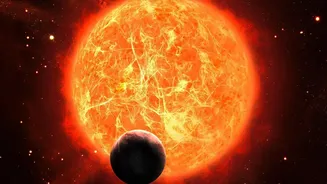
If longevity is key, then M-type red dwarfs should be ideal. They make up roughly 75% of the stars in our galaxy and can live for trillions of years. However, they come with significant problems. To stay warm enough for liquid water, a planet must orbit a red dwarf very closely. This proximity often leads to 'tidal locking', where one side of the planet perpetually faces the star, creating a world of permanent scorching daylight and a frozen night side. More importantly, red dwarfs are notoriously volatile, especially when young. They can unleash powerful stellar flares and intense X-ray radiation that can strip a planet's atmosphere and sterilize its surface. While some models suggest ways life could survive, the consensus is growing that these stars present a hostile environment.
The 'Goldilocks' Star: Enter the Orange Dwarf
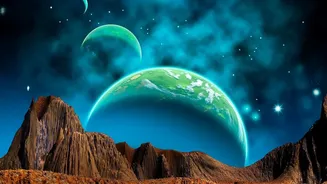
This is where K-type stars, or orange dwarfs, enter the picture as the 'Goldilocks' candidate—not too hot, not too cold, but just right. These stars are the perfect compromise between sun-like stars and red dwarfs. They have incredibly long lifespans, ranging from 15 to 70 billion years, offering a vast and stable timeline for life to evolve. They are about three times more common than sun-like stars and are significantly calmer than red dwarfs, emitting far less harmful ultraviolet and X-ray radiation. Planets in an orange dwarf's habitable zone wouldn't need to orbit as closely as those around a red dwarf, reducing the risk of tidal locking. This blend of longevity, stability, and abundance makes orange dwarfs the prime targets in the search for superhabitable worlds.
The Hunt for a Better Earth
Armed with this new framework, astronomers are re-evaluating the thousands of known exoplanets. In 2020, a team led by geobiologist Dirk Schulze-Makuch identified 24 potential superhabitable candidates out of more than 4,000 exoplanets. While all of these are more than 100 light-years away, this research provides a crucial focus for future observation efforts. Powerful instruments like the James Webb Space Telescope are designed to analyze the atmospheres of distant planets. By pointing them toward the most promising worlds orbiting stable orange dwarf stars, scientists hope to one day find the first chemical hints—or 'biosignatures'—of life on a planet that might be even better than our own.