





What Makes a Flood a 'Flash' Flood?
The defining characteristic of a flash flood is speed. While regular floods can take days or even weeks to develop, a flash flood occurs rapidly, typically within six hours of its trigger event. This leaves little time for warnings or evacuations. The water
rises with alarming quickness, creating powerful currents that can carry boulders, uproot trees, and sweep away vehicles. This speed and force, not just the presence of water, is what makes flash flooding uniquely hazardous. They are often highly localised, impacting smaller river basins and urban areas with sudden, violent intensity before receding just as quickly.
The Most Common Trigger: Intense Rainfall
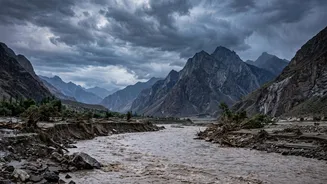
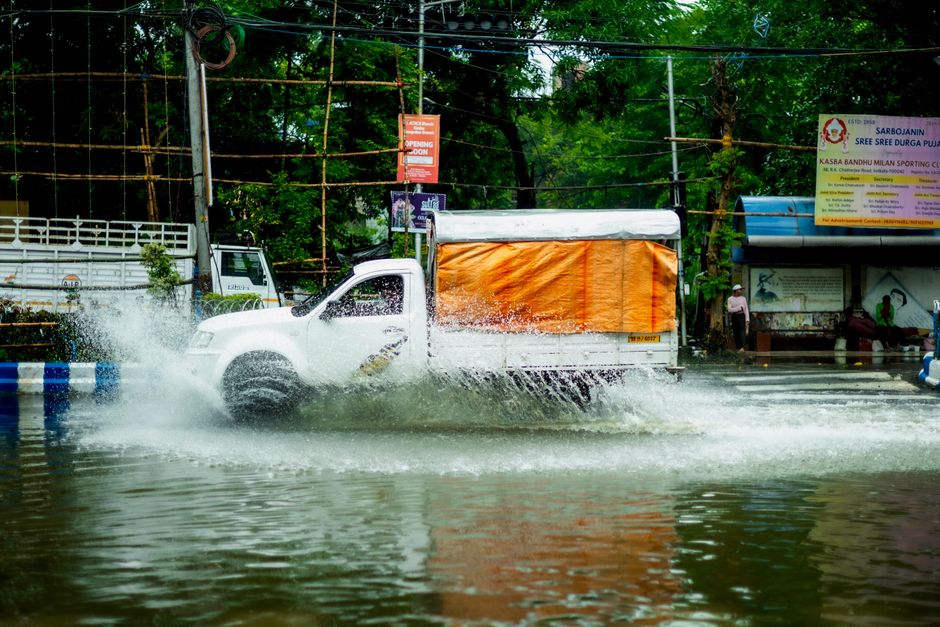
The primary cause of most flash floods is simply too much rain falling too quickly. When rainfall is so intense that the ground cannot absorb it fast enough, the excess water becomes surface runoff. In urban areas, impervious surfaces like concrete roads and pavements prevent absorption entirely, forcing water into drainage systems that can be swiftly overwhelmed. In rural and mountainous regions, steep terrain causes water to rush downhill, gathering speed and volume as it funnels into narrow valleys and channels. Even areas that are normally dry, like desert washes, can become deadly torrents. If the ground is already saturated from previous rains or hardened by drought, its capacity to absorb more water is drastically reduced, exacerbating the runoff and increasing the risk of a sudden flood.
The Domino Effect: Landslides and Debris
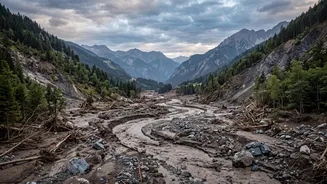
Landslides can trigger flash floods in two devastating ways. The first occurs when a massive amount of rock, soil, or debris suddenly slides into a river or lake. This displaces a huge volume of water, creating a powerful wave, similar to a localised tsunami, that surges downstream. The second, and more common, scenario is the formation of a 'landslide dam'. This happens when a landslide completely blocks a river valley, causing water to build up behind the debris. This newly formed lake can grow rapidly. The danger escalates when this natural dam inevitably fails. As the rising water overtops the blockage, it quickly erodes the loose material, leading to a catastrophic breach and releasing a massive wall of water and debris downstream.
When Defences Fail: The Threat of Dams
Man-made dams are built to control water, but their failure can result in some of the most catastrophic flash floods. A dam failure can occur for several reasons, including structural weaknesses, foundational issues, extreme weather events that cause the dam to be overtopped, or inadequate maintenance. When a dam is breached, the enormous volume of water stored in its reservoir is released in an instant, creating a powerful, fast-moving flood wave that obliterates everything in its path. This is not a slow rise in water level but a sudden, violent surge. Because the potential for destruction is so high, areas downstream of dams are often categorised by hazard level, and emergency action plans are crucial for minimising the loss of life should a failure occur.