

What You Really Need to Get Started
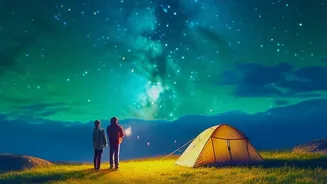
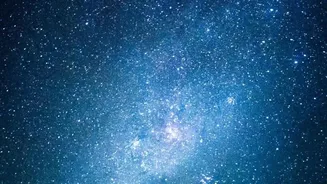
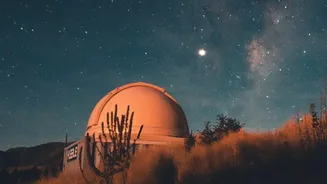
Forget what you think you know about needing expensive equipment. The best stargazing tool is your own eyes. To begin, all you truly need is a clear night, a comfortable spot away from direct lights, and a bit of patience. A blanket or a reclining chair
can make the experience more comfortable. The most important step is allowing your eyes about 20-30 minutes to fully adapt to the darkness; this will dramatically increase the number of stars you can see. While a telescope or binoculars can certainly enhance the view, they are not a prerequisite for appreciating the cosmos. Many of August's best sights, including meteor showers and bright constellations, are best viewed with the naked eye, which offers a wider field of vision. If you want a little help, a stargazing app on your phone can act as an excellent digital guide to the stars above you.
The Main Event: Perseid Meteor Shower
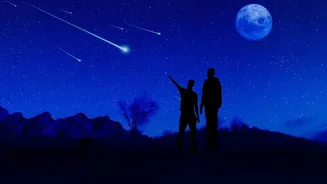
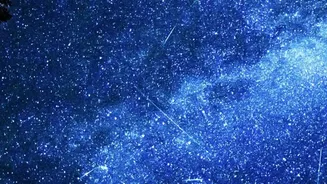
August's headline act is the annual Perseid meteor shower, one of the best and brightest of the year. These 'shooting stars' are actually tiny bits of debris left behind by Comet Swift-Tuttle, which burn up upon entering Earth's atmosphere. In 2026, the shower is active from July 17 to August 24, with the peak happening on the night of August 12-13. This year's peak is perfectly timed with a New Moon, meaning the sky will be extra dark, creating ideal conditions for a spectacular show with potentially 50 to 75 meteors per hour from a dark location. For the best viewing experience, find a spot with a wide-open view of the sky after midnight. Lie back, look up, and be patient. The meteors will appear to radiate from the constellation Perseus but can be seen streaking across any part of the sky.
A Parade of Planets
August 2026 offers a fantastic opportunity for planet spotting. A rare six-planet alignment will be visible in the pre-dawn sky from around August 12 to 18. While not all will be easy to see, you can catch several of our solar system neighbours. Look for reddish Mars high in the east before dawn. Yellowish Saturn will also be visible, rising in the evening and remaining high in the sky through the night. Jupiter and Mercury will make an appearance low in the eastern sky just before sunrise, though they can be tricky to spot in the dawn glow. Venus will be a brilliant beacon in the early evening western sky all month long. For those with binoculars, you might even be able to hunt down the faint glows of Uranus and Neptune. On the morning of August 9, the Moon will appear close to Mars, making the Red Planet particularly easy for beginners to locate.
Connect the Dots: Easy Constellations
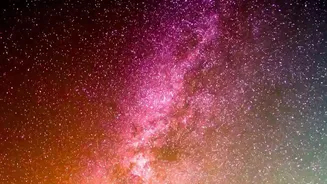
Finding constellations can feel intimidating, but you can start with one of the most recognizable patterns of the northern summer: the Summer Triangle. This isn't a true constellation but an asterism, a prominent group of stars. It's made of three bright stars from three different constellations: Vega (in Lyra), Deneb (in Cygnus), and Altair (in Aquila). Look almost straight up on a clear August night and you'll find these three stars forming a large triangle. From there, you can try to trace the W-shape of Cassiopeia in the northern sky. Low on the southern horizon, look for Scorpius, the Scorpion, with its bright, reddish star Antares marking its heart. Next to it, you can find the 'Teapot' shape within the constellation Sagittarius. Seeing the Milky Way stream from this region is a breathtaking sight, especially away from city lights.
Tips for Stargazing in the City
Living in or near a city doesn't have to mean missing out. While light pollution does wash out fainter stars, there's still plenty to see. The Moon, bright planets like Venus, Jupiter, and Saturn, and the brightest stars are all visible even from urban areas. The key is to manage your expectations and your environment. Try to find a local park, a rooftop, or even a balcony that blocks direct glare from streetlights. Turn off all the lights in your own home to create the darkest possible space. Give your eyes extra time to adjust. While you might not see the faint arms of the Milky Way, you can absolutely track the planets, watch a conjunction, and spot the brightest meteors during the Perseids' peak. The universe is always there; sometimes you just have to look a little more carefully to see it.