






The AI Travel Dream
Artificial intelligence has revolutionised travel planning. Tools built into search engines or dedicated AI planners can digest your interests, budget, and timeframe to produce a detailed itinerary. Ask for a 10-day cultural tour of Rajasthan for a family
of four, and it will generate a day-by-day schedule, suggest hotels, and list major attractions. This is AI's strength: providing a fantastic starting point, saving hours of research, and sparking inspiration for destinations you may not have considered. For high-level logistics, like comparing flight prices or getting a general sense of a multi-city route, AI is an incredibly powerful and efficient assistant. It excels at synthesising vast amounts of online information into a coherent, easy-to-read plan.
Where AI Meets Indian Reality
The challenge arises when you move from the macro plan to the micro-details of getting around. An AI might suggest taking a local bus from your hotel to a specific temple, providing a route that looks perfect on a digital map. However, it may not know that this bus runs erratically, has been rerouted due to a local festival, or that the road is heavily congested at that specific hour. AI models often lack the real-time, on-the-ground insight needed for India's dynamic transport systems. They can generate itineraries with overly ambitious travel times, failing to account for road conditions or the buffer time needed for delays. They also tend to recommend the most popular, well-documented tourist spots, potentially missing the hidden gems a local would know.
Go Straight to the Official Source
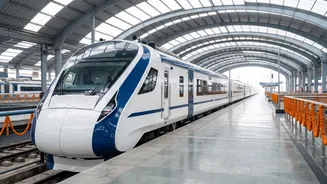
For the most critical parts of your journey, especially long-distance train travel, verification is non-negotiable. The backbone of this is the Indian Rail network. Instead of relying on an AI's suggestion, use that information as a prompt to search official sources. The official IRCTC Rail Connect app and the National Train Enquiry System (NTES) app are essential tools. These platforms provide the most accurate, up-to-the-minute information on train schedules, delays, and platform numbers. Many travellers find that while registering for IRCTC can be cumbersome, it's the gold standard for reliability. Several trusted third-party apps like RailYatri and ConfirmTkt pull data directly from these official sources, often presenting it in a more user-friendly format.
Trustworthy Digital Assistants for Local Travel
Once you're in a city, your travel needs shift to local transport. While Google Maps is an indispensable tool for navigation and can provide public transport suggestions, it's wise to cross-reference. For booking taxis or auto-rickshaws, ride-hailing apps like Uber and its Indian counterpart Ola are widespread and offer upfront pricing, which helps avoid haggling. For inter-city bus travel, platforms like RedBus are industry standards, offering reliable schedules and booking options. For navigating within cities, some apps like Moovit cover major metro areas, providing detailed public transport information. These specialised apps are designed for the Indian market and are more likely to have current, accurate information than a generic AI model.
Leverage the Human Network
Never underestimate the power of local knowledge. An AI can't tell you about the secret eatery that's not on any map or the fact that a particular road is best avoided after dark. Your hotel concierge, a friendly shopkeeper, or even your taxi driver are invaluable sources of real-time information. Before setting out, confirm your AI-generated route with a person. Ask them, "Is this the best way to get to the market at this time of day?" or "Does this bus actually run on Sundays?" This human verification step can save you from significant delays and frustration. It's the perfect blend of high-tech planning and high-touch execution. This local insight often leads to the most memorable parts of a trip—experiences that an algorithm could never predict.
Building a Foolproof Hybrid Itinerary
The smartest way to plan a trip to India is by using a hybrid approach. Use AI as your creative director and initial researcher. Let it build the broad framework of your trip—the cities you'll visit, the sights you want to see, and the general flow of your journey. Then, take that plan and treat it as a draft. Go through it line by line and verify each transportation leg using the specialised tools mentioned. Book your long-distance trains via IRCTC or a trusted aggregator. Check your inner-city routes on Google Maps but confirm them with your hotel staff. Use ride-hailing apps for local cab journeys. This method combines the speed and breadth of AI with the accuracy and nuance of dedicated, local-focused tools and human intelligence.