

What is a Reusable Launch Vehicle?
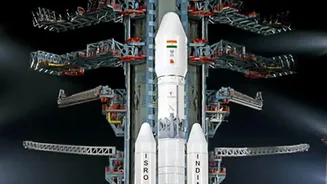
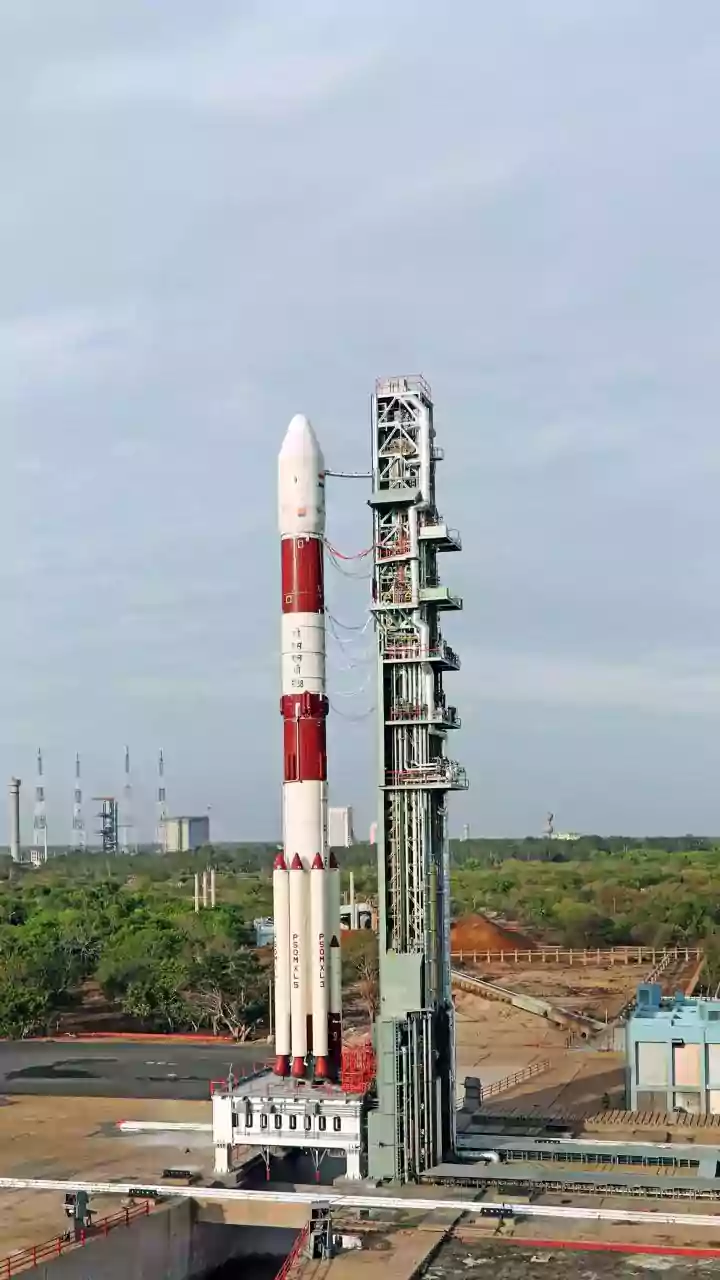
Think of conventional rockets as disposable cups—engineered for a single, glorious flight before their expensive components are discarded in the ocean or atmosphere. This model is the main reason why sending anything to space is incredibly expensive,
with the vehicle itself accounting for a huge portion of the total mission cost. A Reusable Launch Vehicle (RLV) changes this. Much like an airplane, an RLV is designed to fly to space, deploy its payload, and return to Earth to be prepared for another mission. By recovering and reusing the most valuable parts of the rocket, the cost per launch can be dramatically reduced. ISRO's goal is ambitious: to slash the cost of putting a kilogram of payload into Low Earth Orbit, potentially by a factor of ten.
Meet 'Pushpak,' India’s Winged Workhorse
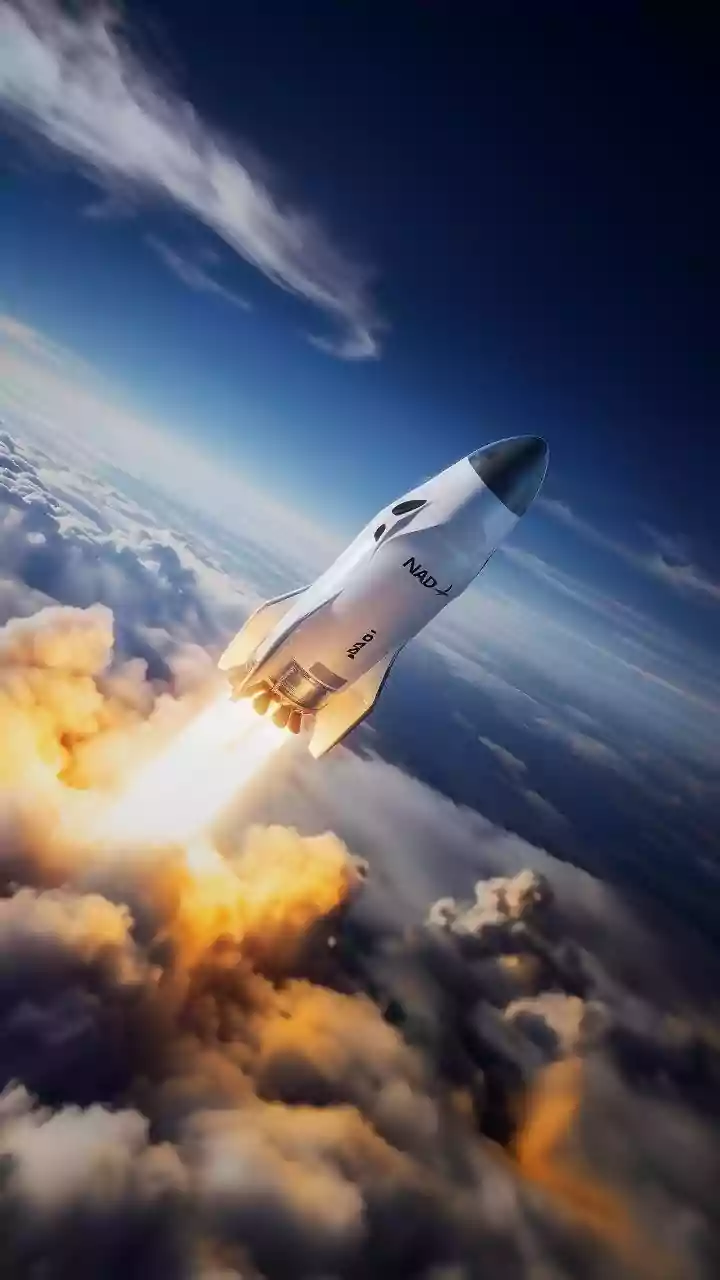
ISRO's answer to the reusability challenge is the RLV Technology Demonstrator (RLV-TD), nicknamed 'Pushpak' after the mythical flying chariot from the Ramayana. Unlike the vertical-landing rockets pioneered by companies like SpaceX, Pushpak is a winged spaceplane. Its design combines the complexities of a launch vehicle and an aircraft, built to withstand the intense heat of re-entry and then glide to a precise, horizontal landing on a runway. The project is a series of technology demonstration missions, each one designed to master a different phase of flight, from hypersonic speeds to autonomous landing. The successful completion of these tests is a critical step toward realising a Two-Stage-To-Orbit (TSTO) launch vehicle, where the reusable first stage returns to Earth after boosting the upper stage toward orbit.
A Hat-Trick of Perfect Landings
A crucial piece of the puzzle is proving the vehicle can land itself safely and precisely. ISRO recently achieved a 'hat-trick' with the third and final Landing Experiment (LEX) in June 2024. In these tests, conducted at the Aeronautical Test Range in Chitradurga, Karnataka, the uncrewed Pushpak vehicle was carried to an altitude of 4.5 km by an Indian Air Force Chinook helicopter and released. From there, its onboard autonomous systems took full control. In the final, most challenging test, Pushpak corrected its course from a significant deviation and navigated through severe winds to execute a flawless, high-speed landing at over 320 kmph. After touchdown, it used a brake parachute and its landing gear brakes to come to a controlled stop. Critically, the same vehicle was used for the second and third tests, proving the hardware's robustness and reusability.
The Economic Game-Changer
Mastering reusability is not just a technological feat; it is a strategic economic move. By bringing down launch costs by an estimated 80%, India can position itself as a highly competitive player in the global space market. This market, which includes launching satellites for communications, Earth observation, and scientific research, is growing rapidly. India's space economy was valued at around $9 billion in August 2026 and is projected to exceed $40 billion within a decade. Lower costs will make space more accessible for Indian startups and established companies, spurring innovation and enabling the deployment of large satellite constellations that were previously too expensive. This capability will be crucial for national programmes like the Bharatiya Antariksh Station, India's planned space station.
What Comes Next for Pushpak?
With the successful completion of the landing experiments, ISRO is now shifting its focus to the next major phase: the Orbital Re-entry Vehicle (ORV) experiment. This will involve launching Pushpak into orbit on a conventional rocket. After circling the Earth, it will re-enter the atmosphere and perform an autonomous landing on a runway, simulating a full end-to-end mission. This is a far more complex challenge, testing the vehicle's thermal protection systems against the extreme heat of re-entry. The lessons learned from Pushpak are also feeding into the design of India’s Next Generation Launch Vehicle (NGLV), a future heavy-lift rocket that will also feature partial reusability.