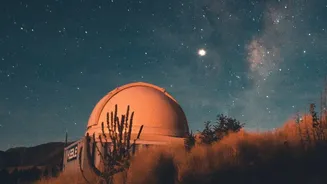



As the monsoon clouds retreat and a crispness enters the air, India's night sky transforms. This post-monsoon clarity, often called 'autumn dust settling', creates a spectacular window for stargazing, making November the perfect month to look up.
The Science of the Great Celestial Clear-Out
The term
'autumn dust settling' perfectly captures a phenomenon that astronomers across India eagerly await. For months, the southwest monsoon blankets the subcontinent, and while essential for life, it's a frustrating time for stargazers. The atmosphere is thick with moisture, clouds, and aerosols—tiny particles of dust, smoke, and pollution. Rain, however, acts as a natural air purifier. It literally washes these particles out of the atmosphere. Once the monsoon withdraws, typically by mid-October for most of the country, a new weather pattern takes over. Drier, more stable air moves in, significantly reducing humidity and atmospheric haze. This results in exceptional transparency, meaning light from distant stars and planets can travel to our eyes with far less scattering and absorption. The turbulent, shimmering effect that makes stars twinkle violently is also reduced, leading to better 'seeing'—a term astronomers use to describe atmospheric stability. This combination of high transparency and stable seeing is why the weeks from late October through November are considered the golden season for observing the cosmos in India.
November's Planetary Parade: What to Look For
This November, the clear skies are putting on a special show, particularly in the hours before dawn. A beautiful alignment of four planets will be visible to the naked eye. Around mid-November, look towards the southeastern horizon about an hour before sunrise to see Mercury, Venus, Mars, and Jupiter forming a diagonal line. Mercury will be the lowest and most challenging to spot, requiring a clear, unobstructed view. Venus will shine brilliantly above it. Higher still, Mars and Jupiter will appear close together, looking like a bright double star. Their closest approach, a conjunction, occurs on the mornings of November 15th and 16th, making for a particularly stunning sight. While these four put on a morning performance, Saturn is best viewed in the evening. Look for it after sunset, where it will be visible for a few hours before setting. Uranus will also be well-placed for observation for most of the night, though you will need binoculars to spot its faint light.
Don't Forget the Shooting Stars
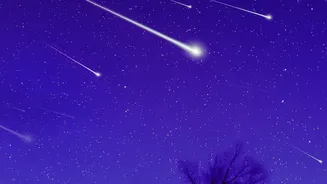
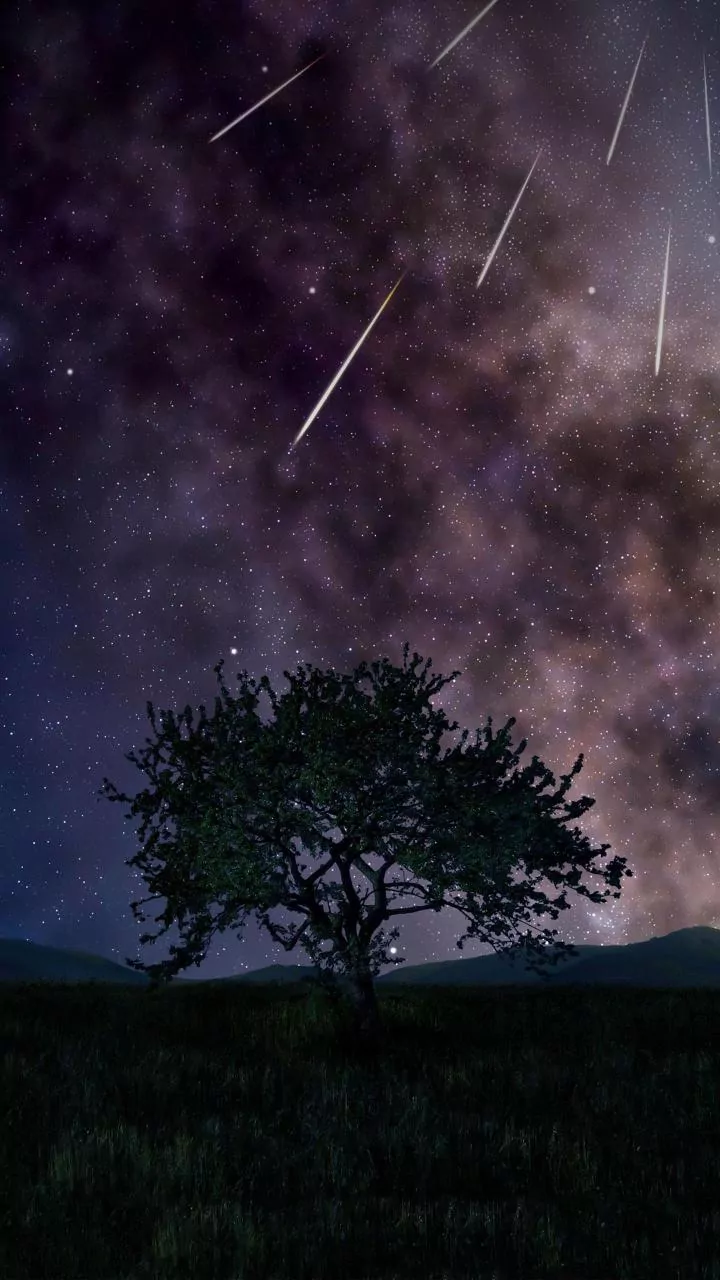
Beyond the steady light of the planets, November also brings one of the year's most famous meteor showers: the Leonids. This shower is active from early to late November, with its peak expected on the night of November 17-18. The Leonids are known for producing very fast and bright meteors, some of which can leave glowing trails that linger for a few seconds. In 2026, the peak occurs when the moon has already set, providing ideal dark sky conditions for viewing. For the best experience, find a dark location away from city lights and look up in the hours before dawn, from about 2 a.m. until the sky begins to brighten. On a clear night, you might see up to 15 meteors per hour. Remember that every streak of light is a tiny grain of dust from the comet Tempel-Tuttle burning up in our atmosphere at incredible speed.
Tips for the Urban Stargazer in India
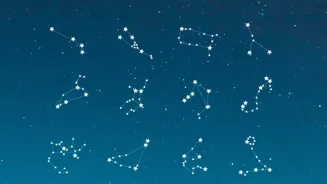
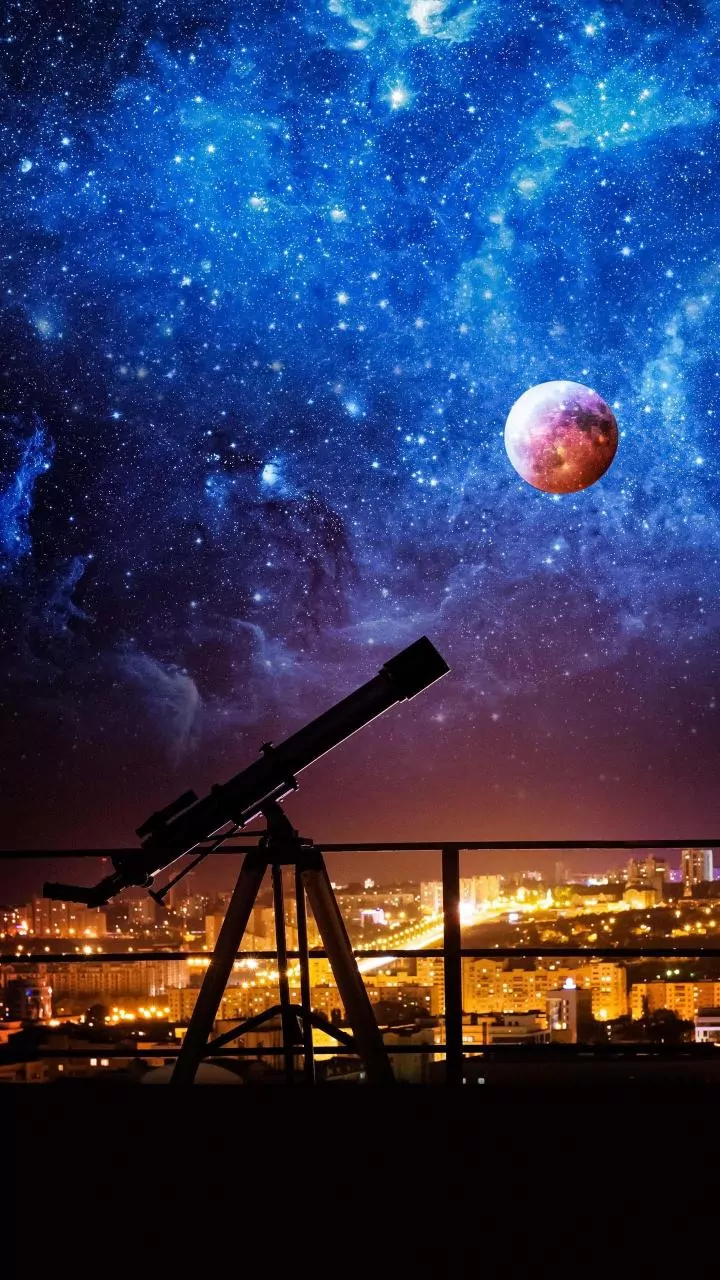
Living in a bustling Indian city doesn't mean you have to miss out entirely. While light pollution is a significant challenge, a few strategies can greatly improve your experience. First, try to get as high up as possible. A tall apartment building's rooftop can lift you above the worst of the immediate street-level glare. Second, find a local park or a green space that is relatively dark. Even a small reduction in direct light can make a difference. Third, and most importantly, give your eyes time to adjust. It takes at least 20 minutes for your eyes to become fully dark-adapted, allowing you to see much fainter objects. Avoid looking at your phone during this time, or use a red-light filter app. Finally, consider using a stargazing app on your phone. Apps like Star Walk 2 can help you identify planets, constellations, and find exactly where to look for events like the planetary alignment.