


Shukrayaan: India's Next Interplanetary Frontier
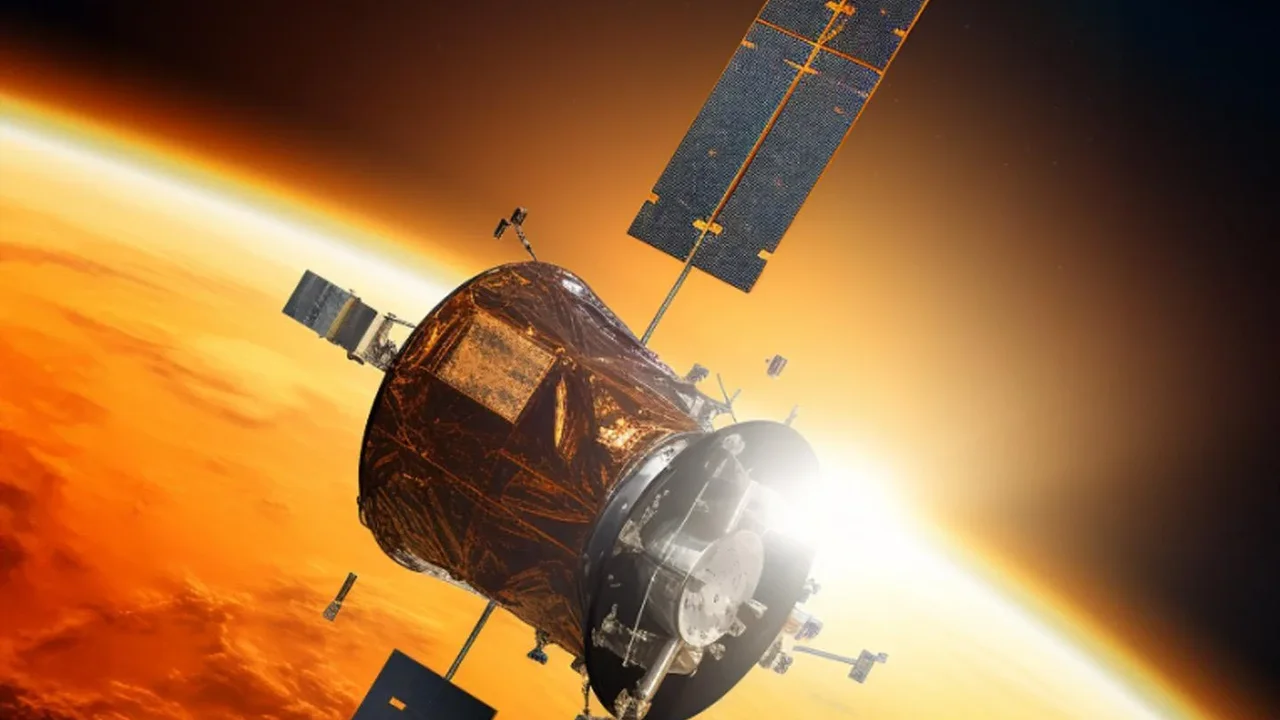
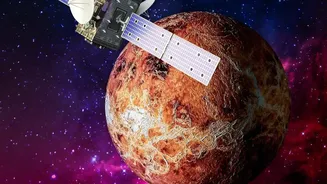
Following the historic success of its Mars and Moon missions, the Indian Space Research Organisation (ISRO) is setting its sights on the most hostile planet in our solar system. The Venus Orbiter Mission, named Shukrayaan-1, represents India's next great
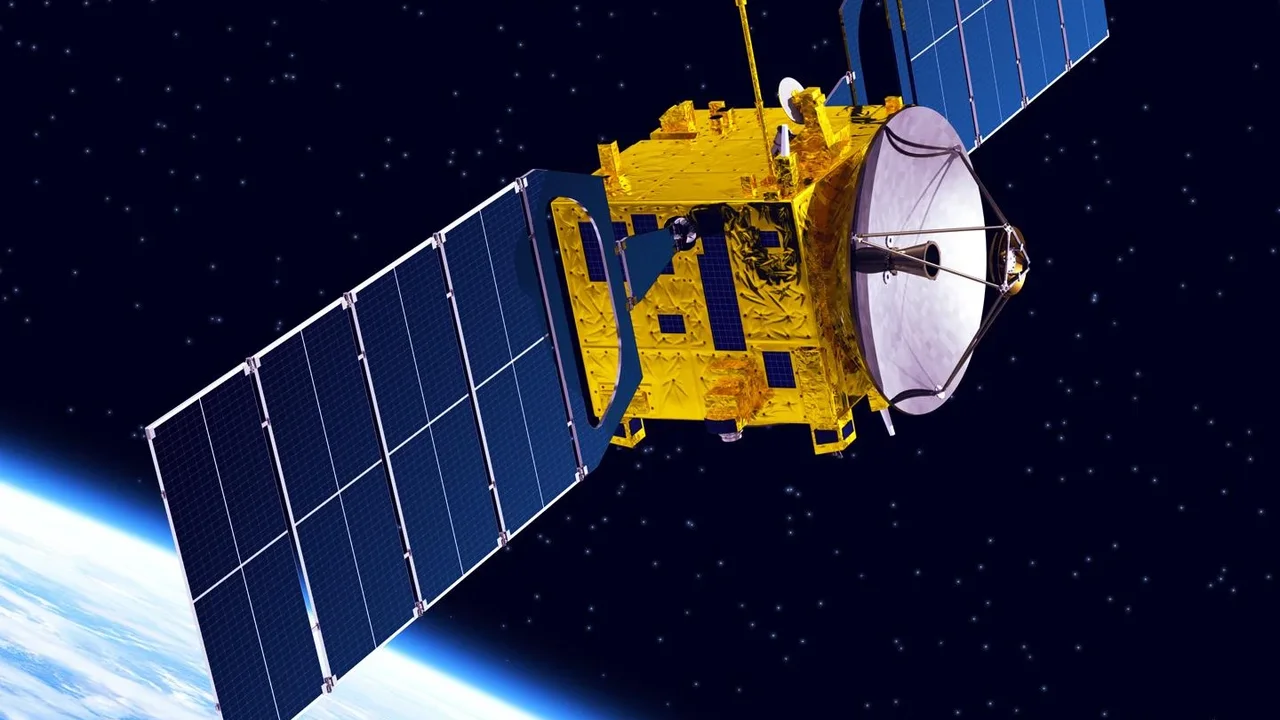
leap in planetary exploration. The mission, which received formal government approval in late 2024, is slated for a launch window around March 2028. This ambitious project involves sending a sophisticated orbiter, weighing around 2,500 kg, on a journey to orbit Venus. The goal is not to land, but to conduct a comprehensive study from above, peeling back the layers of a planet that remains deeply enigmatic despite being our closest planetary neighbour. It’s a mission that will cement India's status as a major player in deep space exploration.
The Mystery of Earth's Toxic Twin
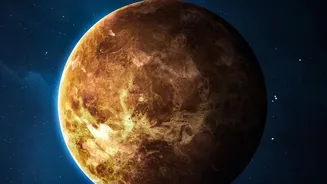
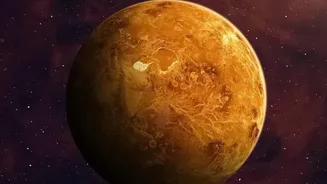
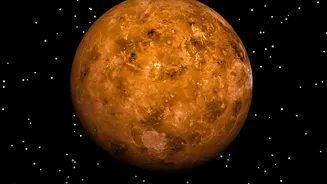
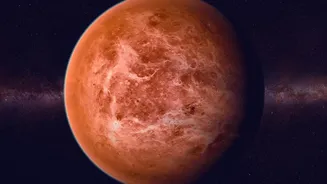
On paper, Venus and Earth should be similar. They are nearly the same size, mass, and density. Yet, they could not be more different. While Earth is a haven for life, Venus is a hellscape. Its surface temperature is a staggering 464 degrees Celsius, hot enough to melt lead, and its atmospheric pressure is over 90 times that of Earth's at sea level. Its skies are filled with thick clouds of corrosive sulphuric acid instead of water. Scientists are fascinated by this divergence. Why did two planets, born from the same cosmic material, evolve so differently? Answering this question is a primary driver for the Shukrayaan mission. Understanding Venus's history could provide invaluable insights into the very definition of a habitable planet.
Peering Through the Poisonous Clouds
The key to Venus’s secrets lies in its thick, toxic atmosphere. The headline objective of Shukrayaan-1 is to investigate its structure and composition in unprecedented detail. The orbiter will be equipped with a suite of advanced instruments, including a Synthetic Aperture Radar (SAR) designed to map the planet's surface, which is otherwise completely hidden by the dense cloud cover. Other instruments will study the atmospheric chemistry, cloud dynamics, and the interaction between the Venusian atmosphere and the solar wind, the constant stream of charged particles from the Sun. ISRO scientists want to understand the forces that drive the planet’s super-rotating atmosphere, where winds whip around the planet much faster than the planet itself spins.
A Warning From a Runaway World
The most compelling reason to study Venus is what it can teach us about our own planet. Venus is the ultimate example of a runaway greenhouse effect. It is believed that early in its history, Venus may have had liquid water oceans, much like Earth. However, as the Sun's brightness increased, those oceans evaporated, filling the atmosphere with water vapour—a powerful greenhouse gas. This created a vicious positive feedback loop: the hotter it got, the more water evaporated, trapping even more heat until the planet became the inferno it is today. By studying the chemical signatures and processes in Venus's atmosphere, scientists hope to better model the dynamics of climate change. While Earth is not in danger of a Venus-like runaway effect from human activity, the mission offers a natural laboratory to test and refine our understanding of extreme climate scenarios.
The Journey and the Global Collaboration
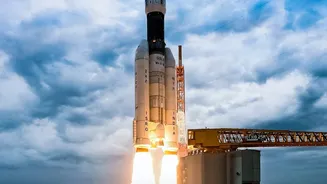
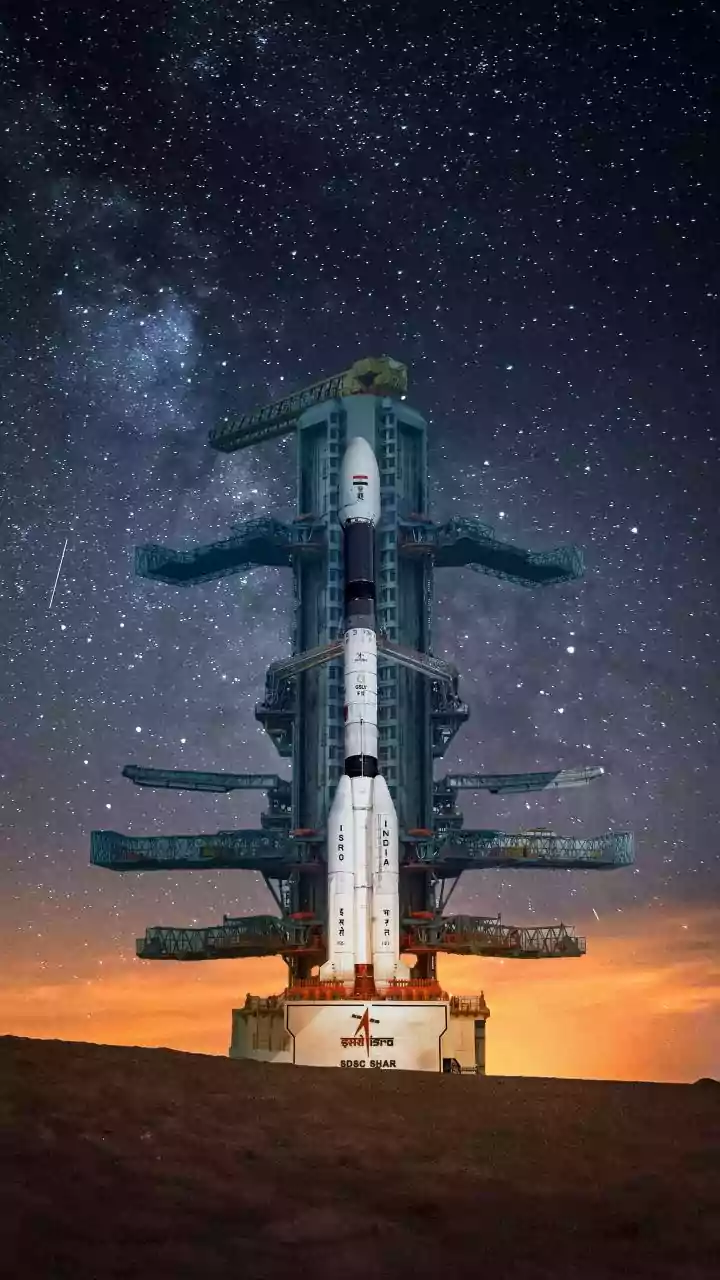
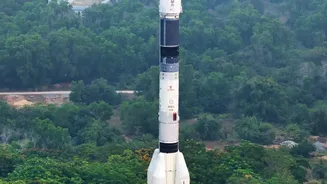
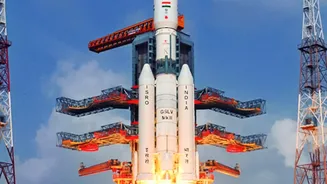
The path to Venus is challenging. The Shukrayaan-1 spacecraft will be launched aboard India’s heaviest rocket, the LVM-3. After its launch, it will embark on a months-long journey before entering a highly elliptical orbit around Venus, from which it will conduct its scientific operations for several years. The mission is not a solo effort. ISRO has partnered with international space agencies, with scientific instruments from Sweden and Russia expected to be on board. This collaboration highlights a growing global interest in Venus, with NASA and the European Space Agency also planning their own missions to the planet in the coming decade. Together, these missions will create the most comprehensive picture of Earth's twin we have ever seen, potentially rewriting our understanding of planetary evolution.