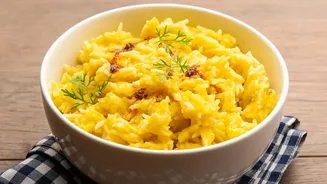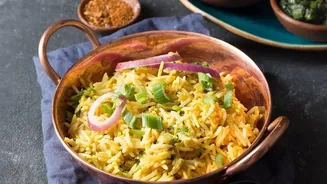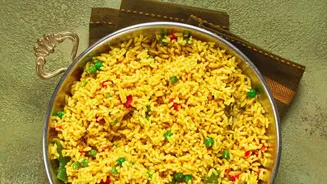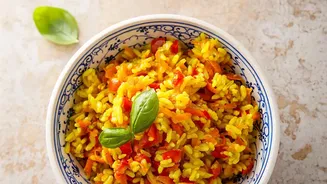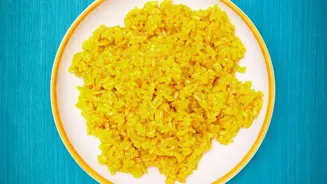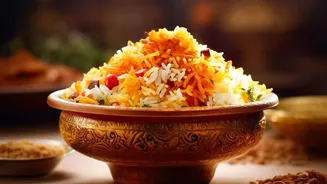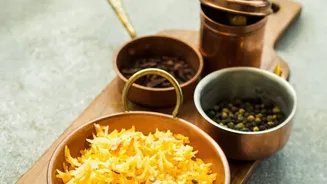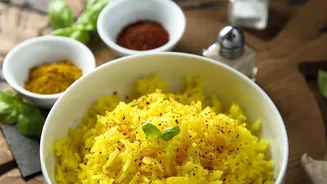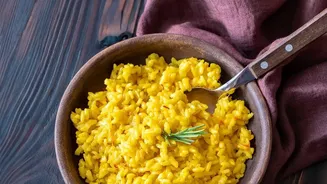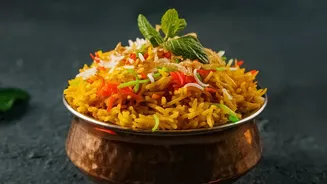

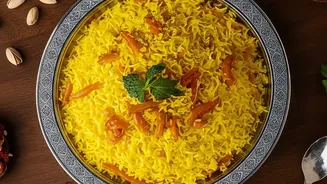
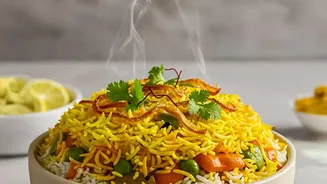
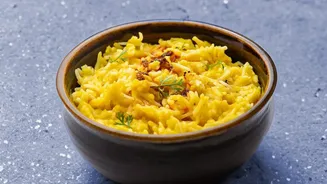
A bowl of plain steamed white rice is a familiar comfort, but a dish of saffron rice is an experience. Its vibrant golden hue is a feast for the eyes, and its aroma is incomparably richer, turning a simple staple into something truly special.
The Science of a Golden Scent
The profound
difference in aroma between plain rice and saffron rice comes down to complex chemistry. The scent of any food is created by volatile compounds, tiny molecules that evaporate and travel to the olfactory receptors in our nose. While white rice offers a subtly sweet, starchy scent, saffron contains a powerful compound called safranal. This is the primary source of its signature aroma, often described as floral, earthy, and hay-like. Interestingly, safranal isn't present in the fresh flower. It forms when another compound, picrocrocin (responsible for saffron's bitter taste), breaks down during the careful drying process. When you cook saffron, heat helps release these volatile oils, allowing them to perfume the entire dish. This is why the aroma of saffron rice can fill a kitchen, signaling a more complex and luxurious flavour experience long before the first bite.
Why Saffron is 'Red Gold'
Saffron’s luxurious aroma comes at a cost, making it the world's most expensive spice. The reason lies in its incredibly labour-intensive harvest. Saffron threads are the delicate red stigmas of the Crocus sativus flower. Each flower produces only three of these tiny threads, which must be painstakingly plucked by hand. To make matters more difficult, the flowers bloom for only a few weeks in the autumn, requiring a rapid harvest to protect the stigmas' quality. It can take up to 170,000 individual flowers to produce just one kilogram of saffron. This entire process, from picking the flowers at dawn to carefully separating the threads, is done by hand. This immense effort is what transforms a simple flower part into a prized culinary treasure, valued for centuries in kitchens from Persia to Spain.
A Journey in Golden Grains
The magic of saffron rice is celebrated in iconic dishes across the globe. In Italy, Risotto alla Milanese is a testament to its power. This creamy, vibrant yellow dish legendarily dates back to 16th-century Milan, where a craftsman accustomed to using saffron for stained glass pigment added it to rice as a joke at a wedding feast. The result was an instant classic. From Iran comes Persian Jeweled Rice, or Javaher Polow, a celebratory dish where saffron-infused basmati rice becomes a canvas for a stunning mosaic of 'jewels' like ruby-red barberries, orange peel, pistachios, and almonds. Meanwhile, Spain’s beloved Paella, particularly from the Valencia region, relies on saffron to give the rice its signature golden colour and a subtle flavour that beautifully ties together the seafood, chicken, and vegetables.
Beyond the Big Three
Saffron’s culinary influence extends far beyond these famous examples. In India, royal Biryanis are often layered with saffron-infused milk or water, which imparts a delicate fragrance and a beautiful streaks of colour to the long-grained rice. Saffron also elevates Indian desserts, like Kheer, a creamy rice pudding that becomes a luxurious treat with just a few golden threads. Cuisines across Africa also embrace the spice. Moroccan saffron rice is often fragrant with cumin and coriander, while a twist on Nigerian Jollof rice sees saffron adding a unique layer of aroma to the beloved tomato-based dish. These dishes prove that a little saffron goes a long way in transforming a meal into a memorable feast.
How to Unlock Maximum Aroma
To get the most out of this precious spice and ensure its rich aroma blossoms in your rice, a little preparation is key. Simply dropping the threads directly into your dish will not release their full potential. The traditional Persian method, known as 'blooming', is far more effective. First, use a mortar and pestle or your fingers to gently grind a pinch of saffron threads into a powder. This breaks down the cell walls and increases the surface area. Next, steep this powder in a few tablespoons of hot (not boiling) water or milk for about 15-20 minutes. The liquid will turn a deep, golden-orange. This saffron infusion is now ready to be added to your rice, ensuring its colour and, most importantly, its magnificent aroma are distributed evenly throughout the dish.