








The Saltwater Challenge
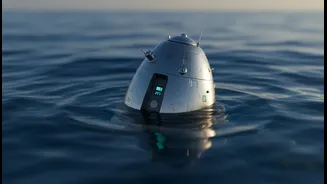
When the Gaganyaan crew module returns to Earth after its mission, it is designed to splash down in Indian sea waters. This moment, while signaling the end of a successful flight, introduces a new set of dangers. Seawater is notoriously corrosive, and
the combination of salt, moisture, and atmospheric oxygen creates a highly aggressive environment for any material. For a sophisticated piece of aerospace engineering like the crew module, which must protect its occupants until recovery teams arrive, this exposure is a significant threat. The integrity of the module, its seals, and its external surfaces must be maintained for hours, if not longer, in potentially rough seas. Safe and swift recovery of the crew is paramount, and this begins with a capsule built to endure its final, earthly test.
Advanced Composite Materials
The key to survival in this marine environment lies in advanced materials. While specific details about the exact composition of the Gaganyaan canopy and crew module are closely guarded, the approach involves a multi-layered defence. The module itself is a double-walled structure, featuring a pressurized inner metallic section and an unpressurized external structure equipped with a Thermal Protection System (TPS). This external shell is where the battle against corrosion is fought. The aerospace industry is increasingly reliant on high-performance polymers and composites that are inherently resistant to corrosion. Materials like carbon-fibre composites, Polyether ether ketone (PEEK), and other specialized plastics are lightweight, incredibly strong, and do not rust like traditional metals. These materials are crucial not just for splashdown but for the entire mission, reducing weight and enhancing fuel efficiency.
Precision Manufacturing and Sealing
A breakthrough is not just about the material itself, but how it is manufactured and assembled. The Gaganyaan crew module's external structure, including the canopy or fairing, must be flawless. Any imperfection could become a weak point for saltwater intrusion. Public-sector undertaking Hindustan Aeronautics Limited (HAL) has been a key partner, manufacturing and delivering critical components like the Crew Module Fairing (CMF) to ISRO. These components are built with extreme precision. The manufacturing process for such advanced composites involves techniques that ensure a uniform, non-porous surface. Furthermore, specialized sealants and coatings are applied to every joint and interface. These are likely fluoropolymers such as PVDF, known for exceptional chemical and UV resistance, providing a final, impermeable barrier against the hostile marine elements.
Rigorous Real-World Testing
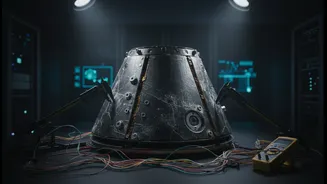
ISRO leaves nothing to chance, and the resilience of the crew module is validated through extensive testing. In collaboration with the Indian Navy, ISRO has conducted numerous recovery trials. These tests use a Crew Module Recovery Model (CMRM), a mock-up that perfectly simulates the mass, dimensions, and center of gravity of the actual flight hardware. These trials are conducted first in controlled pools and later in the open sea, testing not only the recovery procedures but also how the module holds up in the water. Models used in these tests have been constructed from materials like titanium and high-grade stainless steel to withstand the demanding test conditions, indicating the robust nature required for the final module. These exercises help refine the Standard Operating Procedures for recovery and provide invaluable feedback on the performance of the module's design and materials in a realistic marine setting.
An Indigenous Achievement
The development of these marine-resistant components is a testament to India's growing self-reliance in critical aerospace technologies. From ISRO's design to HAL's manufacturing and the involvement of private sector firms like Tata Elxsi and KCP Heavy Engineering in creating test models, the entire ecosystem is contributing to this national endeavour. The ability to create materials and structures that can survive both the vacuum of space and the corrosive saltwater of the ocean showcases a sophisticated industrial capability. These breakthroughs ensure that when India's astronauts return from their historic journey, their final moments before stepping back on dry land are as safe as their voyage through the stars.