



Feeling bloated or gassy? You're not alone. Many people seek natural ways to find digestive comfort. Among the gentle practices of yoga, a simple posture called Apanasana, or the Wind-Relieving Pose, is celebrated for its soothing effects on the belly.
Understanding Apanasana: The Wind-Relieving Pose
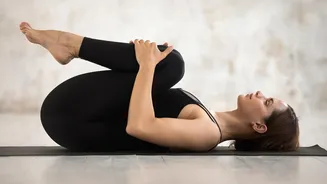
Apanasana, pronounced 'ah-pah-NAH-suh-nuh', is a fundamental reclined yoga posture. Its name is derived from Sanskrit, where 'Apana' refers to the downward flow of energy responsible for elimination, and 'asana' means pose. As the name suggests, it is often called the Wind-Relieving Pose (sometimes Pavanamuktasana) because it is believed to help release trapped gas in the intestines. This gentle, restorative posture involves lying on your back and hugging your knees to your chest. Its primary purpose is to apply mild, soothing pressure to the abdominal organs, which can encourage movement within the digestive tract and provide a sense of release.
The Link Between Apanasana and Digestion
The core claim behind Apanasana's effectiveness for digestive comfort lies in its gentle compression of the abdomen. When you draw your thighs toward your chest, you create a soft pressure that massages the intestines and other digestive organs. This action is thought to stimulate peristalsis—the wave-like muscle contractions that move food and waste through your gut. By promoting this movement, the pose may help alleviate common issues like bloating, indigestion, flatulence, and constipation. Furthermore, yoga in general helps activate the parasympathetic nervous system, which is responsible for the body's 'rest and digest' functions. By calming the body and mind, Apanasana can reduce stress, a known contributor to poor digestion.
Step-by-Step Guide to the Pose
Performing Apanasana is simple and accessible for most beginners. Find a comfortable, flat surface, like a yoga mat or a soft carpet. 1. Lie flat on your back with your legs extended and your arms resting alongside your body. Take a moment to relax. 2. On an exhalation, gently bend your knees and draw them in towards your chest. 3. Clasp your hands around your shins, just below the knees. If this is difficult, you can hold the back of your thighs instead. 4. Keep your head and the entire length of your spine, especially your lower back, resting on the floor. Tuck your chin slightly to lengthen the back of your neck. 5. Gently hug your knees closer to your chest without straining. Your shoulders should remain relaxed and grounded. You should feel a gentle stretch in your lower back and a light pressure on your abdomen.
Breathing, Timing, and Awareness
Your breath is a key component of this pose. As you settle into Apanasana, focus on taking slow, deep belly breaths. As you inhale, you might allow your knees to move slightly away from your chest as your abdomen expands. As you exhale, gently draw the knees closer, deepening the abdominal compression. This rhythmic movement enhances the massaging effect on your digestive organs. Hold the pose for anywhere from 30 seconds to a minute, or for about 5 to 10 deep breaths. Some practitioners enjoy gently rocking from side to side, which can provide a nice massage for the lower back. The goal is comfort and release, not force.
Modifications and Safety Precautions
While Apanasana is generally safe, it's important to listen to your body. If you have a larger belly or chest, it may be more comfortable to take your knees slightly wider apart, towards your armpits. You can also practice one leg at a time (Ardha Apanasana) by hugging one knee to your chest while keeping the other leg extended on the floor. Individuals who have recently had abdominal or spinal surgery, or those with a hernia, should avoid this pose. Pregnant women should also seek advice before practicing postures that compress the abdomen. Always work within your own range of motion and never push into pain.