





A Paradoxical Night for Stargazing
Let’s clear up a common misconception. The Summer Solstice, marking the longest period of daylight in the Northern Hemisphere, actually gives us the shortest night. For serious astronomers, this is a challenge, as the window of true, deep darkness is brief.
However, for the rest of us, the solstice presents a perfect opportunity. The warm, pleasant weather in India makes it an ideal time to be outdoors after sunset. Think of it not as a quest for the faintest deep-sky objects, but as a comfortable, accessible entry point into the hobby of stargazing. It’s a night to connect with the sky, and asteroids are one of the most fascinating targets.
What Exactly Are We Looking For?
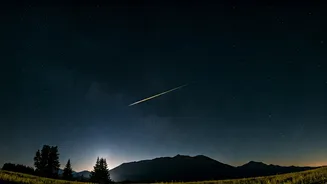
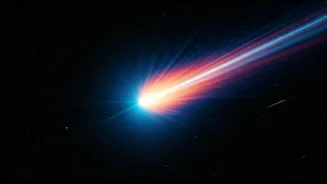
When you hear “asteroid,” you might picture a dramatic fireball streaking across the sky. That’s actually a meteor, or a “shooting star.” An asteroid is something different and much more subtle. These are rocky, airless remnants left over from the early formation of our solar system about 4.6 billion years ago. They range in size from small pebbles to massive bodies hundreds of kilometres across, like Vesta or Pallas. When we “trace” an asteroid, we aren’t looking for a fast streak. We are trying to spot a faint, star-like point of light that, over the course of an hour or more, ever so slightly changes its position relative to the fixed background stars. It's a slow, patient hunt for an object moving on its own distant orbit.
Your Asteroid Hunting Toolkit
You don't need a professional observatory, but you will need more than just your naked eyes. Most asteroids are too faint to be seen without optical aid.
1. **Binoculars or a Telescope:** A good pair of stargazing binoculars (7x50 or 10x50 are excellent choices) is the best starting point. They are portable, easy to use, and gather enough light to reveal many brighter asteroids.
2. **A Star Chart App:** This is your map. Apps like Stellarium, SkyView, or Star Walk are essential. You can use them to identify constellations and, crucially, to pinpoint the predicted location of a specific asteroid on any given night.
3. **A Dark Sky:** This is non-negotiable. City lights will wash out faint objects. Head to a rural area, a park away from city centres, or even a rooftop with minimal direct glare. Give your eyes at least 15-20 minutes to adapt to the darkness.
4. **Patience:** Spotting an asteroid is a game of patience. You’ll be comparing what you see in your eyepiece to your star chart, looking for the “star” that isn’t supposed to be there.
The Technique: How to Spot a Mover
Once you’ve used your app to find the patch of sky where an asteroid is predicted to be, the real work begins. Center your binoculars or telescope on that area. Using your app as a reference, identify the patterns of the brightest stars. Now, look for a faint point of light that doesn't appear on your chart. The best way to confirm it’s an asteroid is to sketch the starfield you see, carefully marking the position of your suspect object. Wait for an hour and then look again. If your target has moved slightly against the background stars, congratulations—you have successfully traced an asteroid.
Why This Cosmic Hunt Matters
Tracking an asteroid is more than just a tick on a celestial checklist. It’s a profound act of connection. You are observing a piece of primordial history, a building block of the solar system that has been travelling through space for billions of years. Scientists at organisations like NASA and ISRO study these objects for two key reasons. Firstly, they hold clues to the origins of our solar system and even life itself. Secondly, tracking Near-Earth Objects (NEOs) is crucial for planetary defence, ensuring we are aware of any potential impact threats far in advance. Every amateur who spots an asteroid is participating, in a small way, in this grand human endeavour of understanding and safeguarding our place in the cosmos.