



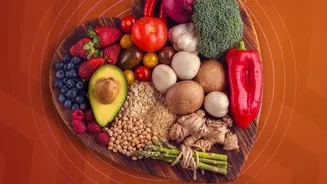
The 'Natural' Label: Not So Simple
The word 'natural' evokes images of farms and fresh produce, but its official meaning is less romantic and often quite vague. In India, the Food Safety and Standards Authority (FSSAI) has specific rules. A single-ingredient food can be called 'natural' if it comes
from a plant, animal, or mineral source and has only been processed in ways that don't fundamentally change it, like washing, peeling, or freezing. However, for a product with multiple ingredients, like a biscuit or a sauce, the term 'natural' cannot be used to describe the product itself. Instead, it can only claim to be 'made from natural ingredients' if every single ingredient meets the strict criteria. This is a crucial distinction. The 'natural' claim isn't a shortcut for 'healthy'; it's a statement about processing and origin that requires a careful read of the fine print.
Understanding the 'Organic' Promise
Unlike 'natural,' the term 'organic' is highly regulated. In India, organic foods are governed by the Food Safety and Standards (Organic Foods) Regulations, 2017. For a product to be labelled organic, it must be certified through systems like the National Programme for Organic Production (NPOP) or the Participatory Guarantee System for India (PGS-India). Consumers should look for the official 'Jaivik Bharat' logo. This certification means the food was grown without synthetic pesticides, chemical fertilisers, or genetically modified organisms (GMOs). But does organic always mean more nutritious? The science is mixed. Some studies show organic produce may have higher levels of certain antioxidants. However, many other comprehensive reviews have found no significant, consistent nutritional superiority in organic foods when compared to their conventionally grown counterparts. The primary guarantee of an organic label is about the farming method, not necessarily a dramatic increase in vitamins or minerals.
The Non-GMO Question
The 'Non-GMO' label is another common sight, indicating that the product was made without ingredients from genetically modified organisms. GMOs are plants or animals whose genetic material has been altered in a lab. In India, FSSAI has rules requiring certification for products making non-GMO claims, and this verification is becoming increasingly important for both consumer trust and access to international markets. The label verifies that the ingredients have not been genetically engineered, a process that relies on strict traceability from seed to shelf. It is important to understand what this label doesn't say. 'Non-GMO' is not the same as 'organic'. An organic product must be non-GMO, but a non-GMO product is not necessarily organic; it could still be grown using conventional pesticides and herbicides. The non-GMO label is purely a statement about the absence of genetic engineering.
Beyond the Buzzwords: Your Real Guide to Nutrition
While front-of-pack claims grab your attention, the real truth is on the back. The two most powerful tools for any shopper are the Ingredients List and the Nutritional Information panel. The ingredients are listed in descending order by weight, so the first few items make up most of the product. If sugar or refined flour (maida) is near the top, you know what you're really eating. A shorter ingredient list with recognisable, whole-food names is often a good sign. The nutrition panel provides the hard numbers on calories, protein, fat, carbohydrates, and, crucially, added sugars and sodium per 100g and per serving. Comparing products based on their 'per 100g' values is the most reliable way to make an informed choice, as 'per serving' sizes can be misleadingly small.