





The feeling of running outdoors is hard to beat, but in urban areas, air pollution can cast a shadow on your workout. Thankfully, nature offers a solution. Strategically using parks can significantly reduce your exposure to harmful pollutants.
The Urban Runner's Dilemma
For city
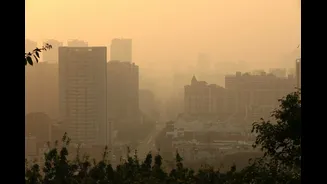
dwellers, a daily run often means navigating streets filled with traffic-related air pollution. During exercise, your breathing rate increases, meaning you inhale more air—and more pollutants—deeper into your lungs. This can include particulate matter (PM2.5), nitrogen dioxide, and ozone, which are linked to respiratory issues, reduced lung function, and even cardiovascular problems over time. Studies have shown that high pollution levels can negatively impact performance, slowing marathon times and diminishing the health benefits of your workout. This creates a frustrating trade-off: the desire for fresh air and exercise clashes with the reality of an unhealthy environment.
How Vegetation Acts as a Natural Filter
Green spaces are more than just pretty scenery; they are active, living air purifiers. Plants, shrubs, and trees improve air quality in several ways. Their leaves and stems act as a porous barrier, capturing airborne particulate matter like dust and soot from vehicle emissions. Rain then washes these trapped particles to the ground. Vegetation also absorbs gaseous pollutants, pulling them out of the air through the tiny pores on their leaves. Furthermore, dense greenery can help mitigate the 'urban canyon' effect, where pollutants get trapped between tall buildings, by disrupting airflow and encouraging pollutants to disperse or settle.
Smart Hedges and Hairy Leaves
Not all greenery is created equal when it comes to fighting pollution. Research has found that plants with dense, complex canopies and rough, hairy leaves are particularly effective. One 'super plant' identified by researchers is the Cotoneaster, a type of shrub whose dense, hairy leaves were found to be at least 20% more effective at capturing particulates along busy roads compared to other shrubs. In general, low, dense hedges are often better than tall trees at filtering pollution at breathing height, as they create a barrier closer to the source of tailpipe emissions. Conifers and yews are also excellent choices for trapping particulate matter.
Plan Your Route for Purer Air
Simply choosing to run in a park is a great first step, but how you navigate that park matters. To maximize the air-cleaning benefits, plan your route away from the perimeter roads. The further you move into a green space, the lower the concentration of traffic-related pollutants. Look for paths lined with thick hedges or dense shrubs, as these act as a direct barrier between you and any nearby roads. Studies have shown these green barriers can significantly reduce exposure to harmful particles. Even small changes in your route to prioritize quieter, greener streets over busy arteries can make a substantial difference in the quality of the air you breathe.
Timing Is Everything
Pollution levels fluctuate throughout the day. They are often highest during morning and evening rush hours due to traffic volume. Gaseous pollutants like ozone, which is formed when sunlight reacts with other pollutants, tend to peak in the afternoon. To minimize exposure, try to schedule your runs for the early morning before traffic builds up, or later in the evening after it has subsided. On weekends, Sunday and Monday mornings often have cleaner air compared to the end of the work week. Before you head out, it’s always wise to check the local Air Quality Index (AQI) online or via a weather app to make an informed decision.