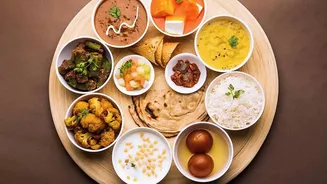









The Foundation: Cost of Raw Ingredients
The price of any meal begins with its core components. For a vegetarian thali, this means vegetables, pulses, rice, and wheat. According to a recent CRISIL 'Roti Rice Rate' report from September 2026, the cost of a home-cooked vegetarian thali rose by
10% year-on-year. A major driver for this was a sharp, 89% surge in onion prices due to tight supplies and a decline in production. Unpredictable weather, like a delayed monsoon, can disrupt planting and harvest cycles, affecting the availability of fresh produce and pushing prices up. Staples are not immune either. Rice prices also saw an 8% year-on-year increase, linked to expectations of lower paddy production. These fluctuating base costs create a volatile foundation for the final price of a meal.
The Journey to the City: Supply Chain and Logistics
Getting produce from the farm to urban markets is a costly affair. India's food supply chain is vast and fragmented, often involving multiple intermediaries. Each step adds to the final price. Fuel costs are a significant factor; higher diesel prices directly translate to more expensive transportation for vegetables and grains. Moreover, India faces challenges with post-harvest losses, estimated to be between 20-30% for vegetables due to inadequate cold storage and inefficient handling. This wastage means that a larger initial harvest is needed to meet demand, and the cost of the lost produce is indirectly passed on to the consumer. The distance between production zones and cities also plays a critical role, with long-distance supply chains being more vulnerable to disruptions and added costs.
The Restaurant's Reality: Operational Overheads
Once the ingredients reach the restaurant, a new set of costs is layered on. For restaurants in Indian cities, rent is a major expenditure. Beyond that, there are staff salaries, which can account for 25-30% of revenue for a small establishment. Electricity, cooking gas, and water bills are also substantial and can range from ₹15,000 to ₹50,000 monthly for an average-sized outlet. Licensing and regulatory compliance, including FSSAI licenses and GST, add another layer of expense. Restaurant owners also factor in a profit margin, which is essential for the business to survive and grow. These operational costs are a significant portion of the final price a customer pays for their meal.
Policy and People: The Bigger Picture
Government policies and broader economic trends also influence meal costs. The Minimum Support Price (MSP) set for certain crops can impact market prices for staples like wheat and rice. Taxes such as the Goods and Services Tax (GST) are applied to restaurant services, which are reflected in the final bill. Furthermore, rising urban incomes and changing lifestyles have led to increased demand for high-quality and diverse food options, including exotic vegetables, which can have their own complex and costly supply chains. As more people dine out, the demand-side pressure can also contribute to price firmness, especially in popular urban areas.