



Welcome to Hampi, a land where giant boulders balance precariously over paddy fields and ancient ruins whisper tales of a mighty empire. Planning a trip to this UNESCO World Heritage Site can feel vast, but this guide will help you navigate it all.
When to Go and How to Get There
The
best time to visit Hampi is during the winter months, from October to February, when the weather is cool and pleasant for exploring. Temperatures during this peak season range from 15°C to 30°C, making it ideal for sightseeing. Summers (April to June) are extremely hot, often exceeding 40°C, while the monsoon (July to September) brings rain that can make some areas muddy, though the landscape becomes lush and green. To reach Hampi, the nearest railway station is Hospet (Hosapete Junction), about 13 km away. From there, you can hire an auto-rickshaw or take a local bus. The closest airport is Jindal Vijaynagar Airport (VDY) in Toranagallu, roughly 40 km from Hampi, with connections to Bangalore and Hyderabad.
Two Worlds: The Sacred Centre & Hippie Island
Hampi is broadly divided by the Tungabhadra River into two distinct zones. The main tourist area, often called the 'Sacred Centre', is where you'll find the majority of the majestic temple ruins and historical sites. This is the heart of the old Vijayanagara Empire. Across the river lies Virupapur Gaddi, popularly known as 'Hippie Island'. This area offers a more laid-back, bohemian atmosphere with guesthouses, relaxed cafes, and sprawling paddy fields, making it a favorite among backpackers. A short coracle or ferry ride connects the two sides, though the ferry service typically stops by late afternoon.
Exploring the Empire of Ruins
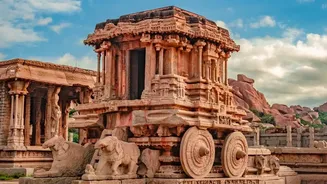
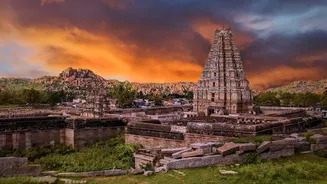
The sheer scale of Hampi's ruins can be overwhelming. Start with the must-see monuments. The Virupaksha Temple, a functioning temple and Hampi's oldest, stands tall near the Hampi Bazaar. The Vijaya Vittala Temple is perhaps the most extravagant complex, famous for its iconic Stone Chariot and musical pillars. This stone chariot is so renowned it's featured on the Indian 50 rupee note. Other key sites include the Royal Enclosure, which houses the elegant Lotus Mahal and the imposing Elephant Stables, the monolithic Lakshmi Narasimha statue, and the Hazara Rama Temple with its detailed carvings depicting the Ramayana.
Landscapes, Sunsets, and Coracle Rides
Hampi's natural beauty is as captivating as its ruins. The landscape is dominated by a surreal terrain of granite boulders, green rice paddies, and the gentle Tungabhadra River. For breathtaking views, climb Matanga Hill or Hemakuta Hill for sunrise or sunset. Anjanadri Hill, believed to be the birthplace of Lord Hanuman, is another popular climb with 575 steps leading to a temple and panoramic vistas. A quintessential Hampi experience is a coracle ride on the Tungabhadra River. These traditional round boats, made of woven bamboo, offer a unique perspective of the ruins from the water.
Savouring Local Life and Culture
To truly experience Hampi, immerse yourself in its local culture. The food scene is predominantly vegetarian, especially on the temple side. You'll find classic South Indian thalis, dosas, and idlis everywhere. Many cafes on the 'Hippie Island' side offer a wider range of international cuisines. Don't miss the Hampi Bazaar, a bustling street market in front of the Virupaksha Temple, perfect for picking up souvenirs like leather goods, jewellery, and colourful textiles. For a more rural feel, explore the quiet lanes of Anegundi village, which is even older than Hampi itself and steeped in mythology.
Essential Travel Tips
Getting around Hampi involves a lot of walking. Consider renting a bicycle or a moped, especially to explore the 'Hippie Island' side. For the main ruins, hiring an auto-rickshaw for the day is a popular and convenient option. Carry plenty of cash, as ATMs are scarce. Stay hydrated, wear a hat, and use sunscreen, as the sun can be intense even in winter. Finally, start your days early to beat the crowds and the midday heat, giving you more time to soak in the magic of this incredible open-air museum.