




The Sun's Rhythmic Cycle
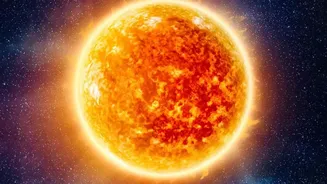
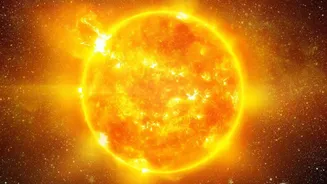
Just like the Earth has seasons, the sun follows a regular activity pattern called the solar cycle, which lasts roughly 11 years. This cycle is tracked by the number of sunspots on its surface—dark, cooler areas driven by intense magnetic activity. The
period with the fewest sunspots is called the solar minimum, a time of relative quiet. In contrast, the solar maximum is the peak of this cycle, when the sun is covered in sunspots that can erupt into solar flares and other energetic events. We are currently in Solar Cycle 25, which began in December 2019, and its peak activity period is expected to create prime conditions for celestial events throughout 2026.
Flares and Ejections Explained
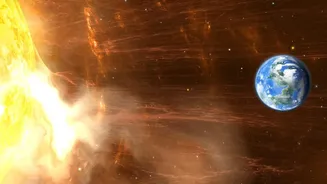
During solar maximum, the sun's tangled magnetic fields often snap and reconnect, releasing massive bursts of energy known as solar flares. These flares emit powerful radiation, including X-rays, that travel at the speed of light and can reach Earth in just eight minutes. Often accompanying major flares are even more significant events called coronal mass ejections, or CMEs. A CME is a gigantic bubble of plasma and magnetic field that gets launched from the sun into space. While flares cause immediate effects like radio blackouts on the sunlit side of Earth, it's the CMEs that are responsible for the most visually stunning phenomena.
From Solar Storm to Light Show
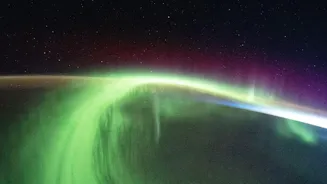
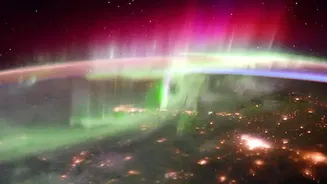
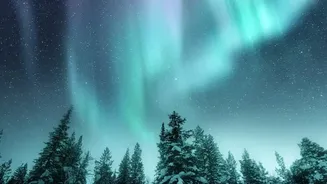
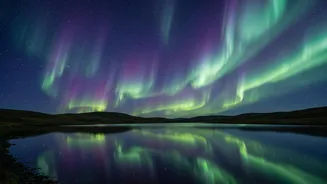
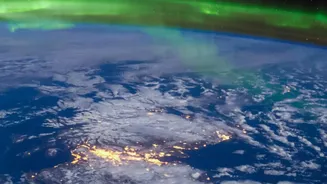
When a CME hurtles toward Earth—a journey that can take several days—it slams into our planet's protective magnetic shield, the magnetosphere. This collision transfers a huge amount of energy and causes a geomagnetic storm. During such a storm, charged particles from the sun are funnelled down the Earth’s magnetic field lines toward the North and South Poles. As these energetic particles strike atoms and molecules (mainly oxygen and nitrogen) in our upper atmosphere, they excite them, causing them to glow. The result is the breathtaking, dancing curtains of light we know as the aurora borealis (Northern Lights) and aurora australis (Southern Lights).
Why 2026 Offers a Prime Opportunity
The peak of Solar Cycle 25 is predicted to be one of the most active in more than a decade. This heightened activity means more frequent and powerful solar flares and CMEs, which in turn leads to auroras that are brighter, more dynamic, and visible more often. Crucially, during an intense solar maximum like the one spanning 2025-2026, the auroral ovals—the rings around the poles where auroras typically occur—can expand. This allows the lights to be seen from lower latitudes than usual, places that rarely get to witness the spectacle.
How to See the Celestial Display
To give yourself the best chance of seeing the aurora, you should travel to locations within the Arctic Circle, known for minimal light pollution and clear, dark skies. Top destinations include Tromsø in Norway, Abisko in Sweden, Fairbanks in Alaska, and much of Iceland and Northern Canada. The prime viewing season runs from September to April, when the nights are longest and darkest. While sightings are never guaranteed, the 2026 solar maximum provides an outstanding opportunity. For those in India, direct observation is extremely unlikely, but the global impact on technology and the sheer beauty of the event make it a compelling phenomenon to follow from afar.
More Than Just Pretty Lights
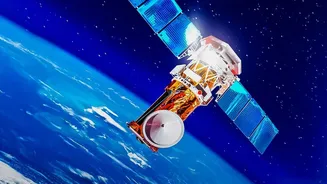
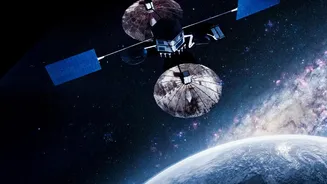
While auroras are beautiful, the powerful geomagnetic storms that cause them can have other, more disruptive effects. These storms can induce currents in power grids that may cause blackouts, particularly in high-latitude regions. They can also disrupt radio communications and GPS signals, affecting aviation and other navigation-reliant industries. Furthermore, intense solar radiation can pose a risk to satellites in orbit and even astronauts aboard the International Space Station, who may need to take shelter during a major event. For most of us on the ground, however, we are well protected by Earth's atmosphere and magnetic field.