


The Problem with Any Old 'Cup'
In many Indian households, cooking is an art of 'andaaz', or estimation. A 'cup' could be a favourite teacup, a small steel tumbler, or a katori. While this works beautifully for dal or sabzi where you can adjust seasonings as you go, baking is a different
story. Baking is a science. It relies on precise chemical reactions between ingredients like flour, sugar, fat, and leavening agents. Using a random cup can lead to disaster because their volumes vary wildly. Too much flour can result in dry, tough cakes, while too little can cause them to collapse. Incorrect measurements are one of the most common reasons for baking failures.
Defining the 'Standard' in Cups and Spoons
So, what are standard measuring cups? These are sets of cups and spoons with specific, internationally recognized volumes. Most recipes found online, especially from the US, use the United States Customary (USCS) system. A standard US cup holds 240 ml. In India, you might find sets based on a metric cup, which is 250 ml. While the 10 ml difference is small, it can add up. It's crucial to know which system your recipe and your cups use. A standard set typically includes 1 cup, ½ cup, ⅓ cup, and ¼ cup measures, along with spoons for tablespoon (tbsp) and teaspoon (tsp).
How to Measure Dry Ingredients Correctly
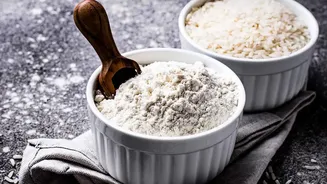
Simply dipping your cup into a bag of flour is a huge mistake. This action compacts the flour, meaning you can end up with 30% more than the recipe calls for. This is a primary cause of dense, dry baked goods. The correct technique is the 'spoon and level' method. Use a separate spoon to lightly scoop flour into your measuring cup until it's overflowing. Then, without shaking or tapping the cup, use the straight edge of a knife to sweep the excess flour off the top, leaving a perfectly level surface. This ensures you get a much more accurate and consistent amount every single time. For brown sugar, the rule is the opposite: you should pack it firmly into the cup.
Liquids Have Their Own Rules
You may have noticed that measuring cup sets come with two types: nested cups for dry ingredients and a clear jug-style cup with a spout for liquids. They are not interchangeable. Dry cups are designed to be filled to the brim and levelled. Trying to measure liquids this way is messy and inaccurate. A liquid measuring cup should be placed on a flat surface. Pour the liquid in and bend down so your eyes are level with the measurement marking to get an accurate reading. Don't try to hold it up in the air and judge from an angle.
The Next Level: Baking with a Scale
While standard cups are a massive leap forward from guesswork, professional bakers and pastry chefs will tell you there's an even more accurate method: weighing your ingredients. A digital kitchen scale removes all ambiguity. A cup of flour can weigh differently depending on humidity or how it's packed, but 125 grams is always 125 grams. Using weight (grams) instead of volume (cups) guarantees that you can replicate a recipe perfectly every time. As you become more serious about baking, investing in an inexpensive digital scale is the single best step you can take to achieve professional-level consistency.