







Why Your Desk Is a Back Breaker
Our bodies are designed for movement, but many office jobs require us to sit for hours on end. This prolonged inactivity is a primary culprit behind lower back strain. When you sit for extended periods, several things happen that your spine doesn't appreciate.
The pressure on your spinal discs increases significantly compared to when you stand or walk. This constant compression can lead to irritation and wear over time. Furthermore, the muscles that are supposed to support your spine, like your core and glutes, tend to 'switch off'. This forces the smaller muscles and ligaments in your back to work overtime, leading to fatigue and strain. Prolonged sitting also shortens the hip flexor muscles at the front of your hips. When these muscles become tight, they pull on your pelvis, altering your spinal alignment and contributing to that all-too-familiar lower back ache.
The Power of the Micro-Break
The key to counteracting the negative effects of sitting isn't necessarily a punishing gym session after work, but rather small, consistent doses of movement throughout the day. This is the principle behind 'micro-breaks'—short, intentional pauses of a few minutes taken regularly. Research shows that these brief breaks can reduce muscle fatigue, boost energy, and improve well-being. A review focusing on sedentary workers found that taking short breaks of just two to three minutes for some light physical activity helped reduce musculoskeletal discomfort and fatigue. By frequently changing your position and reintroducing movement, you help reset your posture, improve blood circulation to your muscles and tissues, and relieve the static load that builds up in your lower back. These small resets are highly effective at preventing stiffness and pain from setting in.
Your Five-Minute Mobility Reset
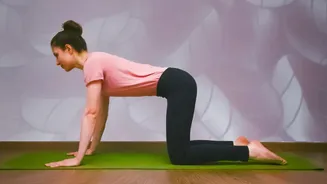
Ready to give your back a break? This simple routine can be done right by your desk and targets the key areas affected by sitting. Aim to perform this sequence at least once or twice a day. 1. Seated Cat-Cow: Sit at the edge of your chair with your hands on your knees and feet flat on the floor. On an inhale, arch your back, lift your chest, and look slightly forward (Cow). On an exhale, round your spine, tuck your chin to your chest, and draw your belly button in (Cat). Repeat this for 60 seconds, flowing with your breath to gently mobilise the spine. 2. Seated Spinal Twist: Sitting tall, place your right hand on your left knee and your left hand on the back or side of the chair. Gently twist your upper body to the left, keeping your hips square. Hold for 20-30 seconds, breathing into the stretch. Slowly return to the centre and repeat on the other side. This helps release rotational tension in the back. 3. Standing Hip Flexor Stretch: Stand up and step one foot back into a shallow lunge, keeping your back leg relatively straight. Gently tuck your pelvis under until you feel a stretch at the front of your back hip. You can place a hand on your desk for balance. Hold for 30 seconds on each side. This helps lengthen those tight hip flexors. 4. Shoulder Blade Squeezes: Counteract the 'desk slump' by improving your posture. Sit or stand tall and, keeping your shoulders down, squeeze your shoulder blades together as if holding a pencil between them. Hold for five seconds and release. Repeat 10 times to activate the muscles of your upper back.
Making the Habit Stick
The most effective mobility routine is the one you actually do. Consistency is more important than intensity. To build this five-minute break into your day, try linking it to an existing habit. For instance, do your stretches every time you get up to refill your water bottle. Alternatively, set a recurring timer or calendar reminder for mid-morning and mid-afternoon. This removes the need to remember and makes the break a non-negotiable part of your schedule. You could also enlist a coworker to join you; having a partner can provide encouragement and accountability. The goal is to make movement a natural rhythm of your workday, not another task on your to-do list. Remember, even a few minutes of focused movement is a powerful investment in your long-term health and comfort.