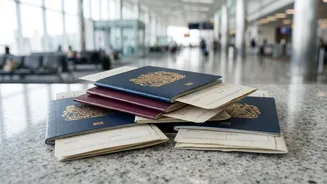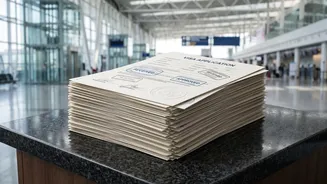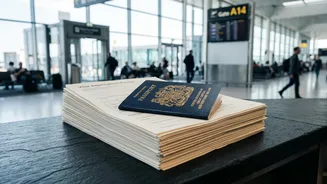





The thrill of planning an international getaway is increasingly being overshadowed by a new, formidable hurdle: navigating the labyrinth of immigration requirements. For many, the dream trip now begins with a mountain of paperwork and anxiety.
The Rise of 'Visa Anxiety'
For a growing
number of Indian travellers, the excitement of booking a flight to a new country is quickly replaced by 'visa anxiety'. This phenomenon, marked by stress over extensive paperwork, long processing times, and the unnerving possibility of rejection, is becoming a significant deterrent. A recent passenger survey from the International Air Transport Association (IATA) found that 43% of travellers were discouraged from visiting a destination due to its entry rules. The primary reason cited was the complexity of the process itself. This administrative friction is turning the once-exciting prelude to travel into a daunting task, forcing many to reconsider their destination choices altogether.
Why Is It Getting Harder to Travel?
The tightening of borders is not happening in a vacuum. It's a result of several converging global trends. In the wake of the pandemic, many countries have retained a cautious approach, digitising their entry systems but often making them more complex. National security concerns and efforts to control illegal immigration are also major factors, leading to more rigorous vetting procedures for applicants from many Asian and African nations. Countries like the United States and the United Kingdom have openly strengthened their screening processes, citing national security as a priority. This has translated into more in-depth background checks, longer wait times, and stricter eligibility requirements for visitors.
The Schengen Squeeze and US Wait Times
For Indian passport holders, two of the most significant pain points are obtaining visas for Europe's Schengen Area and the United States. The Schengen visa process has become notorious for its high rejection rates, which stood at nearly 16% for Indian applicants in 2025, higher than the global average. This resulted in over 181,000 rejections, with each applicant losing a non-refundable fee. Common reasons for refusal are often preventable, such as insufficient financial proof, incomplete documentation, or a vague travel purpose. Simultaneously, securing a B1/B2 tourist visa appointment for the US has become an exercise in extreme patience, with average wait times for Indian applicants reaching 346 days in late 2026. In major cities like Mumbai and Hyderabad, the backlog for an interview can approach a full year.
The Hidden Costs of Gaining Entry
The burden on travellers extends far beyond just filling out forms. The financial sting is considerable. Non-refundable visa application fees can be substantial, especially for families, and a rejection means that money is lost forever. Many embassies require applicants to submit confirmed flight and hotel bookings as part of the application, putting travellers in a risky position where they might lose thousands if the visa is denied. Furthermore, the logistical costs add up, including travel to visa application centres, which are often located only in major cities, and fees for mandatory travel insurance that meets specific, and sometimes strict, criteria.
Travellers Vote With Their Feet
Faced with these hurdles, tourists are increasingly opting for destinations with more welcoming entry policies. Countries that impose stringent visa rules risk a decline in tourism revenue as travellers choose more accessible, hassle-free alternatives. This has created an opportunity for nations that have simplified their processes. In 2026, countries like Thailand, Malaysia, and Sri Lanka have eased their visa rules for Indians, offering visa-free entry or visa-on-arrival to woo a large and growing travel market. This strategic move positions them to capture a larger share of the tourism pie from travellers who are tired of the uncertainty and complexity of applying for visas to Western countries.