






The Old Way of Forecasting
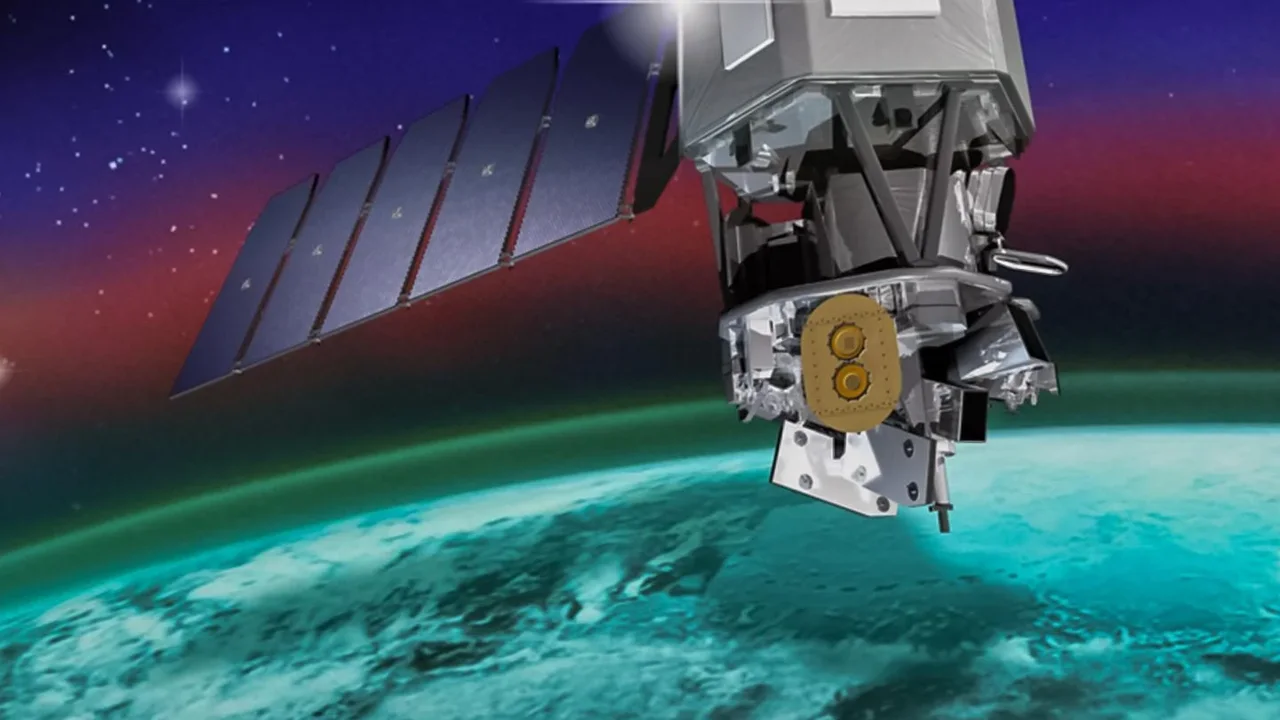
Traditionally, climate and weather modeling has been a monumental task. Scientists built what are known as numerical weather prediction (NWP) models. These are complex physical simulations that divide the planet into a grid and use powerful supercomputers
to solve the complex equations of atmospheric physics for each grid cell. While groundbreaking, this method has significant limitations. The computations are incredibly intensive, meaning a single long-range forecast can take weeks or months to run, even on the world's most powerful machines. This also means the grid cells are often large, sometimes 100 kilometers wide, making it difficult to predict small-scale but high-impact events like thunderstorms or the exact path of a hurricane's eye.
Enter Artificial Intelligence
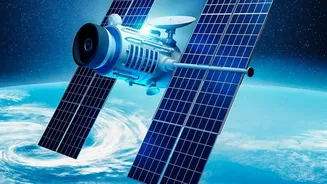
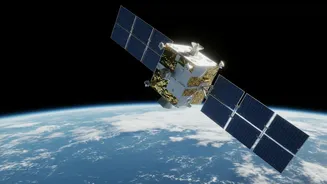
Artificial intelligence, particularly machine learning (ML), takes a completely different approach. Instead of being programmed with the laws of physics, AI models are trained on vast amounts of historical data—decades of satellite imagery, weather balloon readings, and outputs from traditional models. By analyzing this data, the AI learns the intricate patterns and relationships that govern the weather. It learns to recognize the atmospheric conditions that precede a heatwave or a flood without explicitly solving the physical equations. This data-driven approach allows AI models to do things that are simply not feasible for traditional simulations.
The Advantage of Speed and Detail
The most dramatic impact of AI is speed. Models like Google DeepMind's WeatherNext and NVIDIA's Earth-2 platform can generate forecasts thousands of times faster than traditional methods. A 10-day forecast that might take a supercomputer hours can be generated by an AI in under a minute. This speed allows for the creation of large 'ensemble' forecasts—running thousands of slightly different simulations to gauge the probability of different outcomes, which is crucial for predicting the likelihood of extreme and catastrophic events. Furthermore, AI models can operate at a much higher resolution, predicting weather on a kilometer scale, which is vital for providing actionable warnings for localized flash floods or severe storms.
A Tool, Not a Magic Wand
Despite the immense promise, AI is not a perfect solution. One major challenge is the 'black box' problem; because AI models learn patterns from data, it can be difficult for scientists to understand exactly why a model made a particular prediction, making it harder to trust in high-stakes situations. Another concern is that AI models are only as good as the data they are trained on. They may struggle to predict events that are entirely unprecedented and fall outside the patterns of historical data. For this reason, many researchers believe the future lies in hybrid models that combine the speed and pattern-recognition abilities of AI with the rigorous, physics-based foundation of traditional models. This approach aims to get the best of both worlds.
Real-World Impact Today
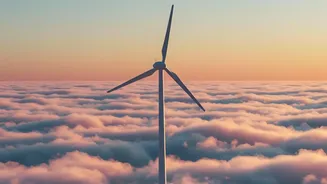
This transformation is already underway. National weather agencies, including NOAA in the US, are partnering with tech companies to integrate AI into their operational workflows. These tools are being used to provide more accurate short-term 'nowcasting' for rainfall, improve warnings for cyclones, and help grid operators better manage the integration of renewable energy by providing superior forecasts for wind and sun. As the technology matures, it promises to give communities, businesses, and governments the detailed, timely information they need to prepare for and adapt to a changing climate, potentially saving lives and mitigating economic damage.