


What is a Conjunction?
In astronomy, a conjunction is a celestial event where two or more astronomical objects, like planets or the Moon, appear close to each other in the sky from our perspective on Earth. While they look near, in reality, they remain millions of kilometres
apart in space. These events are fantastic opportunities for stargazers because they involve bright objects that are often easy to spot, even without special equipment. The upcoming event in October will feature the Moon and the magnificent ringed planet, Saturn.
When and Where to Look
Mark your calendars for the night of October 24, 2026. This is when the Moon and Saturn will have their close encounter in our sky. For observers in India, the best time to look will be after sunset. Saturn will have already reached opposition earlier in the month on October 4, meaning it rises around sunset and is visible for most of the night, making it bright and ideally placed for viewing. On October 24, you will see the nearly-full Moon to the left of Saturn in the sky after the sun goes down. Simply find a spot with a clear view of the sky, away from the glare of city lights if possible, and look up.
Viewing with the Naked Eye
The great news is that you do not need a telescope to enjoy this event. The Moon is the brightest object in our night sky, and Saturn shines like a bright, steady, yellowish star. Their proximity on this night will make for a striking pair, easily visible to the unaided eye. To prepare for the best view, step outside about 15-20 minutes before you plan to observe. This allows your eyes to adapt to the darkness, making it easier to spot fainter objects and appreciate the celestial view. Find a comfortable spot, perhaps a balcony or a quiet park, and give yourself time to soak in the sight.
Using Binoculars or a Telescope
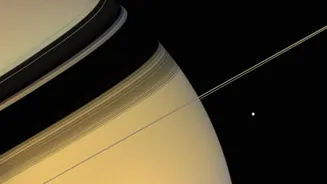
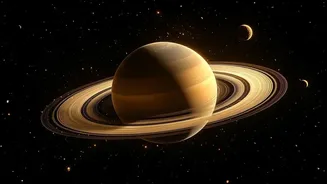
If you have a pair of binoculars or a small telescope, this conjunction becomes even more spectacular. While Saturn may look like a bright dot to the naked eye, even a basic pair of binoculars can enhance the view. For the best results, try to keep your binoculars steady by bracing your elbows on a solid surface, like a table or the roof of a car. A telescope, even a small one, will provide a much more detailed look. It can reveal the breathtaking sight of Saturn’s iconic rings, which are tilted at about 10 degrees from our point of view this year. You might also spot some of Jupiter's moons if you turn your telescope that way, as it will also be visible in the sky.
Helpful Apps for Stargazing
To easily locate Saturn and other celestial objects, a stargazing app on your smartphone can be an invaluable tool. Apps like SkyView, Star Walk 2, and Stellarium Mobile are excellent choices available for both Android and iOS. These apps use your phone's location and sensors to create a real-time map of the sky. You simply point your phone towards the sky, and the app will identify the stars, planets, and constellations you are looking at. Many of these apps also have features that let you see what the sky will look like on a future date, helping you plan your viewing session perfectly.