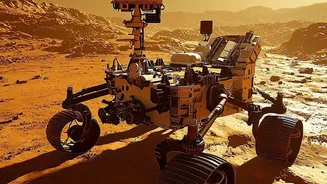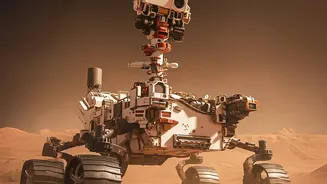




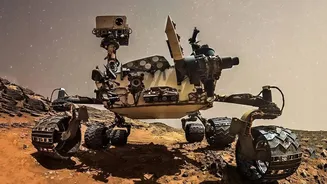
For the first time in history, humanity is on the cusp of bringing pieces of another planet to Earth. NASA's new Perseverance Sample Retrieval Architecture (PSRA) is a fresh strategic approach to safely retrieving these invaluable Martian samples.
The Precious Cargo on Mars
Since
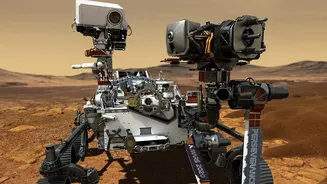
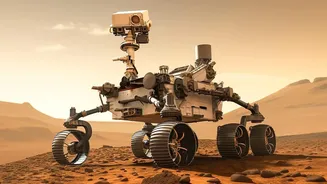
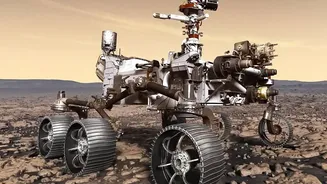
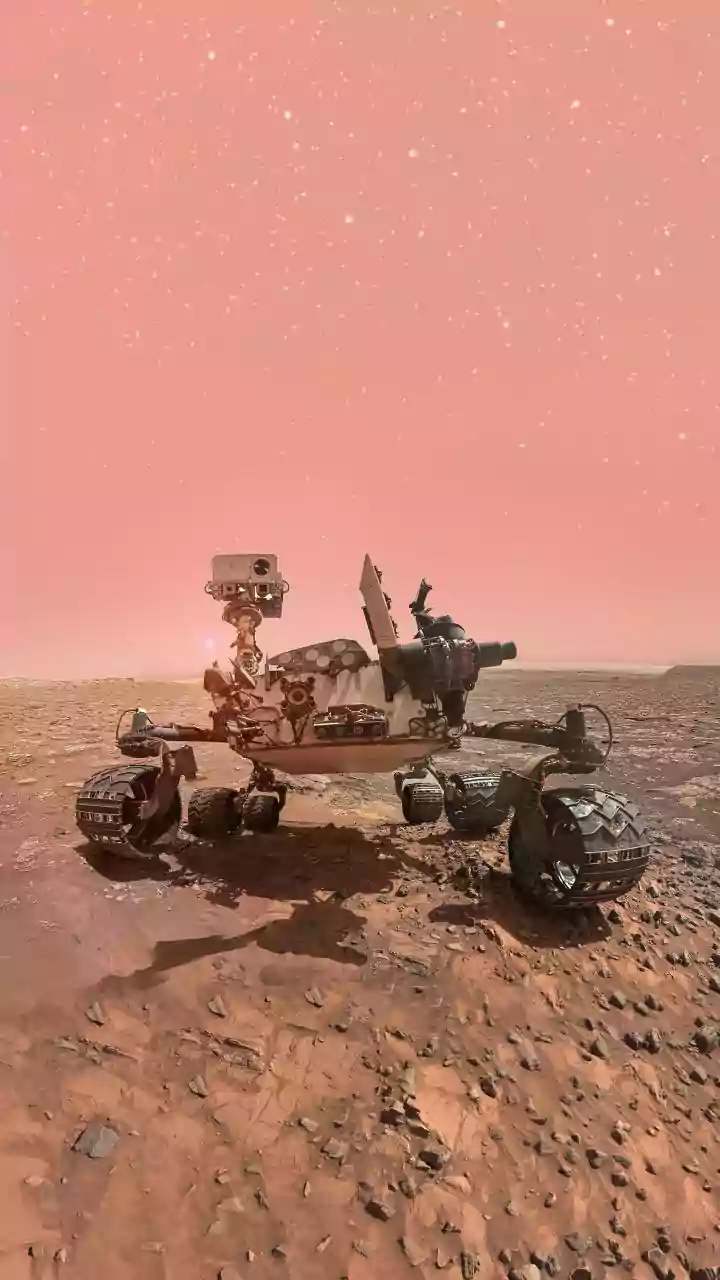
its landing in February 2021, NASA's Perseverance rover has been diligently working in Mars's Jezero Crater, a location believed to have once hosted a lake and river delta. Its primary mission is not just to explore, but to collect. The rover has been drilling into rocks and scooping up soil, sealing a diverse collection of geological treasures into ultra-clean titanium tubes. As of early 2025, this collection included over 20 rock cores, samples of Martian dust (regolith), and even a sample of the Red Planet's thin atmosphere. Some of these tubes are stored aboard the rover, while a backup depot has been carefully placed on the Martian surface, creating a cache for a future pickup mission. These samples are our best chance to answer a monumental question: did life ever exist on Mars?
A Mission Reset for a Historic Goal
Getting these samples from Mars to Earth is one of the most ambitious space exploration goals ever conceived. The original joint plan between NASA and the European Space Agency (ESA), known as Mars Sample Return (MSR), involved a complex relay of spacecraft: a lander to retrieve the samples, a rocket to launch them into Mars orbit, and an orbiter to catch them and fly them back to Earth. However, this ambitious plan ran into significant hurdles. Independent reviews projected the cost to be as high as $11 billion with a return date stretching to 2040, a timeline and price tag NASA deemed unacceptable.
Introducing the PSRA Initiative
In response to these challenges, NASA announced a major strategic pivot on November 9, 2026. Dubbed the Perseverance Sample Retrieval Architecture (PSRA), this new initiative is a comprehensive reassessment of how to achieve the sample return. It's less a brand-new technical blueprint and more of a strategic reset. A dedicated PSRA strategy team is set to begin its work in January 2027, with the goal of delivering impartial recommendations for a more feasible, faster, and cost-effective mission architecture. This re-evaluation will review all prior lessons learned and explore new capabilities to get the job done. The urgency is heightened by international developments, as China is also making progress on its own Tianwen-3 sample return mission, which aims to bring Martian material to Earth as early as 2031.
The 'Safety First' Protocol
The word 'safely' in the headline is not just a casual assurance; it's the cornerstone of the entire program. Bringing extraterrestrial material to Earth carries the extremely low, but not zero, risk of 'backward contamination'. To mitigate this, NASA and ESA are designing a system with multiple, redundant layers of containment. The process starts at Mars, where the sample tubes will be sealed inside a larger container, which is then sealed inside another. This 'container within a container' system is designed to break the chain of contact with the Martian environment. Once the sample capsule lands on Earth, it will be treated with the utmost care, as if it were a hazardous biological material. It will be immediately secured and transported to a specially designed high-containment Sample Receiving Facility, similar to labs used for studying infectious diseases, where it will undergo rigorous testing before any material is cleared for wider scientific study.
Why This Cosmic Delivery Matters
The scientific payoff for this extraordinary effort is immense. While rovers like Perseverance can perform amazing science on Mars, their instruments are limited by size and power. The most sophisticated laboratories are here on Earth. Analyzing these returned samples could revolutionize our understanding of Martian geology, its past climate, and whether the planet ever supported microbial life. Finding signs of ancient life, even fossilized microbes, would be one of the most profound discoveries in human history. The samples will also be preserved for future generations, allowing scientists decades from now to apply new technologies to unlock secrets we can't yet imagine, much like NASA did with the Apollo moon rocks.