






The $10,000 Quadrillion Prize
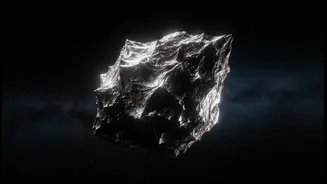
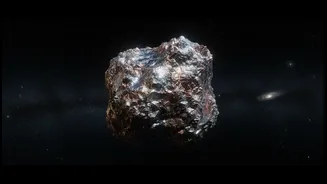
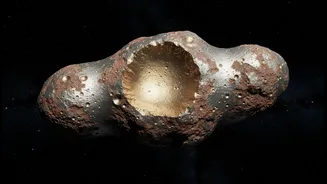
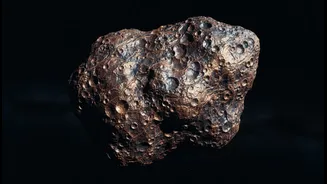
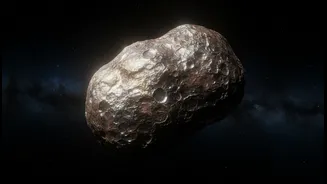
Floating in the main asteroid belt between Mars and Jupiter lies 16 Psyche, a massive object around 280 kilometers wide. For years, it captured imaginations not just for its size, but for its composition. Early observations suggested it was almost entirely
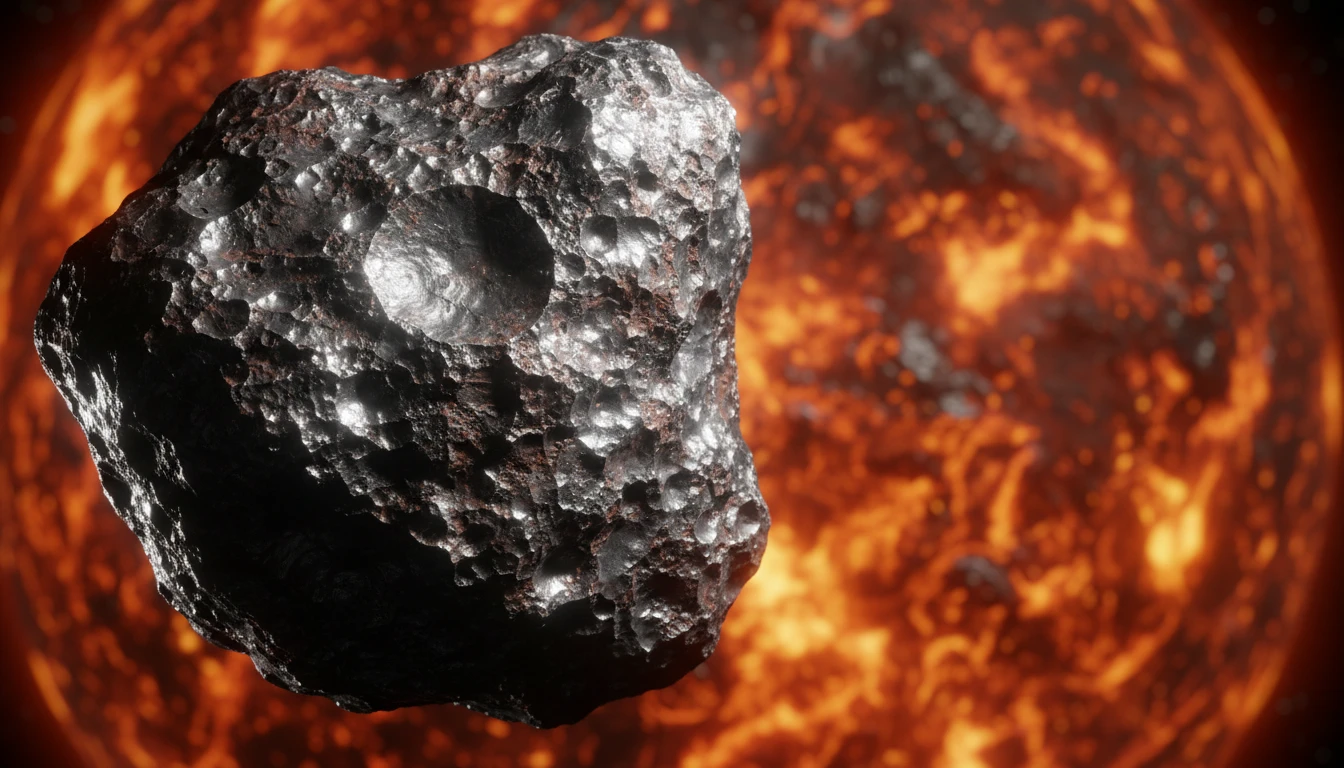
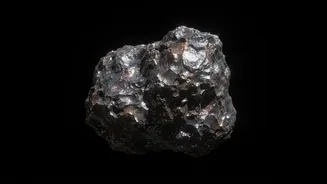
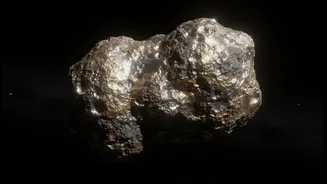
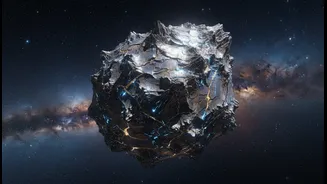
made of metal, primarily iron and nickel. This led to a thrilling hypothesis: Psyche could be the exposed core of a planetesimal, a building block of a planet whose rocky outer layers were violently stripped away billions of years ago. This theory fueled incredible monetary valuations. Based on the sheer volume of presumed metals and current market prices, its worth was estimated at a staggering $10,000 quadrillion. That figure, far exceeding the entire global economy, turned Psyche into a symbol of cosmic wealth, even if the number was purely hypothetical.
A Mission to a Metal World
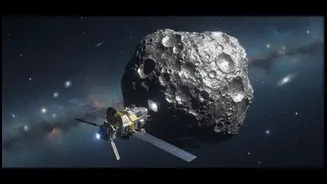
To solve the mysteries of Psyche, NASA launched a dedicated spacecraft in October 2023. The Psyche mission is not a mining expedition, but a scientific one designed to study a world unlike any other we've visited. Its goal is to orbit the asteroid and, for the first time, get an up-close look at a metallic world. By mapping its surface, studying its composition, and measuring its gravity, scientists hope to learn how planets like Earth formed. The spacecraft's long journey is a testament to the asteroid's scientific importance. After a successful gravity-assist flyby of Mars in May 2026, the probe is now on a direct course for its target, with an expected arrival in the summer of 2029.
New Data, New Surprises
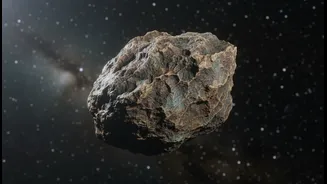
Even before the spacecraft's arrival, new analyses and pre-flyby observations have begun to complicate the simple picture of a solid metal ingot. Studies using advanced ground and space-based telescopes, including the James Webb Space Telescope, have yielded surprising results. Data suggests Psyche is less dense than a solid hunk of iron should be. This implies it might be more porous, or a 'rubble pile' of metal and rock, rather than a solid object. One study revised the composition down from 95% metal to about 82.5% metal, with the rest being rocky material. More recent analyses have even suggested a metal content between 30% and 60% of its total volume. The detection of hydrated minerals on its surface further challenges the idea of it being a purely metallic, dry core.
A Cosmic Revaluation
These new findings directly impact the asteroid's estimated wealth. The astronomical valuations were based on the assumption of a very high concentration of pure metal. If Psyche is actually a mix of metal and less valuable silicate rock, or if it's highly porous, the total mass of valuable metals is significantly lower. A composition of 30-60% metal, instead of nearly 100%, fundamentally changes the calculation. Furthermore, a 'rubble pile' composition would mean any hypothetical future mining operation would face the costly challenge of separating valuable metals from worthless rock, further eroding the net value. While the asteroid remains an incredibly valuable object in theory, the initial $10,000 quadrillion figure is being quietly revised down as our understanding of its true nature grows more complex and scientifically accurate.
Beyond Dollars and Cents
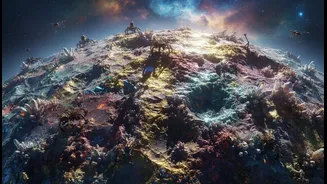
While the headline-grabbing monetary figure may be shrinking, the scientific value of Psyche is actually increasing. The discovery that it is more complex than first thought makes it an even more fascinating target. Is it a modified core? Is it a rubble pile of materials from different cosmic collisions? Did ferrovolcanism bring metal from its interior to the surface, covering a rocky mantle? Each new piece of data transforms Psyche from a simple curiosity into a complex world with a story to tell about the violent history of our solar system. The true wealth of the Psyche mission will not be measured in dollars, but in the fundamental knowledge it will provide about how planets are born and evolve.