


Visitors From Another Star
Our solar system is a busy place, full of asteroids and comets that have been orbiting our Sun for billions of years. But every so often, an object appears that’s just passing through. These are interstellar objects—comets or asteroids that were born
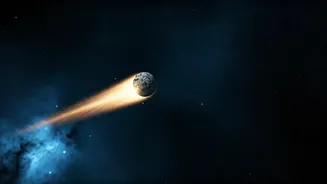
around a different star, ejected from their home system, and sent wandering through the galaxy. They are identified by their extreme speed and trajectory, which show they aren’t gravitationally bound to our Sun. For astronomers, these objects are more than just curiosities; they are physical samples from distant planetary systems, offering a direct look at the building blocks of worlds far beyond our own. Instead of just studying the light from a distant star, we get to see a piece of its neighbourhood up close.
The Famous First Visitors
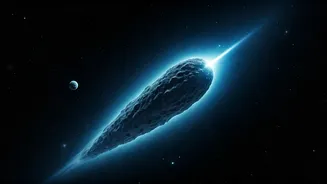
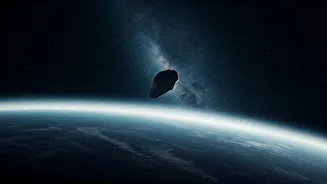
Until recently, these visitors were purely theoretical. That changed in 2017 with the detection of 1I/ʻOumuamua, a Hawaiian name meaning "messenger from afar arriving first". It was a puzzle from the start. It was strangely shaped, like a cigar or a flat pancake, and it sped up slightly as it left our system in a way that wasn't fully explained by the Sun's gravity, leading to intense scientific debate. Two years later, amateur astronomer Gennady Borisov spotted 2I/Borisov. This second visitor was more familiar, looking and acting like a typical comet with a fuzzy halo of gas and dust. But its chemical makeup was still distinct, with an unusually high amount of carbon monoxide. The differences between these first two guests showed that interstellar objects could be incredibly diverse.
A Brand New Messenger
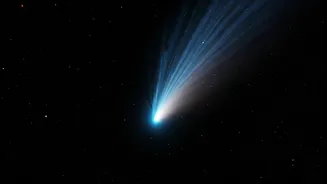
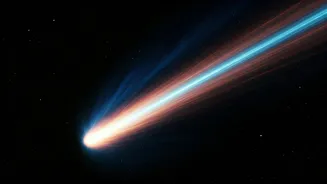
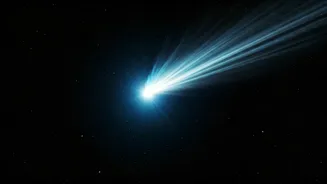
The conversation reignited in July 2025 with the discovery of a third visitor: 3I/ATLAS. Spotted by a telescope system designed to watch for potentially hazardous asteroids, this interstellar comet has provided a wealth of new information. Recent studies using the James Webb Space Telescope revealed that 3I/ATLAS has a unique chemical signature unlike anything in our solar system. It contains exceptionally high levels of a heavy form of hydrogen called deuterium. This suggests the comet formed in an extremely cold environment, possibly 10 to 12 billion years ago—making it potentially older than our own Sun and solar system. It’s a pristine relic from the early days of our galaxy, delivered right to our doorstep.
Why the Floodgates Are Opening
Finding three objects in a decade might not sound like a flood, but it’s just the beginning. The reason this science has “entered public chat” is the dawn of a new generation of astronomy. The Vera C. Rubin Observatory in Chile, which began its massive 10-year sky survey in mid-2026, is set to revolutionise the field. It will scan the entire visible sky every few nights with incredible depth and sensitivity. Scientists expect Rubin to go from spotting one rare object every few years to discovering dozens of interstellar visitors annually. This will transform the study from analysing quirky individuals into understanding a whole population, helping us learn how common or rare our solar system’s ingredients are across the galaxy.
Preparing to Say Hello
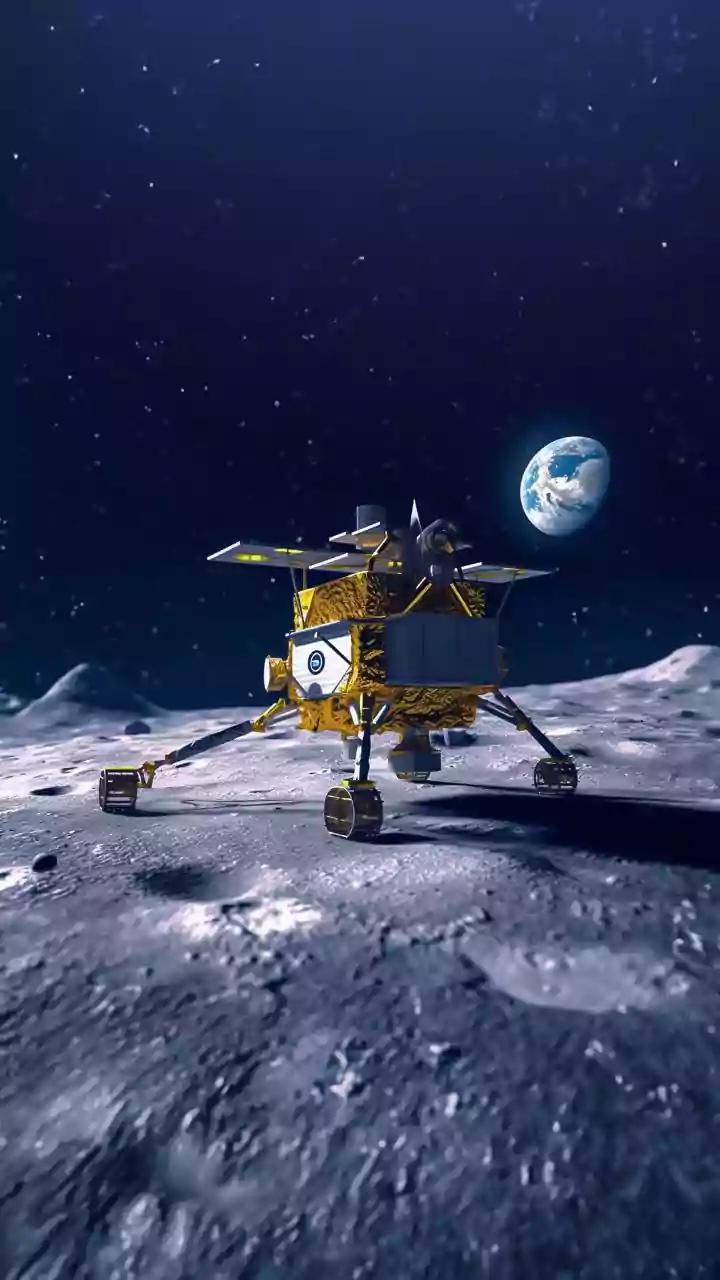
While observing these visitors from afar is one thing, getting an up-close look is the next frontier. That’s the goal of the European Space Agency’s Comet Interceptor mission, planned for launch around 2029. In a first-of-its-kind mission, the spacecraft won’t have a pre-decided target. Instead, it will travel to a stable point in space and wait, potentially for years. When a suitable target is found—ideally a pristine comet on its first trip into the inner solar system or, with luck, a new interstellar object—the spacecraft will be directed to fly by and study it in detail. Such a mission would give us our first-ever close-up measurements of a messenger from another star system.