



The Promise of the 'Goldilocks Zone'
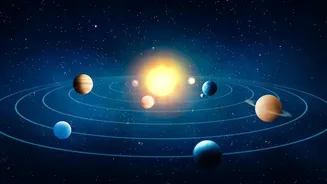
In the cosmic real estate market, location is everything. Astronomers have long focused their search for habitable worlds on a very specific neighbourhood around a star: the circumstellar habitable zone. More popularly known as the 'Goldilocks zone',
this is the orbital region where conditions are 'just right' for liquid water to exist on a planet's surface. Too close to the star, and water boils away. Too far, and it freezes into a global ice sheet. Earth, our vibrant blue marble, sits comfortably within our Sun's habitable zone, a fact that has guided our hunt for 'Earth 2.0' for decades. The logic is simple and compelling: find a rocky planet in this temperate zone, and you might just find a world capable of supporting life.
When Good Orbits Have Bad Atmospheres
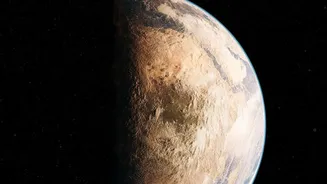
The problem with this Goldilocks logic is that it overlooks a planetary force more powerful than location: the atmosphere. Recent scientific models and observations are painting a more complex picture, showing that an orbit in the habitable zone is merely a starting point, not a guarantee of habitability. A planet can have the perfect address but be rendered utterly unlivable by its own air. The classic example in our own solar system is Venus. It orbits near the inner edge of the Sun's habitable zone, yet its surface is a scorching hellscape hot enough to melt lead. The culprit is its thick, toxic atmosphere, which has created a runaway greenhouse effect, trapping heat and sterilising the planet.
The Runaway Greenhouse Effect
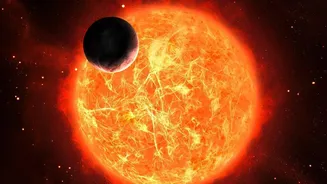
The concept of a 'runaway greenhouse' is key to understanding why a good orbit can go bad. It begins when a planet absorbs more energy from its star than it can radiate back into space. Water vapour, a potent natural greenhouse gas, can trigger a vicious cycle. As the planet warms slightly, more water evaporates from oceans, creating more water vapour in the atmosphere. This traps even more heat, which leads to more evaporation, and so on. Before long, this positive feedback loop becomes an unstoppable process. Sophisticated climate models have shown that for an Earth-like planet, even a small increase in solar radiation could be enough to trigger this irreversible transition, boiling the oceans and transforming a temperate world into a sterile, steam-dominated furnace.
Rethinking the Search for Life
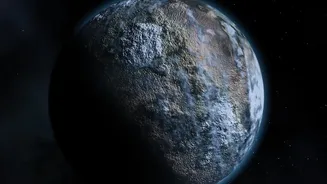
This understanding is forcing a major rethink in how we search for life. It's no longer enough to just find a rocky planet of the right size in the right orbit. The critical question now is: does it have an atmosphere, and if so, what kind? An atmosphere is essential for life, providing shielding from radiation and regulating climate. However, as we've seen, it can also be the agent of a planet's doom. This shift has pushed the characterisation of exoplanet atmospheres to the forefront of astronomy. Until very recently, detecting an atmosphere on a rocky, habitable-zone planet was a huge technological challenge. But in a major breakthrough in mid-2026, scientists confirmed the first such atmosphere around a super-Earth named LHS 1140 b, located 48 light-years away. This discovery, while exciting, highlights the next challenge: determining if an atmosphere is a life-sustaining blanket or a life-destroying pressure cooker.