






Master Your Grip: The Foundation of Safety
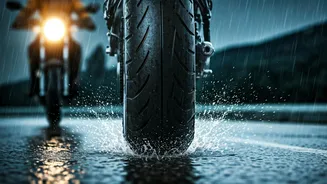
On wet roads, the connection between your tyres and the asphalt is everything. Traction is significantly reduced, meaning your bike will behave differently than it does in the dry. [2] The first step is a thorough tyre inspection. Ensure your tyres have adequate
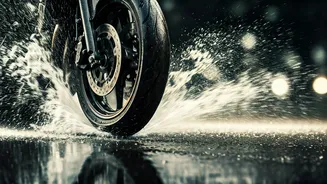
tread depth—at least 2-3mm—to effectively channel water away and prevent hydroplaning. [11] Worn or old, hardened rubber is a major risk and should be replaced before the season begins. [13] Maintaining the manufacturer-recommended tyre pressure is also crucial; despite a common myth, under-inflating tyres does not improve wet grip and can make handling unpredictable. [20] Beyond equipment, your riding style must adapt. All inputs—acceleration, braking, and steering—should be smooth and gradual. [15] Sudden movements can easily break traction and lead to a skid. Reduce your overall speed and significantly increase your following distance from other vehicles to compensate for longer braking distances on wet surfaces. [15]
See and Be Seen: The Critical Role of Lighting
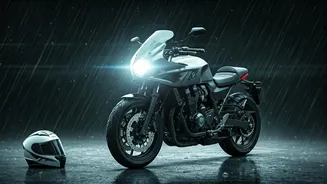
Visibility drops dramatically during a downpour, not just for you, but for every other driver on the road. Your bike's lighting system is your primary tool for safety in these conditions. Before riding, conduct a full check of your electricals. [4] Ensure your headlamp, tail lamp, brake lights, and indicators are all clean and functioning perfectly. [2] It is advisable to ride with your headlight on (on a low beam setting to avoid dazzling others) even during the day in overcast conditions, as this makes you much more visible to other road users. [13, 18] For those who frequently ride in heavy rain or on poorly lit highways, investing in auxiliary LED lights can be a worthwhile upgrade, significantly improving your ability to spot potholes and other hazards. [16] Finally, remember that clean lights are bright lights. Mud and grime can quickly coat your lamps, so make it a habit to wipe them down before every ride. [10]
Your Personal Armour: Essential Protective Gear
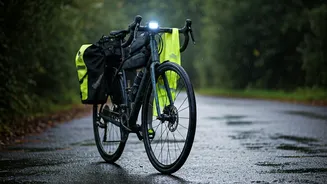
Staying dry is not just about comfort; it's about maintaining focus. A cold, wet rider is a distracted rider. [21] High-quality waterproof gear is non-negotiable. This starts with a good two-piece rain suit (jacket and pants) that fits snugly over your regular riding gear. [7, 8] Avoid loose-fitting ponchos, as they can flap in the wind and get caught in your bike's chain or wheels. [7] Your helmet should have a clean, scratch-free visor. Applying a water-repellent coating can help rain bead and roll off, while an anti-fog insert like a Pinlock is essential for preventing your visor from steaming up from the inside. [10, 17] Complete your protection with waterproof gloves that offer a good grip and waterproof boots to keep your feet dry and firmly on the pegs. [7] Gear with high-visibility colours or reflective panels is also highly recommended to make you stand out in gloomy conditions. [5, 17]
Beyond the Basics: Crucial Maintenance Checks
The monsoon is harsh on a motorcycle's mechanical components. Water and grit accelerate wear and tear, making regular maintenance more important than ever. Your brakes are critical; wet conditions can reduce their effectiveness, so inspect brake pads and fluid levels regularly. [3, 9] The chain is another vulnerable part. Rain washes away lubricant, leaving it exposed to mud and rust. Clean and lubricate your chain more frequently during the monsoon to ensure smooth performance. [4, 9] Exposed electrical wiring should be checked and insulated properly to prevent short circuits. [6] After riding in the rain, take a few minutes to wash off mud and dry your bike, paying special attention to the chain and metal components to prevent rust. [9, 15] If possible, park your motorcycle in a covered area to protect it from constant exposure to moisture. [6, 11]