





A New Era for Low-Earth Orbit
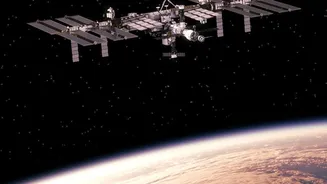
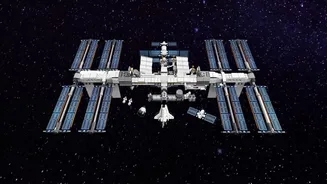
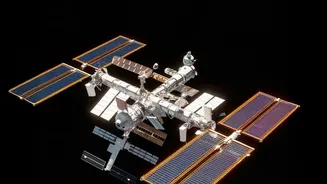
For over two decades, the International Space Station (ISS) has been the sole human outpost in low-Earth orbit. But with its planned decommissioning around 2030, a fundamental shift is underway. NASA is moving from being the owner and operator of its own orbital
real estate to becoming just one of many customers in a new, bustling marketplace. This strategic pivot has ignited a race among private companies to build the next generation of space stations. Funded in part by NASA's Commercial Low-Earth Orbit Destinations (CLD) program, these ventures are not just replacing the ISS; they are completely rethinking the architecture of living and working in space.
Axiom Space: Building on a Legacy
Axiom Space is taking a uniquely incremental approach. Instead of building a standalone station from day one, its strategy is to first attach its new modules to the ISS itself. The company plans to launch its first module, providing power and thermal control, followed by habitation modules that will expand the station's living and working quarters. Once this segment is complete and self-sufficient, and just before the ISS is retired, the Axiom Station will detach and become a free-flying commercial platform. The design of its modules reflects lessons learned from the ISS, but with a significant upgrade in user experience. Featuring larger windows for breathtaking Earth views and crew quarters with interiors conceived by famed designer Philippe Starck, Axiom aims to create an environment suitable for professional astronauts, private space explorers, and in-space manufacturing.
Orbital Reef: The 'Business Park' in Space
In contrast to Axiom’s approach, the team of Blue Origin and Sierra Space envisions their station, Orbital Reef, as a "mixed-use business park" in orbit. The architecture is designed from the ground up to be a decentralized and scalable platform for a wide variety of clients, including national space agencies, private companies, and space tourists. The core idea is an open system that allows different customers to add their own modules and capabilities over time, much like a terrestrial business park. A key architectural feature is the Large Integrated Flexible Environment (LIFE) module from Sierra Space, an inflatable habitat that can be packed into a rocket fairing and then expand in space to offer a vast interior volume. This design allows for a larger and more versatile workspace than traditional rigid modules, supporting a crew of up to ten people and a diverse range of activities from scientific research to industrial production.
Starlab: A Science Hub in a Single Launch
The joint venture between Voyager Space and aerospace giant Airbus is taking yet another path with Starlab. Their architectural innovation lies in simplicity and speed of deployment. The plan is to launch the entire station—a single, massive, rigid module—on one super heavy-lift rocket, such as SpaceX's Starship. This monolithic approach bypasses the complexities of on-orbit assembly that have defined previous station construction. While the team initially explored inflatable technology, they ultimately opted for a large metallic structure, leveraging Airbus's extensive experience with modules like the Columbus Laboratory on the ISS. Starlab is being designed as a premier destination for science, with a layout that includes a dedicated laboratory, habitation deck, and utility bay, effectively offering the research capacity of the entire ISS within a single, state-of-the-art module.