




The Quest for Fundamental Answers
Pushing past the Moon allows us to tackle some of humanity's most profound questions. Missions to Mars, like those by NASA's rovers, have uncovered evidence of ancient water, hinting that the Red Planet may have once supported life. The MAVEN orbiter
helped scientists understand how Mars lost its atmosphere over billions of years, transforming from a potentially habitable world to the barren planet we see today. Farther afield, missions to Jupiter, such as Galileo and Juno, have revolutionised our understanding of gas giants and their moons. Galileo found strong evidence of a global ocean of liquid water under the icy shell of Europa, and that Ganymede has its own magnetic field—a first for any moon. These missions aren't just planetary sightseeing; they are deep, scientific investigations into the origins of solar systems and the potential for life elsewhere in the cosmos.
An Engine for Innovation on Earth
The extreme challenges of deep space exploration force us to invent revolutionary technologies that have tangible benefits back on Earth. To explore space, NASA and other agencies have pioneered countless innovations that are now part of our daily lives. These are often called 'spin-offs'. Well-known examples include memory foam, originally developed for pilot cushioning, and the CMOS image sensors used in smartphone cameras, which were first created for miniature cameras on interplanetary missions. Other innovations include scratch-resistant lenses, cordless tools, and advancements in medical imaging like MRI. The technologies developed for keeping astronauts alive in harsh environments have led to breakthroughs in water purification systems, medical diagnostics, and even fire-resistant materials for public safety. This push for innovation creates jobs, boosts the economy, and improves our quality of life in ways we often take for granted.
New Economic Frontiers
Looking beyond the Moon also opens up new economic possibilities that could redefine our future. The concept of asteroid mining, once science fiction, is becoming a serious consideration. Asteroids are rich in valuable resources, including platinum group metals, nickel, and cobalt, sometimes in concentrations far higher than terrestrial mines. As Earth's resources dwindle and demand from new industries like AI and electric vehicles grows, space-based resources could become crucial. Economic models suggest that even the 10 most accessible asteroids could hold around $1.5 trillion in resources. Furthermore, the ability to use resources found in space—a concept called In-Situ Resource Utilization (ISRU)—is key to sustainable, long-term exploration. Being able to generate fuel and oxygen on Mars or the Moon, for instance, dramatically reduces the cost and complexity of missions.
India's Journey into Deep Space
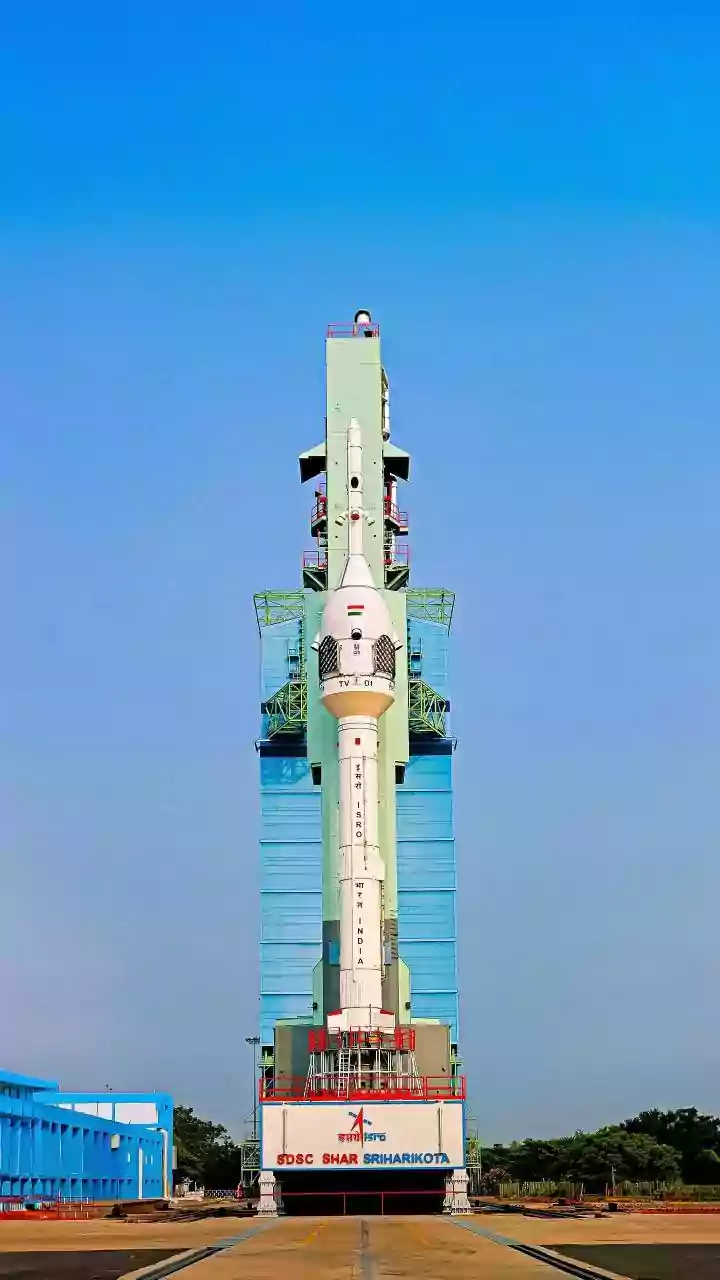
For India, looking beyond the Moon is a cornerstone of its national ambition. Following the historic success of Chandrayaan-3, ISRO is planning a suite of ambitious deep space missions. The upcoming Gaganyaan mission will demonstrate India's human spaceflight capability, making it the fourth country to achieve this feat independently. Looking further, India has set its sights on a Venus Orbiter Mission, slated for around 2028, to study the planet's hostile atmosphere. There are also plans for Chandrayaan-4, a sample-return mission, and a collaborative lunar polar exploration mission with Japan (LUPEX). These projects are part of a grander 'Space Vision 2047,' which includes building an Indian space station (Bharatiya Antriksh Station) by 2035 and landing an Indian astronaut on the Moon by 2040. This strategy is not just about exploration, but also about building a robust space economy and inspiring the next generation.
A Unifying Force for Humanity
In an often-divided world, space exploration serves as a powerful, unifying endeavor. The International Space Station (ISS) is a prime example of successful global cooperation, involving a partnership of 15 countries for over two decades. This spirit of collaboration continues with initiatives like the Artemis Accords, which establish shared principles for the next era of exploration. Ambitious projects, such as the NASA-ISRO Synthetic Aperture Radar (NISAR) satellite, showcase how international partnerships can address global challenges like climate change. By working together towards common goals in the cosmos, nations build trust and diplomatic ties on Earth. This shared journey pushes the boundaries of human achievement and provides a hopeful vision for the future, reminding us of what we can accomplish when we are united.