



Beyond the Breathtaking Pictures
It’s easy to be mesmerized by the James Webb Space Telescope's visual masterpieces. We’ve seen galaxies merging 12 billion years ago and baby stars sparking to life in cosmic dust clouds. These images are invaluable, offering a fresh, crisp look at the universe's
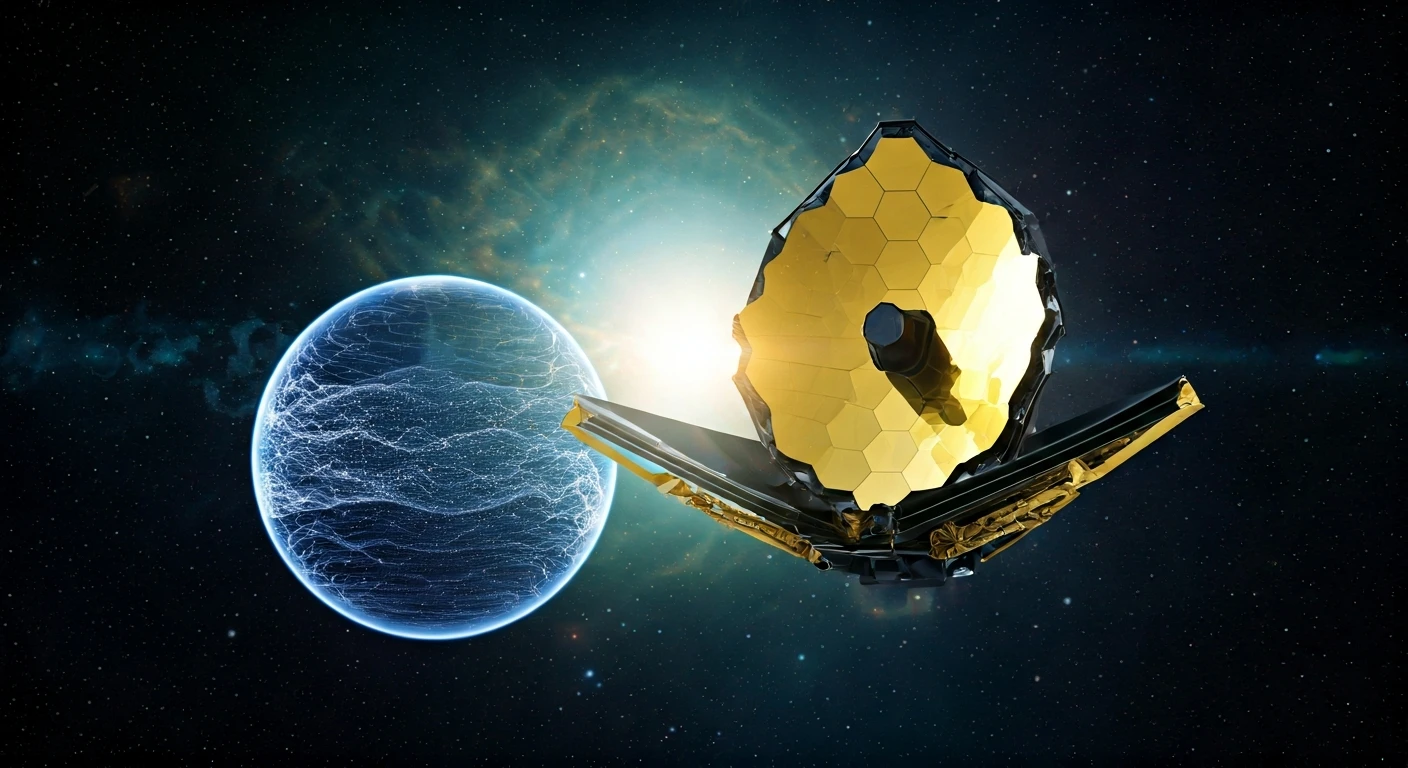
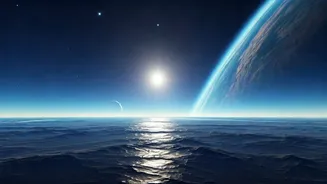
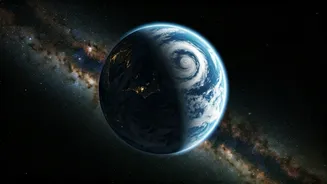
grand architecture. They capture the public imagination and rightly so, representing a monumental leap in astronomical imaging. Yet, to focus only on these cosmic portraits is to miss the telescope's most revolutionary work. The true narrative, the one that will redefine our place in the cosmos, isn't being painted in vibrant nebulas but written in the faint lines of light that have passed through the atmospheres of distant planets.
Decoding Alien Air
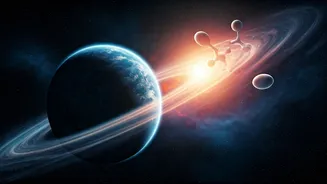
The game-changing technique is called transmission spectroscopy. When an exoplanet passes in front of its host star from our perspective, a tiny fraction of the starlight filters through the planet's atmosphere. The gases in that atmosphere absorb specific wavelengths, or colors, of light, leaving a unique chemical fingerprint in the light that reaches Webb's sensitive instruments. By analyzing this 'absorption spectrum,' astronomers can identify the molecules present, such as water, methane, and carbon dioxide. This process is like identifying the ingredients of a cake by seeing which colors are missing from a rainbow that has passed through its steam. This method is our primary tool for studying the conditions on these faraway worlds.
The Hunt for Habitability
Why does this matter? Because these chemical fingerprints can tell us if a planet is potentially habitable. The presence of carbon-based molecules and water vapor is a crucial first step. For example, JWST's early observations confirmed water vapor on the gas giant WASP-96 b and, for the first time on any exoplanet, detected definitive evidence of carbon dioxide on WASP-39 b. More recently, in a stunning look into our own solar system's future, Webb detected an atmosphere containing methane around WD 1856 b, a Jupiter-sized planet orbiting a dead star. This was the first time an atmosphere was seen on a planet transiting a white dwarf, giving us a glimpse of what can survive a star's death. Each detection helps piece together the puzzle of planetary formation and survival.
Whispers of Biological Life?
The most tantalizing clues are biosignatures—gases that, on Earth, are only produced by life. Recently, JWST found compelling evidence of dimethyl sulfide (DMS) in the atmosphere of K2-18b, a planet 124 light-years away that exists in its star's habitable zone. On our world, DMS is overwhelmingly produced by marine life like phytoplankton. While this is not a definitive discovery of life, it is the strongest hint to date. Scientists remain cautious, as the signal needs further verification and there could be unknown geological processes at play. However, finding such a molecule forces us to consider that the conditions for life might exist elsewhere, a transformational moment in the search.
The Unseen Revolution
The telescope is also revealing how complex and varied planetary weather can be. On WASP-94A b, Webb observed a daily cycle where clouds made of rock-like minerals form in the morning and completely vanish by evening. And on rocky super-Earths, while no atmospheres have been definitively detected yet, the data suggests many are either bare rock or have very thin atmospheres, reshaping theories on how planets retain their volatile gases. These findings, while less visually spectacular than a swirling galaxy, are fundamental. They are the hard data that will inform the next generation of observatories and refine our search for a true Earth-twin.