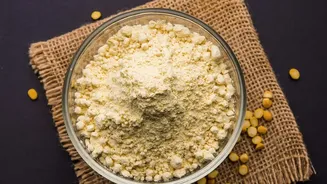





The aroma of besan roasting in ghee is pure nostalgia, but the fear of burning it is real. That bitter taste or raw-flour stickiness can ruin a batch of Besan Ladoo. Here’s how to get it right and achieve that perfect, soft, melt-in-your-mouth sweet.
The Golden Rule: Low Flame and Patience
The single most critical step in making perfect Besan Ladoo is roasting the gram flour (besan). Rushing this process on high heat is the number one mistake. High temperatures will brown the outside of the flour granules while the inside remains raw, resulting in a ladoo that tastes both bitter from scorching and unpleasantly pasty. To avoid this, commit to a 'low and slow' approach. Use a heavy-bottomed pan or kadai, which distributes heat more evenly and reduces the risk of burning. The entire roasting process can take anywhere from 20 to 45 minutes, depending on the quantity of flour and the pan's thickness. Your patience will be rewarded with a deep, nutty flavour, which is the hallmark of a great ladoo.
Ghee is Your Roasting Partner
Ghee does more than just add richness; it’s essential for even cooking. It helps coat each particle of besan, ensuring it roasts uniformly and preventing it from sticking and burning. There are two popular methods: roasting the besan in all the ghee from the start, or dry-roasting the besan first and adding melted ghee later. Both work, but starting with ghee can help you manage the mixture better. A good rule of thumb is to start with about half the required ghee, adding more as you go if the mixture seems too dry or sandy. As you roast, the mixture will first look lumpy and thick, then transform into a looser, more liquid paste as the besan cooks and begins to release the ghee. This 'ghee separating' from the flour is a key sign that you are on the right track.
Trust Your Senses, Not Just the Clock
While recipes provide time estimates, the true indicators of perfectly roasted besan are its colour and aroma. At the beginning, the besan will have a raw, slightly 'beany' smell. As it cooks, this will transform into a wonderfully nutty and sweet fragrance that fills the kitchen. Visually, the colour will change from a pale yellow to a uniform, light golden-brown. It's crucial to stir continuously, especially towards the end, to ensure an even colour and prevent any part from getting too dark. Once you achieve that perfect aroma and colour, take the pan off the heat immediately but continue stirring for another minute, as the residual heat in the pan can still cook and burn the flour.
The Cool-Down is Crucial
Once your besan is perfectly roasted, the next critical step is cooling. Transfer the hot mixture to a separate bowl or plate to stop the cooking process. You must let it cool until it is just lukewarm or warm to the touch before adding the sugar. If you add sugar to a piping hot mixture, the sugar will melt and turn the ladoo mixture into a runny, sticky mess that is impossible to shape. This mistake is a common reason for ladoos that are too flat or hard. Letting the mixture cool properly ensures the sugar blends in perfectly to create a soft, slightly grainy texture.
Troubleshooting Common Ladoo Problems
Even with careful steps, things can sometimes go slightly awry. If your mixture is too dry and crumbly to form ladoos, it means you need a little more ghee. Add a teaspoon or two of warm, melted ghee to help it bind. If the opposite happens and your mixture is too runny or soft, it's likely due to too much ghee. In this case, you can refrigerate the mixture for 10–20 minutes to help the ghee solidify, which should make it firm enough to shape. If the ladoo sticks to the roof of your mouth, it's often a sign that the besan was undercooked or too finely milled. Using a slightly coarser variety of besan, sometimes sold as 'ladoo besan', can help create a more desirable, granular texture.