



What is Chandrayaan-4?
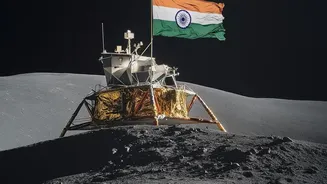
Chandrayaan-4 is India's first lunar sample-return mission. Unlike its predecessor, which conducted experiments on the lunar surface, this mission's primary objective is to land on the Moon, collect soil and rock samples, and transport them safely back
to Earth for detailed scientific analysis. If successful, India will join an elite club of nations—the United States, the former Soviet Union, and China—that have accomplished this complex feat. The mission is a key part of India's long-term space vision, which includes establishing a space station by 2035 and landing an Indian astronaut on the Moon by 2040.
A Quantum Leap in Complexity
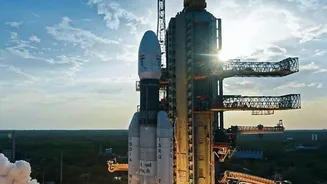
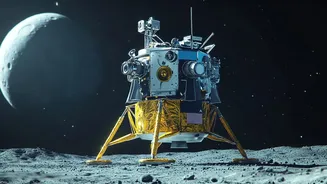
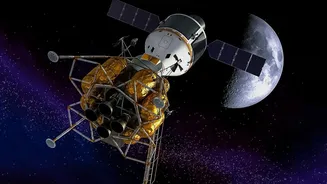
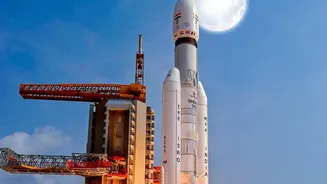
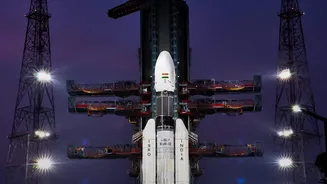
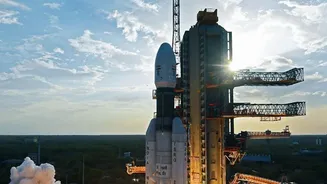
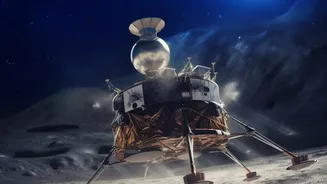
A sample-return mission is exponentially more difficult than a one-way landing. While Chandrayaan-3 consisted of three main modules, Chandrayaan-4 is a far more complex spacecraft comprised of five separate modules: a Propulsion Module, a Descender Module (the lander), an Ascender Module, a Transfer Module, and a Re-entry Module. This intricate design requires not one, but two separate launches using India's heaviest rocket, the LVM3. The different components will then need to perform a series of autonomous rendezvous and docking manoeuvres in Earth's orbit before embarking on their journey to the Moon.
The Multi-Stage Journey Home
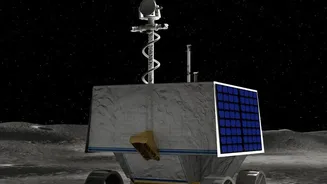
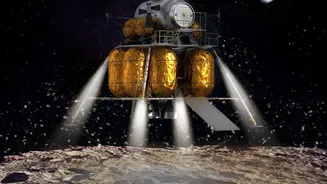
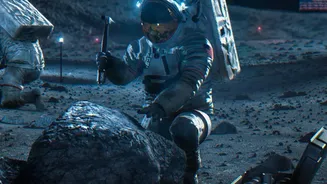
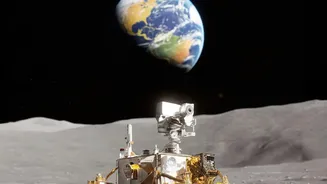
The mission plan is a testament to precision engineering. After landing near the lunar south pole, a robotic arm and drilling mechanism will collect samples. The Ascender module, carrying these precious samples, will then lift off from the lunar surface—using the lander as a launchpad—and dock with the Transfer and Re-entry modules waiting in lunar orbit. This is another critical, high-stakes manoeuvre. The samples will be transferred to the Re-entry module, which will then detach and begin its voyage back to Earth, designed to withstand the fiery heat of atmospheric re-entry before delivering its cargo.
Why Bring Back Moon Dust and Ice?
The scientific payoff for this enormous effort is immense. Studying pristine lunar samples in sophisticated labs on Earth allows for analysis far beyond what any robotic rover can perform. These samples hold clues to the Moon's origin, the history of our solar system, and the intense period of asteroid impacts known as the Late Heavy Bombardment. More importantly, the mission is targeting the south pole, where permanently shadowed craters are believed to hold water ice. Analyzing this ice is crucial for understanding the potential for in-situ resource utilization (ISRU)—the idea of using lunar resources like water to produce oxygen and rocket fuel, which is essential for future long-term human presence on the Moon.
The Ambitious Timeline
ISRO has been working on the concepts and technologies for this mission, with a potential launch target around 2028. The mission's complexity, particularly the need for two separate heavy-lift launches in quick succession and multiple in-orbit docking procedures, presents significant logistical and technical challenges. To practice these crucial docking capabilities, ISRO is planning a dedicated test mission called SPADEX (Space Docking Experiment). Every step of this mission, from launch to landing and back again, will test the limits of India's spacefaring capabilities and pave the way for even more ambitious human and robotic exploration in the decades to come.