






What is the 10% Rule?
The '10% rule' in the context of Provident Fund withdrawals refers to the standard rate for Tax Deducted at Source (TDS). It is not a new fee but rather an advance tax collection mechanism governed by Section 192A of the Income Tax Act. The Employees’
Provident Fund Organisation (EPFO) is required to deduct this tax under specific conditions before paying out the withdrawal amount to a member. This rule is designed to discourage premature withdrawals and ensure tax compliance on funds that might become taxable. It's important to note that this is a deduction at source, not the final tax liability, which depends on your overall income and tax slab for the year.
When Does This Deduction Apply?
The 10% TDS rule is not applied to every withdrawal. It is triggered only when two specific conditions are met simultaneously. First, the withdrawal must be made before completing five years of continuous service. Second, the withdrawal amount must be ₹50,000 or more. If your service is less than five years but the amount is below ₹50,000, no TDS is deducted. Similarly, if you withdraw any amount after completing five years of continuous service, the entire corpus is generally tax-free, and no TDS applies. 'Continuous service' can include the tenure with previous employers, provided you transferred your PF balance to the new employer instead of withdrawing it.
Partial Withdrawals and TDS
The headline specifically mentions partial withdrawals, which can cause confusion. Generally, partial withdrawals or advances taken for specific purposes allowed under EPF rules (like medical emergencies, education, or housing) while you are still employed are not treated as a final, taxable settlement. Therefore, TDS under Section 192A typically does not apply to these in-service advances. The 10% TDS rule primarily comes into play for premature final settlements—for instance, when you leave a job before completing five years and decide to withdraw the entire balance instead of transferring it.
The Crucial Role of Your PAN Card
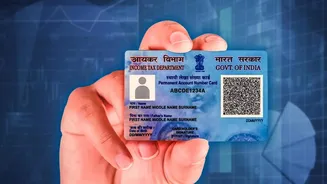
Providing your Permanent Account Number (PAN) is critical when making a PF withdrawal that falls under the TDS criteria. If your PAN is correctly linked to your EPF account, the TDS is deducted at the standard rate of 10%. However, if you fail to provide a valid PAN, the deduction rate can jump significantly. As of recent updates, the rate without PAN is 20%. Ensuring your PAN is seeded and verified with your Universal Account Number (UAN) is a simple step that can save you from a much higher tax deduction.
Can You Avoid This Deduction?
Yes, in certain situations, you can avoid TDS even if you are withdrawing more than ₹50,000 before five years of service. This is possible if your total income for the financial year (including the PF withdrawal amount) is below the basic tax exemption limit. To claim this exemption, you must submit a self-declaration form to the EPFO at the time of the withdrawal claim. Individuals below 60 years of age submit Form 15G, while senior citizens (60 and above) submit Form 15H. Note that starting from the 2026-27 financial year, a new consolidated Form 121 will replace Forms 15G and 15H for this purpose.