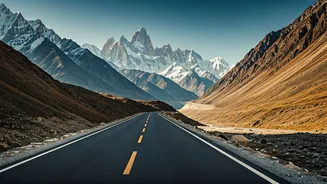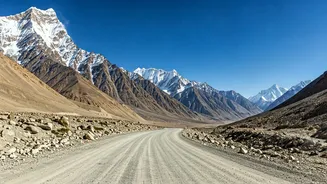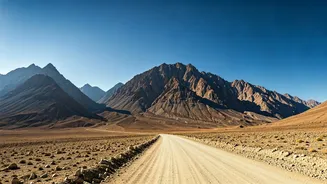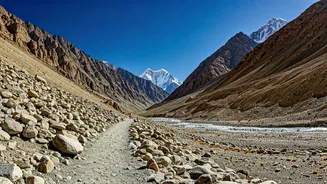





The Allure of the High Passes
First, let's address why Ladakh has become a pilgrimage for road-trippers. It’s more than just a destination; it's a rite of passage. The journey through barren moonscapes, azure lakes, and the world's highest motorable passes offers an unparalleled sense
of freedom and accomplishment. The region’s stark beauty, Tibetan-Buddhist culture, and the sheer challenge of the drive have created a perfect storm of wanderlust, amplified by social media. Every biker, driver, and backpacker wants to claim their 'I conquered Khardung La' moment. This boom in interest has fueled an explosion of online guides, vlogs, and itineraries, turning a once-niche adventure into a mainstream obsession.
Rule Number One: Respect the Altitude
If you remember only one thing from any guide, let it be this: acclimatisation is not optional. Acute Mountain Sickness (AMS) is a serious risk that can ruin your trip, or worse. The single most important decision you'll make is your route. The Manali-Leh highway, while breathtaking, involves a rapid ascent, increasing AMS risk. The smarter, safer choice for first-timers is the Srinagar-Leh highway. It offers a much more gradual ascent, allowing your body to adjust. Plan for at least two full days of rest and acclimatisation in Leh (at 11,500 ft) before ascending to higher altitudes like Pangong Tso or Khardung La. Walk around, drink water, and avoid strenuous activity. This isn't a race.
Choosing Your Chariot: Bike vs. Car
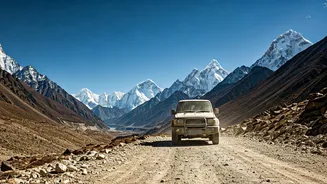
The classic image is a Royal Enfield against a mountain backdrop, but your choice of vehicle depends on your comfort, group size, and experience. For bikers, a well-serviced machine with good torque (like a Himalayan or an RE 350/500) is crucial. You must be an experienced rider, comfortable with rough terrain and unpredictable weather. For those in cars, a high-ground-clearance SUV is ideal, with 4x4 offering peace of mind for water crossings and tricky sections, especially early in the season. Many travellers now opt to hire a local taxi with an experienced Ladakhi driver, which is often the wisest choice. They know the roads, the weather patterns, and how to handle any mechanical issues.
The Permit Puzzle, Simplified
Yes, you need permits. To visit 'inner line' areas like Nubra Valley, Pangong Tso, and Tso Moriri, all travellers (including Indian citizens) need an Inner Line Permit (ILP). Foreign nationals require a Protected Area Permit (PAP). The good news is that the process has been streamlined. You can now apply for the ILP online through the Leh administration's official portal before your trip. You'll need to upload ID proof and pay a nominal fee. You can then print the permit or have your hotel/guesthouse in Leh help you with the final stamping. Don't leave this for the last minute, and always carry multiple physical copies of your permit and ID with you.
A Smarter Itinerary
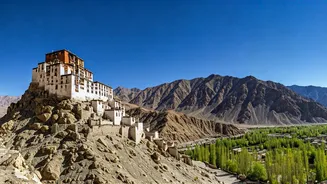
The biggest mistake travellers make is trying to cram too much into too little time. A rushed itinerary is a recipe for exhaustion and altitude sickness. A well-paced 10-12 day plan is a good starting point. For example: Fly or drive into Leh (Day 1-2: Acclimatise). Explore local monasteries (Day 3). Drive to Nubra Valley via Khardung La, stay the night (Day 4). Return to Leh (Day 5). Drive to Pangong Tso, stay the night (Day 6). Return to Leh (Day 7). This allows your body to adjust while still covering the main highlights. The key is to build in buffer days for rest or unforeseen delays like landslides. Flexibility is your best friend.
Packing Beyond the Basics
Layering is essential. You'll experience freezing cold and harsh sun on the same day. Pack thermal wear, a fleece jacket, and a windproof/waterproof outer shell. But also think about the non-clothing essentials. Cash is king, as ATMs are scarce and often empty outside Leh. A powerful power bank is a lifesaver, as electricity can be erratic. Sunscreen (SPF 50+), sunglasses, and a wide-brimmed hat are non-negotiable due to the high-altitude sun. Most importantly, a basic medical kit with medication for headaches, stomach issues, and AMS (like Diamox, after consulting your doctor) is critical. Download offline maps for your entire route, as mobile connectivity will be zero in most places.