




The Moon's Next Act
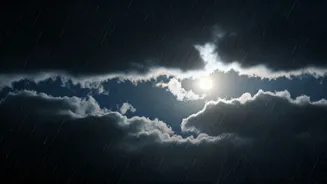
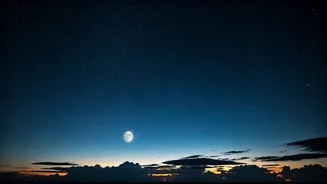
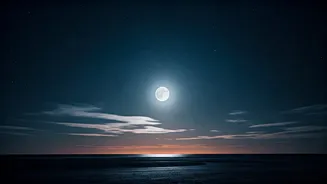
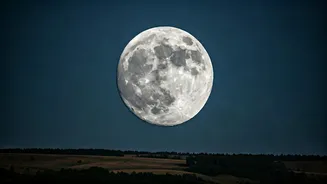
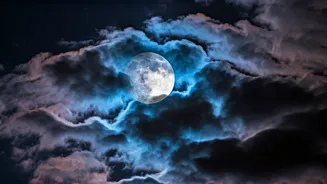
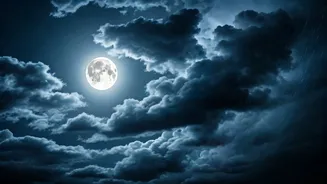
June’s full moon, popularly known as the Strawberry Moon, reached its peak illumination around June 29 and 30. It earned its name not from its colour, but from the short strawberry harvesting season observed by Indigenous North American tribes. This year,
it appeared particularly low and large on the horizon for those in the Northern Hemisphere, a special sight as it occurred shortly after the summer solstice. But even as it wanes, the moon remains a spectacle. In the days following its peak, the bright gibbous moon still dominates the sky, and its bright light can wash out fainter stars. This makes it a perfect time to focus on brighter celestial objects that can hold their own against the lunar glow.
A Parade of Planets
The early summer evening sky is hosting a delightful gathering of planets. Shortly after sunset, you can look to the west and west-northwest to spot some of our solar system neighbours. Venus and Jupiter have been putting on a show, appearing close together throughout June. Venus is unmistakably brilliant, often the first point of light to appear in the twilight. Jupiter, though dimmer than Venus, still shines with a steady, bright light. Mercury has also been making an appearance, though it’s more of a challenge as it sits very low on the horizon and can be lost in the afterglow of sunset. Having the crescent moon join this planetary alignment mid-month created a stunning visual guide for skywatchers.
The Summer Triangle Takes Centre Stage
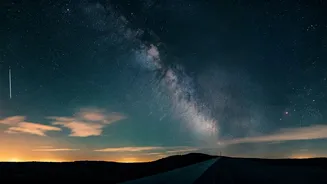
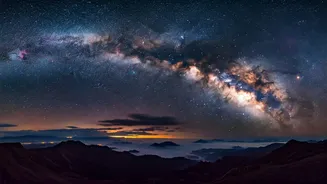
Beyond the planets, a famous star pattern, or asterism, is making its prime-time appearance: the Summer Triangle. This giant triangle is not a constellation itself but is formed by three brilliant stars from three separate constellations. These are Vega in the constellation Lyra (the Harp), Deneb in Cygnus (the Swan), and Altair in Aquila (the Eagle). You can find it rising in the eastern sky on June and July evenings. Vega is the brightest of the three and a great starting point. The trio is so bright that the pattern is visible even from light-polluted cities, making it one of the most accessible and rewarding targets for summer stargazers. On a clear, moonless night away from city lights, you might even see the faint, misty band of the Milky Way passing right through the triangle.
Navigating the Monsoon Challenge
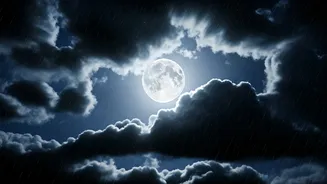
For skywatchers in India, the biggest hurdle at this time of year is the monsoon. Late June marks the arrival of seasonal rains and cloud cover across many parts of the country, which can easily obstruct the view. This is where the “weather luck” mentioned in the headline comes in. Success depends on monitoring local weather forecasts closely and seizing moments of clear sky. These clearings can be brief, sometimes lasting just an hour or two between spells of rain, but they offer a precious window to the cosmos. Patience is key; even if one night is completely overcast, the next might offer a temporary break in the clouds. Planning around these weather patterns is essential for any successful stargazing attempt during this season.
Your Skywatching Toolkit
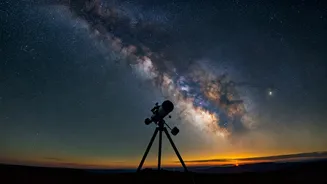
You don’t need expensive equipment to enjoy the night sky. Many sights, like the Summer Triangle and the bright planets, are easily visible with the naked eye. However, a simple pair of binoculars can dramatically enhance the view, revealing the moons of Jupiter or the craters on our own Moon. To get the best experience, find a location away from bright city lights with a clear view of the horizon. Give your eyes about 15 to 20 minutes to fully adapt to the darkness; this will allow you to see much fainter stars. Using a red flashlight is recommended if you need light, as it won't spoil your night vision like a white light will. Finally, stargazing apps on your smartphone can act as an interactive map to help you identify what you’re looking at with ease.