





The Silent Killers in Our Seas
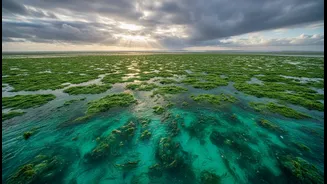
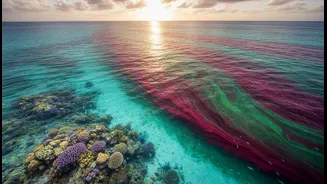
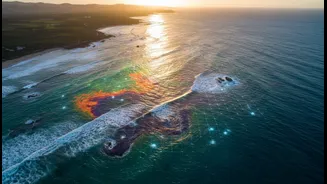
Harmful algal blooms (HABs), sometimes known as 'red tides' or 'brown tides', occur when colonies of microscopic algae grow out of control. While many algal species are harmless and form the base of the marine food web, certain species produce powerful
toxins or grow so dense they create devastating effects. When these massive blooms die and decompose, the process consumes enormous amounts of oxygen in the water, creating hypoxic (low-oxygen) or anoxic (no-oxygen) zones where fish and other marine animals cannot survive. This leads to mass mortality events that can wipe out local populations of fish, invertebrates, and even marine mammals. Recent events, like a catastrophic bloom in South Australia that killed an estimated one million marine animals, underscore their destructive power.
The Problem with a Bird's-Eye View
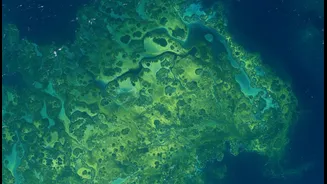
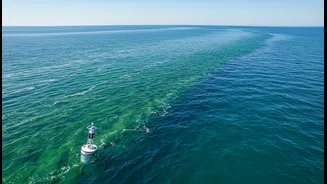
For years, the primary tool for tracking large-scale algal blooms has been satellite imagery. This technology allows scientists to see the vast green or brown swirls from space, providing critical data on the size, spread, and duration of a bloom. However, this method has significant limitations. Satellites can show where a bloom is, but they cannot reliably identify the specific species of algae involved or whether it is producing toxins. Furthermore, satellite sensors can only see the surface layer of the water, potentially missing dense algal populations lurking below. This means that while we can see the bloom, we can't accurately assess the specific threat it poses to the ecosystem from orbit alone.
Why Species-Level Detail Is Crucial
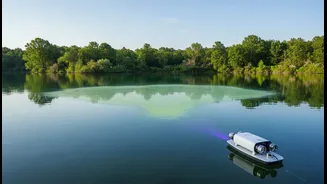
The push from scientists is to move beyond simply mapping the bloom's footprint to understanding its specific biological impact. This is where species-level monitoring comes in. Not all algae are created equal. For example, the dinoflagellate Noctiluca scintillans, which creates stunning bioluminescent tides, has become a dominant and disruptive presence in the Arabian Sea. While not directly toxic, it outcompetes the foundational plankton that support fisheries and can create oxygen-starved zones when it decays, threatening fish populations. In contrast, species like Karenia brevis produce potent neurotoxins that directly kill fish, birds, and marine mammals. Knowing which species is present is the difference between tracking a nuisance and preparing for an ecological disaster. Traditional microscopy and newer eDNA techniques—which detect genetic markers in water samples—are crucial for this granular identification.
A Targeted Approach to Protection
Species-level monitoring is about targeted intelligence. It involves identifying 'indicator species'—organisms whose presence, absence, or condition reflects the specific health of an ecosystem. By tracking not just the algae but also the specific fish, invertebrates, and plankton affected, scientists can build a much clearer picture of the bloom's impact. This data allows for more precise risk assessments. For example, early detection of a species known to produce toxins harmful to shellfish can trigger timely harvesting closures, protecting human health and the seafood industry. This approach shifts the focus from a reactive, broad-stroke response to a proactive, targeted strategy, helping managers protect vulnerable species and critical economic resources like fisheries and aquaculture.
The Stakes for India's Coastline
For India, with its extensive coastline and reliance on marine resources, this shift in thinking is particularly urgent. The Arabian Sea is already witnessing a dramatic ecosystem shift, with winter blooms of Noctiluca scintillans replacing the historically dominant diatoms that form the base of the marine food web. This change threatens the fisheries that sustain millions of people along India's west coast. The Indian National Centre for Ocean Information Services (INCOIS) already tracks these blooms, but a deeper, species-focused approach is needed to understand their full impact. By integrating detailed, on-the-ground biological data with large-scale satellite surveillance, India can better forecast ecological tipping points, protect its immense marine biodiversity, and safeguard the livelihoods of its coastal communities.