


A Discovery in the Dark
The story of 3I/ATLAS began as a faint blip on a screen. On July 1, 2025, a robotic telescope in Chile, part of the Asteroid Terrestrial-impact Last Alert System (ATLAS), flagged a previously unknown object moving across the night sky. The system, funded
by NASA, is designed to scan the heavens for asteroids that might pose a threat to Earth. But this object was different. When astronomers calculated its path, they realized it was moving too fast to be gravitationally bound to our sun. Its trajectory was a hyperbola, an open-ended curve proving it was not a member of our solar family but a visitor from the vast expanse of interstellar space. Following protocol, it was designated 3I/ATLAS: the third (3) interstellar (I) object ever discovered, found by the ATLAS survey.
Not Our First Interstellar Visitor
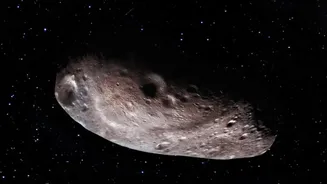
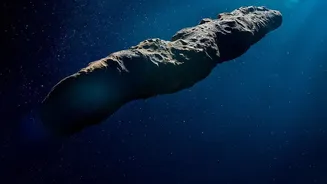
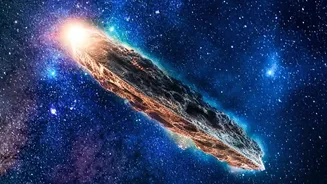
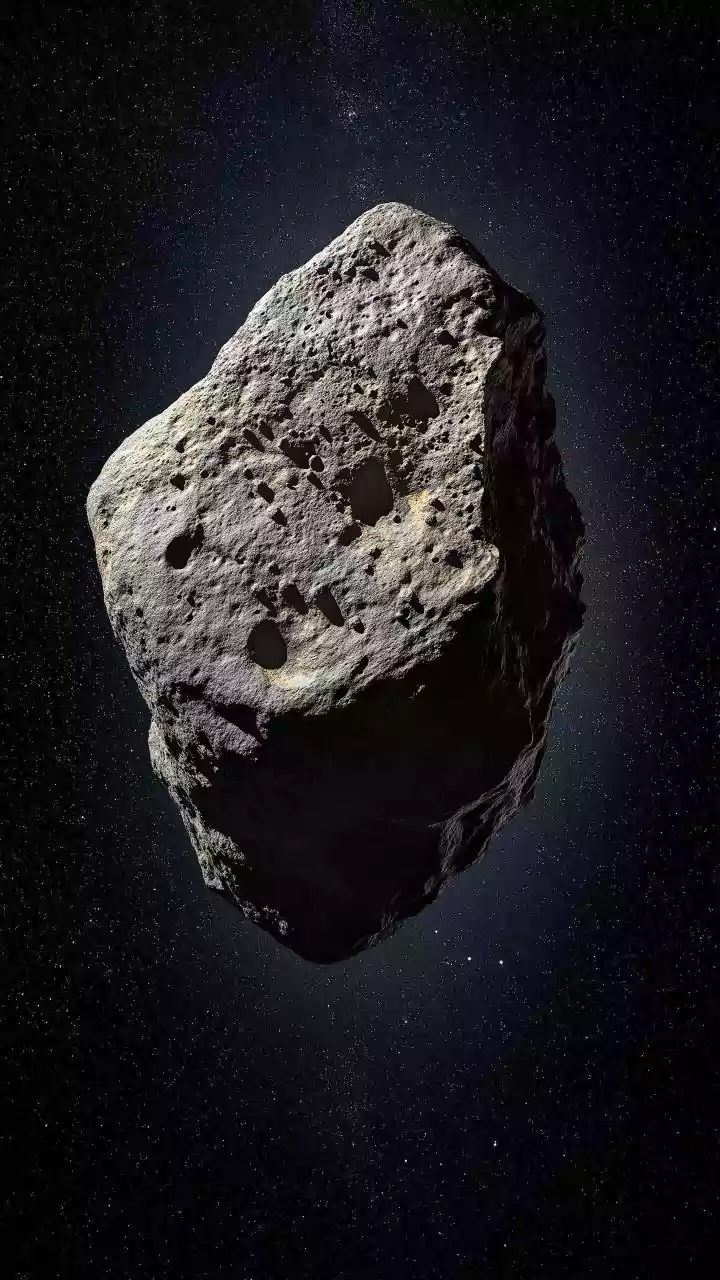
While remarkable, 3I/ATLAS is not the first cosmic messenger to grace our solar system. That title belongs to 1I/'Oumuamua, a bizarre, cigar-shaped object detected in 2017 that puzzled scientists with its lack of a visible tail, or coma. Then, in 2019, came 2I/Borisov, discovered by amateur astronomer Gennadiy Borisov. Unlike 'Oumuamua, Borisov looked and behaved much more like the comets from our own solar system, sporting a distinct coma and tail of gas and dust as it neared the sun. These two encounters proved that interstellar objects, once theoretical, were indeed out there. 3I/ATLAS confirms that these visitors, while rare, are a recurring phenomenon, giving scientists a new window into the galaxy.
What Makes 3I/ATLAS Different?
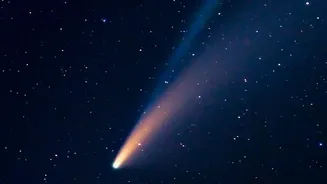
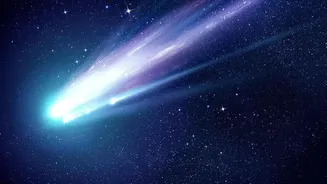
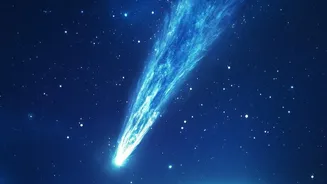
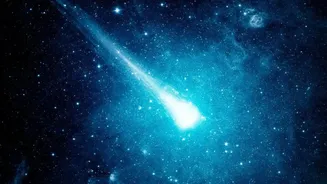
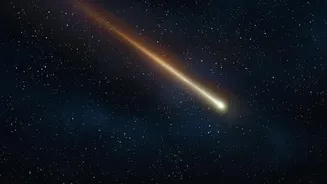
Like 2I/Borisov, 3I/ATLAS is an active comet, meaning it has an icy nucleus that releases gas and dust as it is warmed by the sun, forming a glowing shroud called a coma. This activity is a scientific goldmine. By using powerful instruments like the James Webb Space Telescope and the Very Large Telescope, astronomers can analyze the chemical composition of this outgassing material. Early observations have revealed a chemical cocktail unlike any comet from our own neighbourhood. Studies have shown an unusually high concentration of carbon dioxide and peculiar isotopic ratios of carbon and nitrogen. This suggests 3I/ATLAS may have formed in an extremely cold region on the outskirts of its home star system, offering a pristine sample of materials from a different corner of the Milky Way.
A Global Race Against Time
The detection of 3I/ATLAS triggered a coordinated, worldwide astronomical campaign. Because the comet is just passing through, there is a limited window to observe it before it recedes into the darkness of interstellar space, never to return. Telescopes on the ground and in orbit turned their gaze towards the faint visitor to gather as much data as possible. Each measurement of its brightness, color, and chemical makeup provides another clue in a cosmic detective story. Scientists are trying to piece together the history of this object: What kind of star did it orbit? How was it ejected into space? And what does its composition tell us about how planets form in other systems? These objects are physical samples from distant worlds, a chance to study alien chemistry up close.
A Messenger from a Galaxy of Worlds
Why should we care about a frozen rock from light-years away? Because objects like 3I/ATLAS are fossils of planetary formation. They carry the chemical fingerprint of the stellar nurseries where they were born billions of years ago. By studying its makeup, we can test and refine our theories about how solar systems, including our own, come into being. The unusual chemistry of 3I/ATLAS already suggests that the ingredients for planets can vary significantly across the galaxy. As telescope technology improves, astronomers expect to find many more of these interstellar travellers. Each one will add another piece to the grand puzzle of our cosmic origins, reminding us that our solar system is just one of countless others in an active and interconnected galaxy.