



A Mission of Unprecedented Complexity
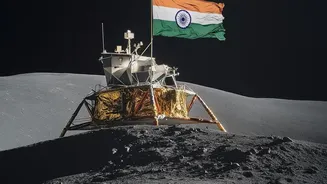
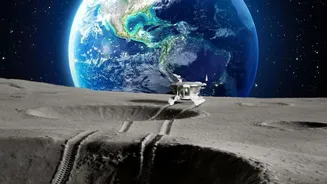
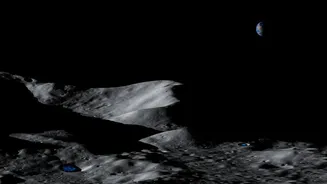
Chandrayaan-4 is not just another lunar landing; it is India's first-ever attempt at a lunar sample return mission. The goal is to land on the Moon's south pole, collect rock and soil (regolith), and, most importantly, potential water ice, then transport
it all the way back to Earth for analysis. If successful, India will join an exclusive club of nations — after the United States, the former Soviet Union, and China — to have accomplished this feat. Described by ISRO as its most complex lunar mission to date, it aims to prove a whole new set of technologies crucial for future deep-space exploration. The Union Cabinet approved the mission in September 2024, signaling a strong national commitment to this ambitious scientific endeavor.
The Five-Module Masterplan
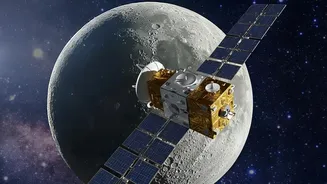
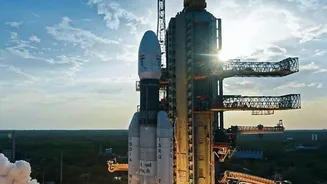
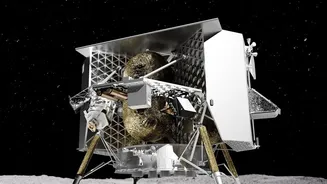
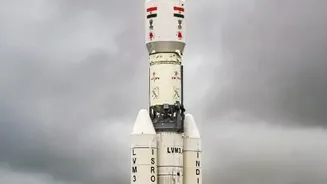
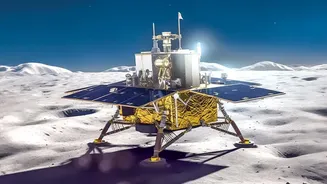
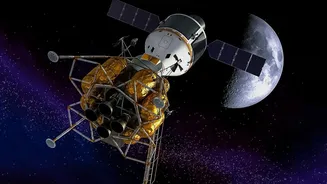
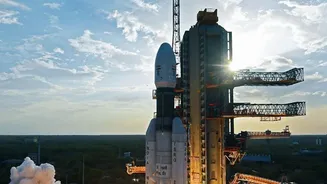
To pull off this round trip, ISRO has designed a sophisticated five-module spacecraft. Because the combined weight of around 9,200 kg is too heavy for a single LVM3 rocket, the mission will be launched in two separate parts. The components include a Propulsion Module to travel towards the moon, a Descender Module for the soft landing, an Ascender Module to lift off from the lunar surface with the samples, a Transfer Module to carry the samples back towards Earth's orbit, and a Re-entry Module to protect the precious cargo as it comes home. These two stacks will first launch into Earth's orbit and perform a crucial docking maneuver — a feat ISRO has already successfully tested with its SPADEX mission — before proceeding as an integrated spacecraft towards the Moon.
The Lunar Heist: Collecting the Samples
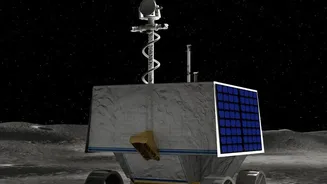
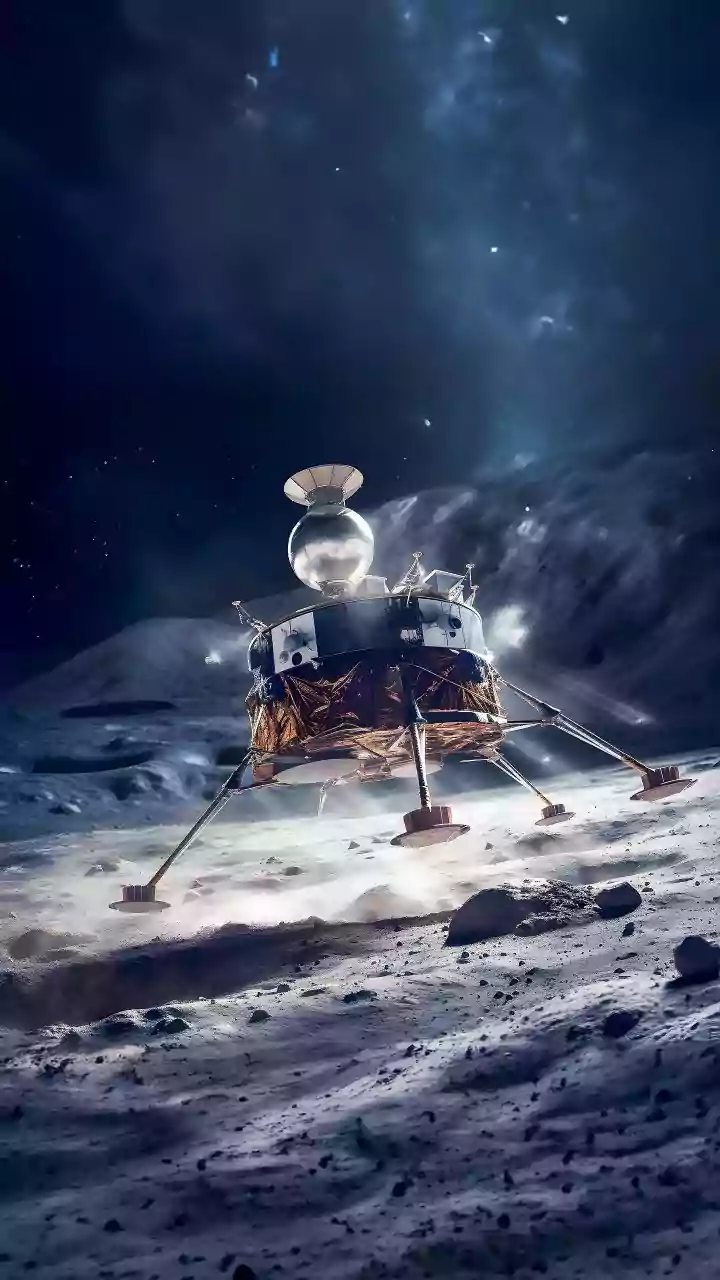
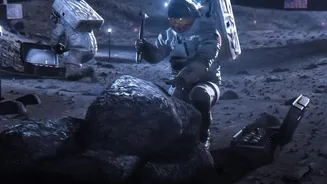
Once the Descender module lands safely near the lunar south pole, the real work begins. The lander will be equipped with a robotic arm to scoop surface samples and a drill to collect material from beneath the surface. This is critical because water ice is expected to be mixed with soil in the permanently shadowed regions of the pole, protected from the sun's harsh radiation. The mission aims to collect up to 3 kg of this unique material. After collection, the samples will be transferred into containers and hermetically sealed inside the Ascender Module to preserve them in their pristine state. This module then performs another historic first for India: launching off the Moon, using the lander as a launchpad, to begin its long journey home.
The Return Journey and Orbital Rendezvous
After lifting off from the Moon, the Ascender Module will rendezvous and dock with the Transfer and Re-entry modules waiting in lunar orbit. This is another high-stakes maneuver where the sealed sample container is automatically transferred to the Re-entry Module. The Transfer Module then fires its engines to push the Re-entry Module out of lunar orbit and onto a trajectory back to Earth. As it approaches our planet, the Re-entry Module will separate and perform a controlled, high-speed entry through the atmosphere, finally landing on Earth with its invaluable lunar payload.
Why Bringing Moon Ice to Earth Matters
Studying lunar samples directly in labs on Earth offers scientific possibilities far beyond what any rover or orbiter can achieve. Scientists can use massive, highly sensitive equipment to analyze the composition of the ice and regolith, unlocking secrets about the origin of the Moon, the Earth, and our solar system. The water ice from the south pole is particularly significant. Beyond its scientific value, it is seen as a vital future resource that could be used to produce breathable air, drinking water, and even rocket fuel for missions deeper into space. By mastering this technology, Chandrayaan-4 not only elevates India's status as a major space power but also paves the way for a sustained lunar presence and its ambitious Gaganyaan human spaceflight program.