




The Digital Gold Rush
India is in the midst of a data centre gold rush. Spurred by the global AI revolution, exploding data consumption, and a government push for data localisation, companies are pouring billions into building the physical backbone for our digital lives. India's
data centre capacity has surged from around 375 megawatts (MW) in 2020 to over 1,575 MW in 2025. Projections suggest this could multiply several times over by 2030, with some estimates putting future capacity as high as 12 GW or more. Global tech giants and domestic conglomerates alike are committing vast sums to this expansion, with major hubs emerging in and around Mumbai, Chennai, Hyderabad, and Bengaluru. The strategy is clear: to become a dominant force in AI, India must host the data and the computing power that fuels it.
The Hidden Cost of AI
But this digital infrastructure has a very real, and very large, physical footprint. Modern AI-ready data centres are incredibly resource-intensive. They are vast buildings filled with servers that consume enormous amounts of electricity and generate immense heat, requiring constant cooling. This creates a double burden on resources: power to run the servers and power and water to cool them. A single large data centre can consume as much water as a small town. One report estimated that data centres in India used about 150 billion litres of water in 2024-25, a figure that could more than double by 2030. Similarly, their electricity demand is projected to soar, putting significant pressure on an already strained national grid. This hunger for resources is the central problem. Can India power its AI dream without compromising its environmental goals and the basic needs of its citizens?
A Question of Geography
The core of the debate is where to build these facilities. Historically, data centres have been built near financial centres and submarine cable landing stations, which is why Mumbai and Chennai are dominant hubs. This makes sense for connectivity but creates immense pressure on urban resources. Many of these cities already face acute water stress and power challenges, especially during peak seasons. Placing more resource-hungry facilities in these densely populated areas is becoming a point of conflict. In one prominent case near Mumbai, residents have protested a planned Amazon data centre, citing concerns over the felling of trees, potential noise pollution, and the added strain on local water and power supplies. This highlights the dilemma: building in established urban hubs offers connectivity benefits but risks environmental and social backlash. Building in more remote areas could ease urban strain but faces challenges related to land acquisition and ensuring reliable power and fibre-optic connectivity.
The Search for a Sustainable Path
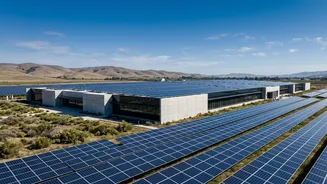
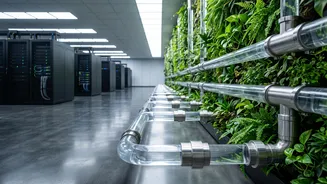
The industry and government are aware of these challenges. There is a growing push for 'green' data centres that operate more sustainably. Technologically, this involves innovations like more efficient cooling systems, such as direct-to-chip liquid cooling, that drastically reduce water usage compared to older evaporative cooling methods. Many operators are also investing heavily in renewable energy, aiming to power their facilities with solar and wind to reduce their carbon footprint. On the policy front, several states like Karnataka, Tamil Nadu, and Telangana have introduced their own data centre policies, offering incentives tied to sustainability benchmarks. The central government has also floated a national policy framework aimed at setting up 'Data Centre Economic Zones' with dedicated infrastructure. The goal is to guide development in a way that balances growth with environmental stewardship, though a uniform national standard for energy and water efficiency is still lacking.