


The Unbeatable Duo: Chai and Pakoras
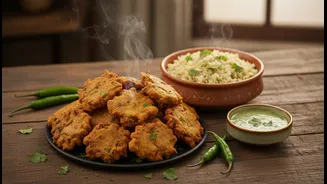
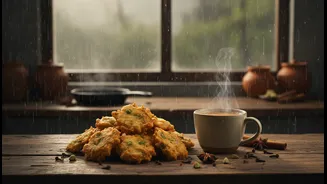
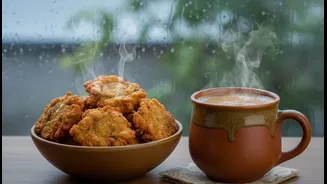
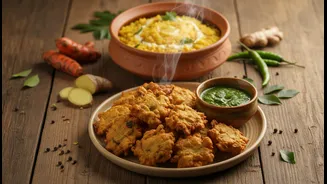
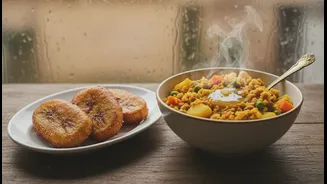
Across the length and breadth of India, the rumble of thunder is often accompanied by the sizzle of pakoras. This combination of steaming hot masala chai and deep-fried fritters is the nation's unofficial monsoon uniform. Whether they're made with onions
(kanda bhaji), potatoes, spinach, or paneer, these crispy snacks are the ultimate comfort food on a rainy day. The tradition became particularly popular in the 20th century with the rise of street food culture and remains a beloved ritual in homes, canteens, and roadside stalls. It’s a simple, accessible pleasure that brings people together, sharing a plate of crunchy goodness while the rain pours outside.
Street-Side Classic: Bhutta (Roasted Corn)
Walk down any street during the monsoon, and you’re likely to find vendors roasting corn on the cob over hot coals. Known as Bhutta, this quintessential street food is a monsoon must-have. The magic lies in its preparation: the corn is charred until smoky and sweet, then generously rubbed with a mixture of lemon juice, salt, and chilli powder. This perfect balance of smoky, tangy, and spicy flavours captures the essence of a rainy evening. It’s a simple, nostalgic snack that connects directly to the sights, sounds, and smells of the Indian monsoon.
Bengal's Pride: Ilish Maach (Hilsa Fish)
For Bengalis, the monsoon is synonymous with Ilish, or Hilsa, the 'queen of fish'. This period is when the sea-dwelling fish swim upstream to spawn in rivers, making them plentiful and their flavour exceptional. Enjoying Hilsa is more than a meal; it's an emotion steeped in culture and nostalgia. Prepared in dozens of ways — from the classic Shorshe Ilish (cooked in a pungent mustard gravy) to simply being fried (bhaja) and served with its own oil over rice — this bony fish is a delicacy that defines the season in West Bengal and Bangladesh. The annual arrival of Hilsa is a celebrated event, uniting families over a shared love for this unique fish.
Kerala's Wellness Ritual: Karkidaka Kanji
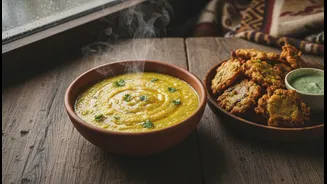
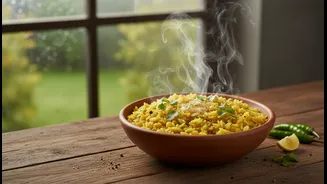
In Kerala, the monsoon, known as Karkidakam (mid-July to mid-August), is traditionally a time for rejuvenation and healing. Central to this is the consumption of Karkidaka Kanji, a medicinal rice porridge. This isn't just any gruel; it's an Ayurvedic preparation made with Njavara rice, herbs, and spices designed to boost immunity, aid digestion, and detoxify the body when it is considered most vulnerable. This age-old practice reflects a deep understanding of seasonal wellness, where food is seen as medicine. While modern lifestyles have evolved, many families in Kerala still embrace this tradition, preparing the nourishing kanji to stay healthy during the wet, cool season.