






Why Cover Letters Are Fading
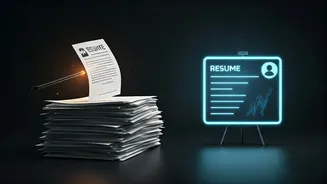
The traditional cover letter is a relic from an era of paper resumes and postal applications. In today’s fast-paced digital job market, its effectiveness is rapidly declining. Hiring managers and recruiters are swamped with applications, often spending
mere seconds on each one. They don’t have time to read a 400-word essay that, more often than not, repeats information already on the resume and is filled with generic phrases like “I am a highly motivated team player.” Furthermore, many companies use Applicant Tracking Systems (ATS) to screen candidates. These systems are designed to parse resumes for keywords, not to interpret the nuanced prose of a cover letter. In many cases, the letter you painstakingly crafted may not even reach human eyes. The reality is that the cover letter has become a low-impact, high-effort task that fails to differentiate candidates in a meaningful way.
Your Portfolio Is the New Cover Letter
Instead of telling a recruiter you have “strong design skills” or are a “proficient coder,” a digital portfolio allows you to prove it. It replaces vague claims with tangible evidence. This is the single most powerful shift you can make in your job application strategy. A well-curated portfolio does everything a great cover letter was supposed to do, but better.
It demonstrates your skills, showcases your best work, and reveals your professional personality and style. It provides context for your accomplishments, allowing you to explain the problem you solved, the process you used, and the results you achieved for each project. For roles in design, writing, marketing, development, and many other fields, a portfolio isn't just an add-on; it is the main event. It’s your professional highlight reel, designed to command attention.
Building a ‘Clickable’ Portfolio
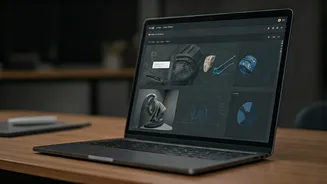
A “clickable” portfolio is one that is compelling, easy to navigate, and immediately demonstrates your value. This isn't a digital dumping ground for every project you’ve ever done. It’s about strategic curation.
First, select 3-5 of your strongest, most relevant projects. For each one, don't just show the final product. Write a brief case study that outlines the challenge, your specific role and contribution, your thought process, and the measurable outcome. Use visuals to break up text and guide the viewer’s eye.
Second, host it on a clean, professional platform. A personal website is ideal, as it gives you complete control over the branding and narrative. However, platforms like Behance (for designers), GitHub (for developers), or even a well-organised PDF hosted on Google Drive can work. The key is a single, clean link.
Finally, include a clear ‘About Me’ section that functions as your master cover letter—a brief, engaging introduction to who you are, what you’re passionate about, and what kind of role you’re looking for.
How to Pitch Your Portfolio Link
Replacing the cover letter doesn’t mean sending a blank email. The goal is to make your portfolio link the star of the show. When an application form has an optional field for a cover letter, skip the upload and use the space for a link to your website or portfolio. In the email to the hiring manager or in your application notes, be direct and confident.
Instead of attaching a document, write a short, sharp pitch. Try something like:
“Instead of a formal cover letter, I’ve created a portfolio that showcases projects directly relevant to this role: [your portfolio link]”
Or:
“I believe my work speaks for itself. You can see a few examples of how I’ve delivered results in past roles here: [your portfolio link]”
This approach shows confidence, respects the recruiter’s time, and immediately directs them to the tangible proof of your abilities. Place the same link prominently at the top of your resume, right next to your name and contact information.
When You Still Need a Cover Letter
While the portfolio-first approach is powerful, be pragmatic. Some organisations, particularly large corporations, government bodies, or academic institutions, have rigid application processes that may explicitly require a cover letter file to be uploaded. If the ATS won’t let you proceed without one, don’t let it screen you out.
In these cases, write a micro-cover letter. Keep it to three short paragraphs. The first acknowledges the role you’re applying for. The second highlights one key achievement from your resume. The third and most important paragraph directs them to your portfolio. It could be as simple as: “For a more detailed look at my work and capabilities, my full portfolio is available at [your portfolio link].” This satisfies the system requirement while still pivoting the focus to where it matters most: your work.