




A Sudden, Mysterious Flare
In late 2019, an automated sky survey designed to catch fleeting celestial events flagged something unusual. A galaxy known as SDSS1335+0728, located in the Virgo constellation, had started to brighten dramatically. At first, it might have been dismissed
as a supernova, the explosive death of a star. But this light wasn't fading. Instead, for more than four years, it has continued to intensify, puzzling scientists who say this behavior is unlike anything they've seen before. Typical cosmic explosions, even the most powerful ones, last for a few hundred days at most. This enduring, growing brilliance pointed to a far more momentous and sustained event taking place at the very heart of the galaxy.
The Awakening of a Monster
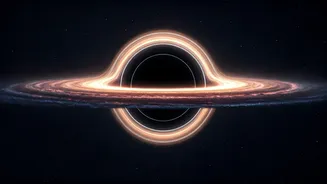
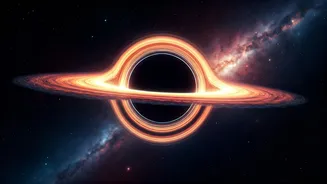
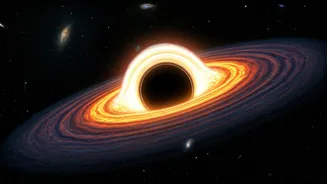
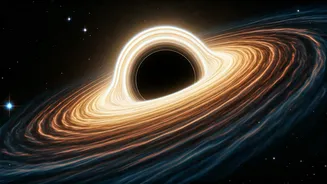
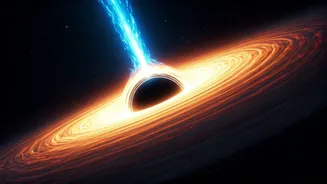
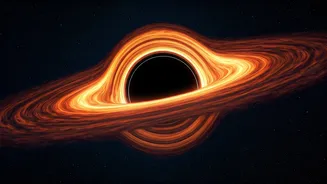
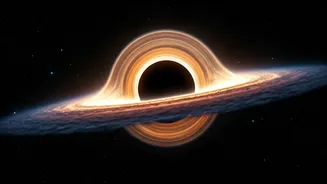
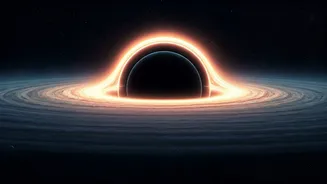
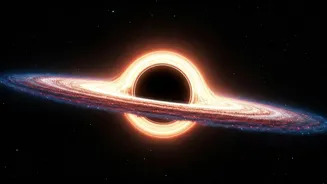
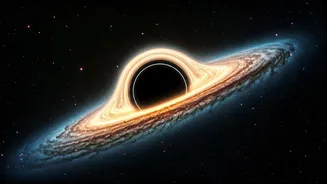
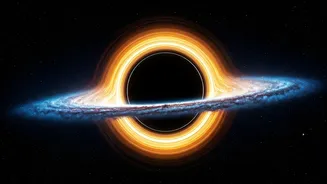
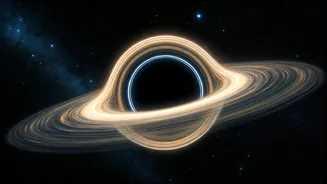
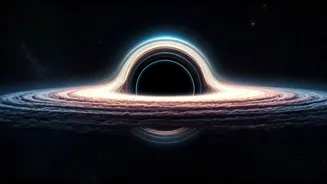
The leading explanation is as awe-inspiring as it is historic: we are likely witnessing the awakening of a dormant supermassive black hole. Most large galaxies, including our own Milky Way, have a monster black hole at their center. These behemoths can have masses millions or even billions of times that of our sun. For long periods, they can be quiet, or 'asleep', not actively feeding. But if a large supply of gas or dust drifts too close, the black hole's immense gravity begins to pull it in. This material doesn't fall straight in; it forms a swirling, superheated structure around the black hole called an accretion disk. This disk can become so hot and bright that it outshines the entire galaxy, creating what astronomers call an Active Galactic Nucleus (AGN).
A Real-Time Cosmic Transformation
What makes the event in SDSS1335+0728 so special is that it appears to be the first time astronomers have caught this 'switching on' process in real time. After the initial alert, observatories around the globe trained their instruments on the galaxy. An international team of astronomers used data from major facilities, including the European Southern Observatory’s Very Large Telescope, to track the changes. They found the galaxy was radiating far more energy across ultraviolet, optical, and infrared wavelengths. By early 2024, it even began emitting X-rays, further confirming a high-energy process was underway near the black hole. While other theories, like an unusually slow-motion star being torn apart, have been considered, the long duration makes the awakening of the central black hole the most compelling explanation.
Why This Distant Alarm Matters
Observing a galaxy's core spring to life provides an invaluable, real-world laboratory for understanding the lifecycle of galaxies. Scientists know galaxies transition between active and dormant phases, but seeing the trigger event happen is a goldmine of information. It helps them refine their models of how black holes grow and influence their host galaxies. This discovery also carries a fascinating local relevance. The supermassive black hole at the center of our Milky Way, known as Sagittarius A*, is currently in a dormant state. While the awakening in SDSS1335+0728 is happening a safe 300 million light-years away, studying it gives us a glimpse into the fundamental processes that govern our own cosmic neighborhood, revealing the dynamic and ever-changing nature of the universe on the grandest scales.