

A New Cosmic Mystery
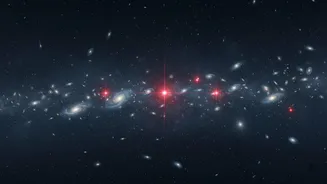
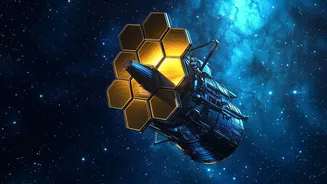
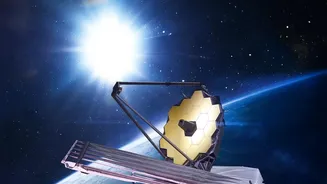
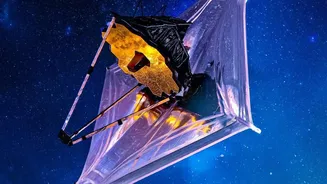
Since it began operations, the James Webb Space Telescope (JWST) has been peering into the deepest, earliest epochs of the universe. Almost immediately, it started spotting a new class of object that no one had seen before: hundreds of compact, intensely
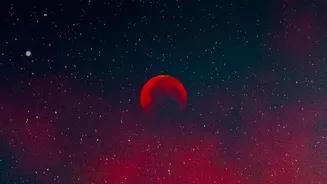
red sources of light. Dubbed 'little red dots' (LRDs), these objects appeared to be abundant around 600 million years after the Big Bang but then seemed to vanish as the universe matured. Their existence posed a significant puzzle. What were they, and where did they go? The race to identify them has become one of the most exciting new frontiers in cosmology, all thanks to the unprecedented technological power of Webb's infrared eyes.
The Original Theory: Dusty Star Factories
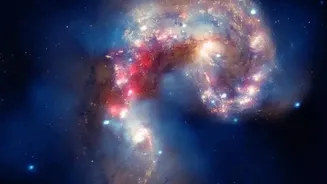
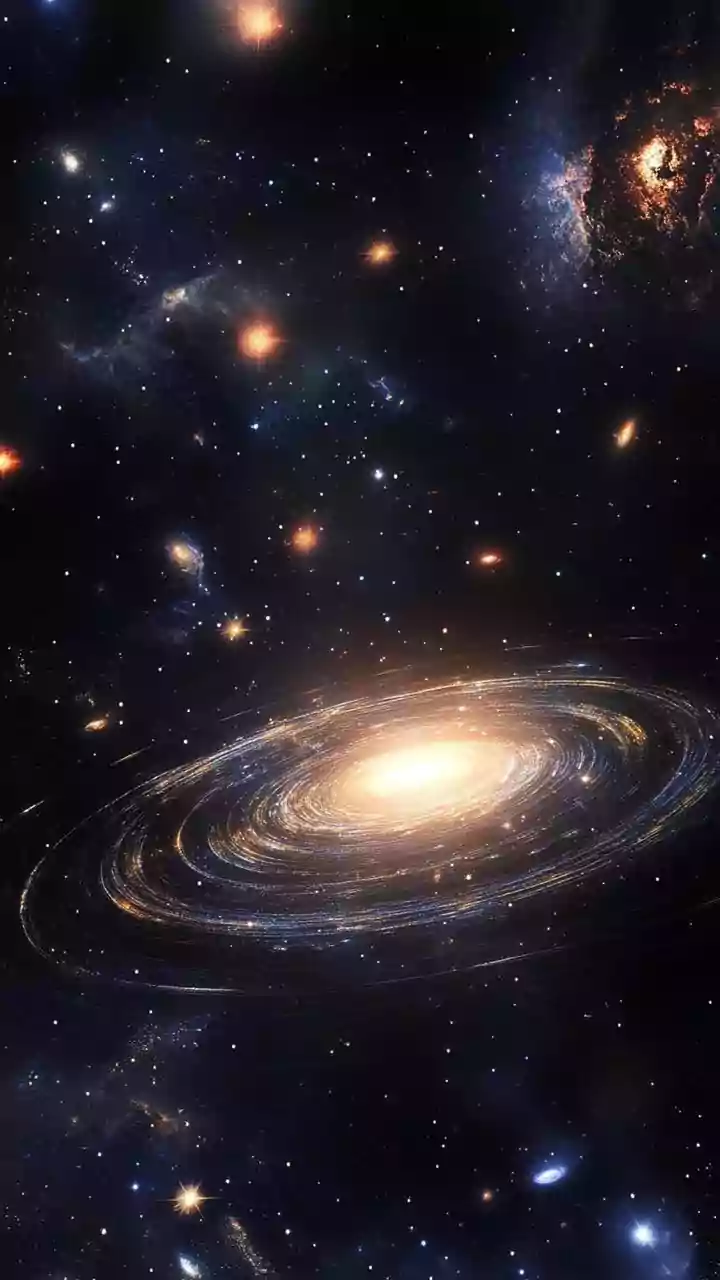
The initial leading hypothesis was that LRDs were incredibly dense, young galaxies churning out stars at a furious rate. In this scenario, their distinct red color was attributed to vast cocoons of dust that shrouded the galaxies. This cosmic dust would absorb the blue and ultraviolet light from young, hot stars and re-radiate it at longer, redder wavelengths. While plausible, this theory presented its own problems. It required these galaxies to be extraordinarily dense, pushing the limits of our models for how quickly the first galaxies could have formed after the Big Bang. Something about the picture didn't quite add up, prompting scientists to seek alternative explanations.
A Paradigm Shift: It's All About the Distance
The latest research reframes the entire puzzle. Instead of being red because of dust, new evidence suggests many LRDs are red because of their extreme distance. In an expanding universe, the farther away an object is, the more its light gets stretched into redder wavelengths—a phenomenon known as redshift. The new findings propose that these objects are so incredibly far away, existing in the universe's first few hundred million years, that their light has been redshifted to an extreme degree. This implies we are not looking at dusty galaxies, but at something else entirely: incredibly luminous objects from the cosmic dawn that are far more remote than first assumed.
Meet the Real Culprits: Early, Giant Black Holes
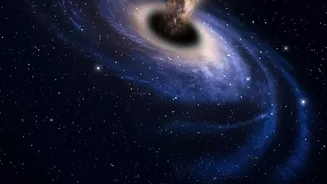
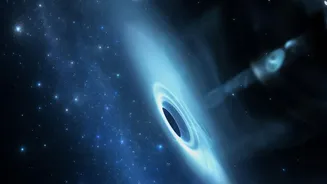
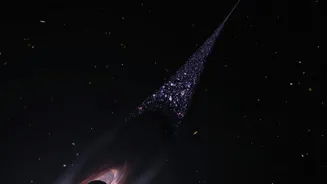
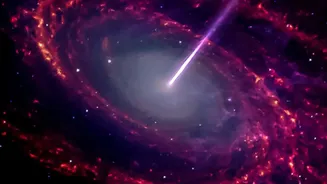
So, if they aren't dusty galaxies, what are they? The emerging consensus points to LRDs being some of the earliest and most active supermassive black holes ever observed. These objects, known as quasars, are the intensely bright cores of galaxies where a giant black hole is furiously consuming surrounding gas and dust. The evidence comes from Webb's spectroscopic analysis, which breaks down light into its component wavelengths. This analysis revealed that the gas within many LRDs is moving at tremendous speeds—a tell-tale sign of matter swirling around a supermassive black hole. This finding suggests that monster black holes, millions or even billions of times the mass of our sun, were already in place much earlier than many theories predicted.
Rewriting the Story of the Universe
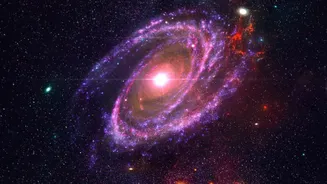
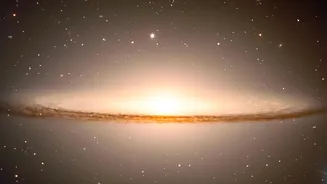
This reinterpretation has profound implications. It could help solve the long-standing mystery of how supermassive black holes grew so big, so fast in the early universe. A recent study took this idea further by simulating what a more recent, well-understood galaxy with a feeding black hole would look like if it were at the extreme distance of an LRD. When digitally 'pushed back' in time, the galaxy's sprawling spiral arms disappeared, leaving only its bright, compact, red nucleus—looking exactly like a little red dot. This suggests LRDs may not be a unique type of object after all, but rather a temporary, ferociously active phase in the life of a supermassive black hole, whose host galaxies are simply too faint and distant for even Webb to see clearly.