







The Real Cause of 'Tech Neck'
The problem starts with posture and gravity. Your head weighs roughly 5 kilograms, but for every inch you tilt it forward to look at a screen, the load on your cervical spine increases dramatically. This condition, often called 'tech neck', is a result
of prolonged static posture, where muscles in your neck and upper back are under constant strain from holding your head in an unnatural position for hours. Over time, this leads to muscle fatigue, stiffness, tension headaches, and chronic pain. Poor ergonomic setups, like a monitor that's too low or a non-supportive chair, only make the problem worse.
The Rules of Safe Stretching
Before you begin, remember a few golden rules. First, never stretch to the point of pain; you should only feel a gentle pull or tension. All movements should be slow and controlled, without any bouncing or jerking. Hold each stretch for about 15 to 30 seconds and breathe deeply throughout to help your muscles relax. The goal is to release tension, not create new strain. If you feel any sharp or radiating pain, stop immediately. Consistency is far more important than intensity.
1. The Forward and Backward Tilt
This is the most basic and one of the most effective moves for targeting the muscles at the back and front of your neck. While sitting tall with your shoulders relaxed, slowly lower your chin toward your chest, holding for 15-30 seconds. You should feel a gentle stretch along the back of your neck. Release and slowly tilt your head back to look toward the ceiling, being careful not to crunch your spine. This simple movement helps counteract the forward-head posture we adopt while looking at screens.
2. The Ear-to-Shoulder Tilt
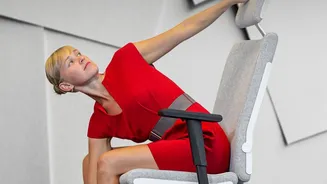
To target the tight muscles along the sides of your neck, like the upper trapezius, this stretch works wonders. Sit straight and look forward. Gently tilt your right ear toward your right shoulder, keeping the left shoulder relaxed and down. To deepen the stretch, you can gently place your right hand on the side of your head, letting its weight add a little pressure. Do not pull. Hold for 20-30 seconds before slowly returning to the center and repeating on the other side.
3. The Gentle Chin Tuck
The chin tuck is a powerhouse for strengthening the deep neck flexor muscles and correcting forward head posture. Sit upright and look straight ahead, keeping your shoulders relaxed. Gently draw your chin backward, as if you're trying to make a double chin, without tilting your head down. You'll feel a stretch at the base of your skull and an engagement of the muscles in the front of your neck. Hold this position for 5 seconds and repeat 10 times.
4. The Shoulder Blade Squeeze
Neck pain is often connected to tension in the upper back and shoulders. The shoulder blade squeeze helps to activate and strengthen the muscles that support good posture. While sitting or standing, imagine you have a pencil between your shoulder blades. Gently squeeze them together and down, opening up your chest. Hold for 5-10 seconds, then release. This move provides immediate relief from hunching and encourages your shoulders to stay in a more natural, relaxed position.
Making It a Daily Habit
The key to seeing real results is consistency. Stretching once a week won't undo the daily strain of a 40-hour workweek. Most experts recommend taking short movement breaks every 30 to 60 minutes. You don't need to run through this entire routine every time. Just performing one or two of these stretches for a minute or two can interrupt the cycle of stiffness and muscle fatigue. Set a timer on your phone or computer to remind yourself to get up, move, and give your neck the break it deserves.