





Artemis: Humanity's Return to the Moon
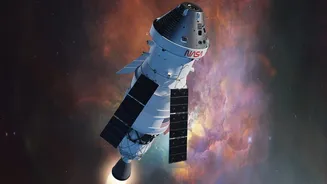
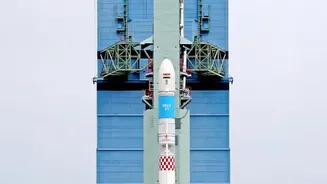
More than half a century after the last Apollo mission, NASA is going back to the Moon. But the Artemis program is far more than a repeat of history. After a successful uncrewed test flight (Artemis I) in 2022 and a crewed lunar flyby (Artemis II) in early
2026, the next steps are even more ambitious. Artemis III, planned for 2027, will be a critical demonstration mission in low-Earth orbit. It's designed to test the spacecraft and lander systems that will eventually carry astronauts to the lunar surface. NASA is working with commercial partners like SpaceX and Blue Origin to develop these human landing systems. The ultimate goal, targeted for Artemis IV in 2028, is to land astronauts near the Moon's south pole, a region believed to hold water ice. This isn't just about planting a flag; it's about establishing a sustainable human presence on another world, building a foundation for a lunar economy, and using the Moon as a stepping stone for the next giant leap: Mars.
Europa Clipper: Searching for Life's Ingredients
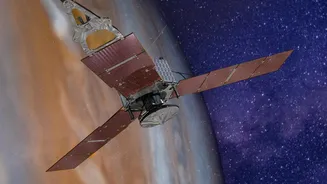
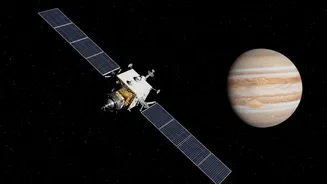
One of the most profound questions is whether we are alone in the universe. NASA's Europa Clipper mission is designed to tackle that question by investigating Jupiter's icy moon, Europa. Launched in October 2024, the spacecraft is currently on a multi-year journey to the Jupiter system. In December 2026, it will perform a crucial Earth gravity assist—a slingshot maneuver to fling it toward the outer solar system. Arriving in April 2030, Europa Clipper won't orbit the moon directly due to Jupiter's intense radiation belts. Instead, it will perform dozens of close flybys, using a suite of advanced instruments to scan the moon's surface, confirm the presence of a subsurface ocean, and even sample plumes of water vapor that may erupt into space. While not a life-detection mission itself, its goal is to determine if Europa has the necessary ingredients for life: liquid water, essential chemical elements, and an energy source. The findings could transform our understanding of habitable worlds.
Dragonfly: A Nuclear-Powered Drone on Titan
Perhaps one of the most futuristic missions on NASA's slate is Dragonfly, a nuclear-powered, car-sized drone destined for Saturn's largest moon, Titan. With a launch planned for July 2028, the rotorcraft will spend over six years crossing the solar system, arriving at Titan in 2034. Titan is an alien world with a thick, nitrogen-rich atmosphere, weather, and rivers and lakes of liquid methane and ethane. Dragonfly is designed to fly through this dense atmosphere, landing at various scientifically interesting sites. It will drill for samples, analyze the complex organic chemistry on the surface, and search for clues about how far prebiotic chemistry—the building blocks of life—has progressed. By flying from one location to another, Dragonfly can cover far more ground than a traditional rover, acting as a mobile laboratory on a world that could hold secrets to the origins of life itself.
Mars Sample Return: A Mission in Flux
Bringing a piece of another planet back to Earth is one of the ultimate goals of planetary science. For years, NASA has been working toward the Mars Sample Return mission, a complex plan to retrieve the rock and soil samples currently being collected by the Perseverance rover. However, the original plan faced significant budget and timeline challenges, leading to a major reassessment. NASA is now exploring new, more efficient architectures, including potential partnerships with commercial companies, with a final decision on the mission's design expected in the second half of 2026. While the exact method is being re-evaluated, the objective remains: to bring carefully selected Martian samples into state-of-the-art labs on Earth. Analyzing these samples directly could reveal whether life ever existed on Mars and provide unparalleled insights into the Red Planet's history.