




For decades, bringing pristine samples of Mars back to Earth has been a holy grail for scientists searching for signs of ancient life. But NASA's ambitious plan is facing a crisis, forcing the agency to find a new, more affordable approach.
The Grand Plan
The Mars Sample
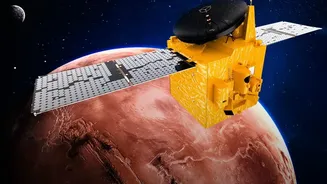
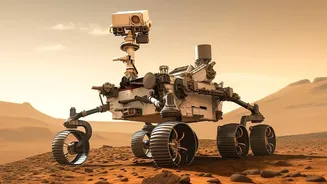
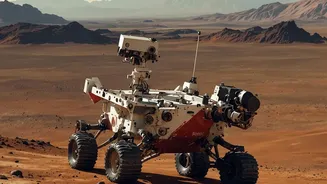
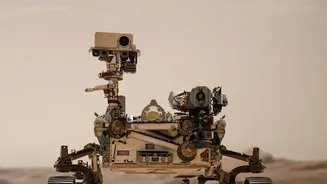
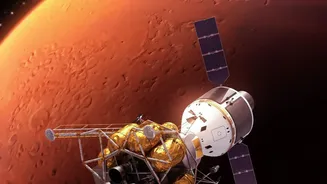
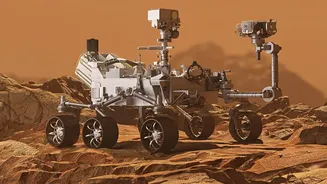
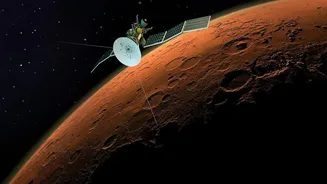
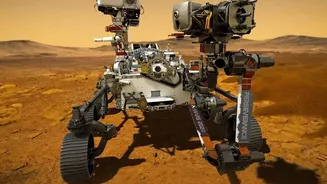
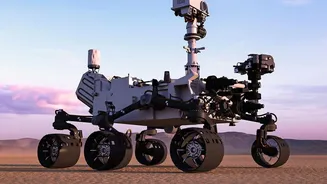
Return (MSR) mission is one of the most complex robotic endeavors ever conceived. The multi-stage plan, developed by NASA in partnership with the European Space Agency (ESA), is like an interplanetary relay race. First, the Perseverance rover, which has been exploring Mars's Jezero Crater since 2021, collects and caches compelling rock and soil samples in small titanium tubes. The next step involves sending a lander to the surface to retrieve these tubes. A small rocket, called the Mars Ascent Vehicle, would then launch the samples into orbit around Mars. Finally, an orbiter built by the ESA would rendezvous with the sample container, capture it, and begin the long journey back to Earth, with the priceless cargo expected to arrive in the 2030s. The scientific payoff would be immense, allowing researchers to use the world's most advanced laboratories to search for definitive biosignatures.
A Mission Hits A Reality Check
The mission's complexity has come with a staggering price tag and an increasingly unrealistic timeline. An independent review board concluded that the project was ineffectively designed, with a 'near zero' probability of meeting its original launch dates. The board's report expressed major concerns, estimating the total cost could balloon to as much as $11 billion, a figure NASA deemed too expensive, with a return date pushed as far back as 2040. This 'sticker shock' and the challenging schedule forced the agency to admit that the original architecture was no longer feasible. The plan was criticized for being established with unrealistic budget and schedule expectations from the very beginning, putting extreme pressure on the rest of NASA's planetary science funding.
NASA Presses The Reset Button
Instead of canceling the program outright, NASA is going back to the drawing board. The agency has initiated a new effort called the Perseverance Sample Retrieval Architecture (PSRA), tasking an internal team to develop a new strategy. This team will kick off its work in January 2027 and is expected to deliver recommendations by the end of that year. The goal is to find a faster, cheaper, and more achievable way to get the samples home. In parallel, NASA has reached out to the private aerospace industry for fresh ideas, awarding study contracts to companies like SpaceX, Blue Origin, and Lockheed Martin to explore alternative mission designs. These studies could lead to complete overhauls of the mission or suggest ways to use new technologies, like SpaceX's Starship, to simplify the process.
The Race Against Time and a New Space Race
The need for a new plan is urgent for two key reasons. First, the samples collected by Perseverance are waiting on the Martian surface, and the rover itself cannot operate forever. Second, a new competitor has entered the arena. The China National Space Administration (CNSA) is moving forward with its own Mars sample return mission, Tianwen-3. China aims to launch its mission around 2028 and return about 500 grams of Martian material to Earth as early as 2031, potentially beating NASA to this historic achievement. This has been described as a potential 'Sputnik moment', adding a layer of geopolitical competition to the scientific quest. While China's mission may be less complex than NASA's original plan, its aggressive timeline puts pressure on the U.S. to not lose its decades-long leadership in Mars exploration.