


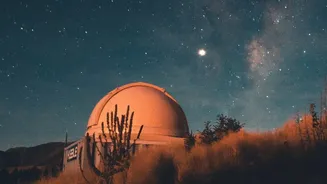
A Celestial Welcome
Throughout August, Saturn will become an increasingly prominent object for sky-watchers. While it has been visible in the pre-dawn hours, this month marks its transition into a brilliant evening attraction. The planet will be rising a few hours after
sunset, positioning itself perfectly for comfortable viewing sessions. As a bonus, you can watch the moon make a close approach to Saturn overnight from August 30 to 31, a beautiful pairing that you won't want to miss. Think of August as the opening act for Saturn's main performance, a time to get acquainted with the jewel of our solar system as it grows brighter each night.
Understanding the Main Event: Opposition
The reason for all this excitement is an astronomical event called opposition. For an outer planet like Saturn, opposition occurs when Earth passes directly between it and the Sun. This alignment is special for two key reasons. First, Saturn is at its closest point to Earth for the year, making it appear larger and more detailed through a telescope. Second, it is fully illuminated by the Sun from our perspective, much like a full moon. This causes it to shine at its maximum brightness. During opposition, a planet rises in the east around sunset, remains visible all night long, and sets in the west around sunrise. While Saturn's opposition for 2026 falls on October 4, the weeks leading up to it, including all of August and September, provide an excellent and ever-improving view.
What You Can See and How
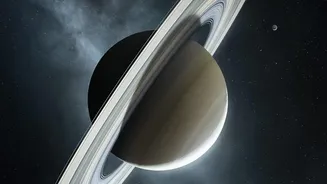
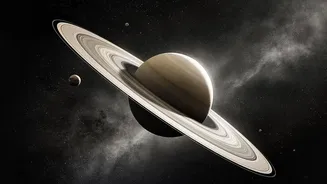
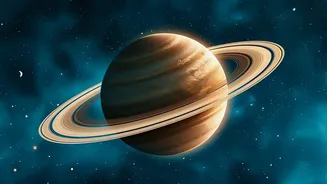
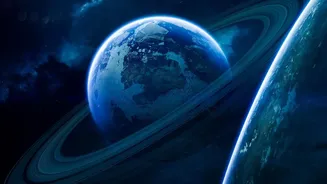
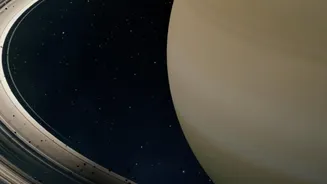
You don't need professional equipment to enjoy Saturn. To the naked eye, it appears as a bright, steady, golden-hued point of light that doesn't twinkle like the surrounding stars. This steady glow is a classic giveaway that you are looking at a planet. If you have a pair of binoculars, hold them steady and you might notice that Saturn is not perfectly round, but slightly elongated—a subtle hint of its magnificent rings. However, the real magic happens with a telescope. Even a small, beginner-level telescope with about 50x magnification will reveal the rings as a distinct and breathtaking structure, separate from the planet itself. After being nearly edge-on and invisible in 2025, the rings are now tilting back towards us, making 2026 a fantastic year for observation.
A Special Trick of the Light
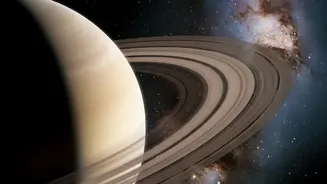
One of the most fascinating phenomena to watch for is the ‘opposition surge,’ also known as the Seeliger effect. For a few days right around the opposition date in October, Saturn’s rings will appear to surge in brightness, suddenly outshining the planet’s globe. This happens because the countless tiny ice and rock particles that form the rings are positioned to reflect sunlight directly back at Earth, with their own tiny shadows hidden from our view. The result is a stunning visual effect that makes the ring system look exceptionally brilliant, a sight that rewards dedicated observers who track the planet through the season.
Tips for Stargazers in India
To get the best view, the most important step is to find a location away from bright city lights. Light pollution washes out fainter objects, and while Saturn is bright, a darker sky will make the experience far more immersive. Consider heading to a rural area, a park, or even a rooftop with an unobstructed view. To easily locate Saturn and other celestial objects, download a stargazing app like Stellarium, Star Walk, or Sky Guide. These apps use your phone's location to show you a real-time map of the sky. While the monsoon can bring cloudy nights, the post-monsoon period offers increasingly clear skies, making late August and September prime time to start your Saturn watch.