



Find Your Nook
Before buying any furniture, assess your home for potential office spots. Look for underused areas that could become a consistent workspace. This might be a quiet corner in the living room, a space next to a bedroom window, or a wide hallway. The goal
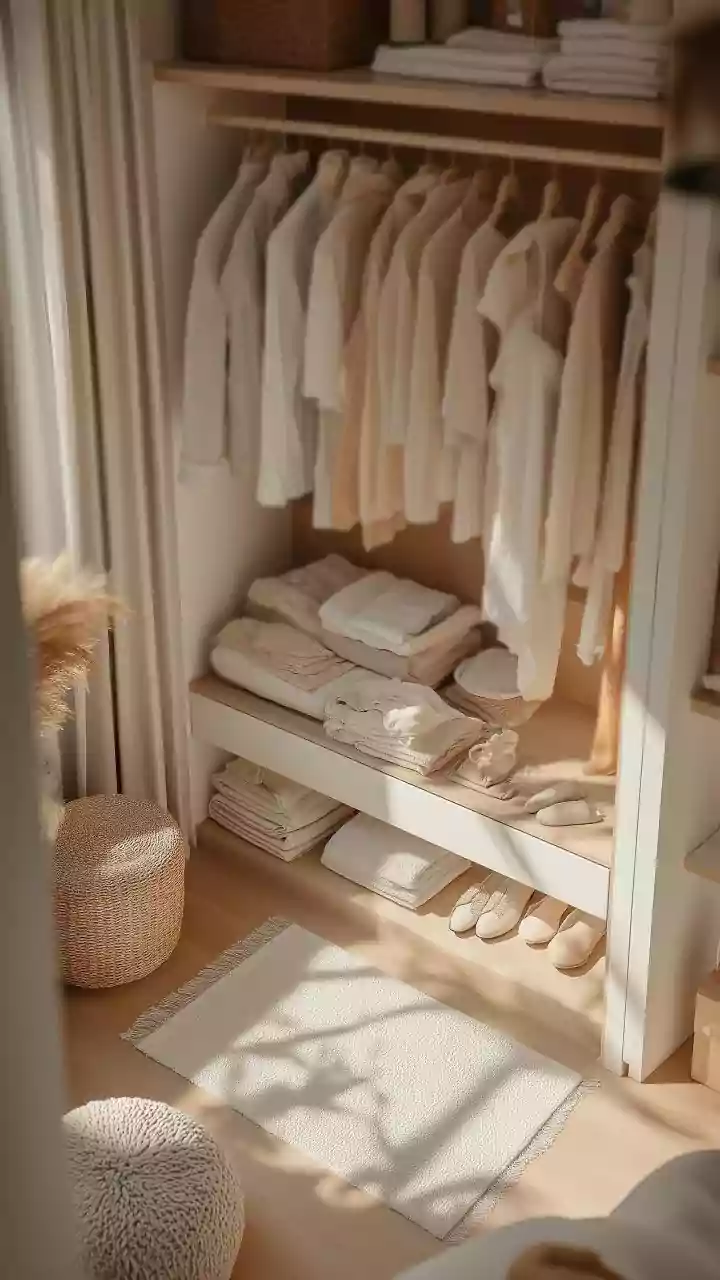
is to find a spot you can use daily to help your brain associate the area with focus. Don't overlook the 'cloffice'—a closet transformed into an office. By removing the doors and shelving, even a small reach-in closet can become a surprisingly effective and contained workstation. When choosing your spot, consider access to electrical outlets for your devices and try to select an area with good natural light, which can help reduce eye strain and keep you alert.
Choose Smart, Multifunctional Furniture
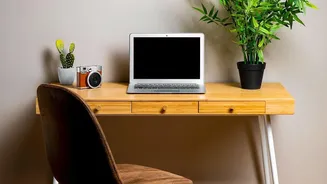
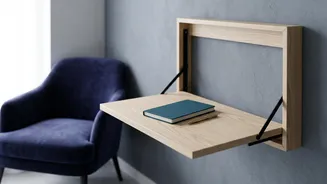
In a small space, every piece of furniture should work hard. Instead of a bulky, traditional desk, opt for compact and multifunctional designs. A wall-mounted desk that folds away when not in use can free up valuable floor space. Similarly, ladder desks offer a small footprint with vertical shelving, and some coffee tables feature lift-tops that convert them into a work surface. You can also consider repurposing existing furniture, like a console table. Some beds, known as Murphy beds, even fold up into a wall cabinet that can feature an integrated desk. The key is to select pieces that provide a functional work surface without overwhelming the room.
Think Vertically for Storage
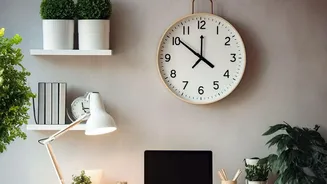
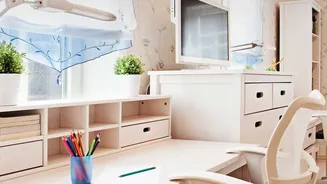
When floor space is limited, your walls are your best asset for storage. Building up, not out, keeps your workspace from feeling cluttered. Install wall-mounted shelves or tall, slender bookcases to store printers, files, and supplies, keeping them off your desk and the floor. This strategy pulls the eye upward, which can make the room feel taller and more open. A pegboard with hooks and small shelves is another versatile option for keeping small items organised and within reach. Using cohesive storage bins can also help create a clean, organised look that reduces visual noise.
Create Visual and Physical Boundaries
When your office is in your living room or bedroom, creating a sense of separation is crucial for work-life balance. You can visually define your work zone with a small area rug or by painting the wall behind your desk a different colour. Physically hiding the workspace at the end of the day is even more effective. A stylish folding screen or a curtain can conceal your desk area. The 'cloffice' is a prime example of this, as you can simply close the doors when you're done working. Positioning your desk to face a wall rather than the entire room can also help you stay focused by minimising distractions.
Don't Sacrifice Ergonomics
A makeshift workspace shouldn't lead to back and neck pain. Ergonomics is just as important in a non-traditional setting. Prioritise a comfortable chair, even if it's not a standard office chair; it should support your back. Ensure your screen is at eye level to maintain a neutral head position. This can be achieved with a monitor stand or even a stack of books. Using a separate keyboard and mouse with your laptop allows you to position the screen correctly while keeping your hands and wrists in a comfortable, straight line parallel to the floor. If your feet don't rest flat on the floor, use a footrest.
Establish an 'End of Day' Ritual
The biggest challenge of a home office without walls is knowing when to 'leave' work. A portable or foldable desk helps create a mental boundary, as you can pack it away at the end of the day. If your setup is permanent, create a ritual to signal that your workday is over. This could involve putting your laptop in a drawer, turning off your desk lamp, and clearing your work surface. This small routine helps you mentally switch from work mode to relaxation mode, preventing your workspace from encroaching on your personal time and allowing your living space to feel like a home again.