



More Than an Astronaut
Anil Menon’s resume reads like a blueprint for a modern space explorer. Born to Indian and Ukrainian immigrants, he is a physician specialising in emergency and aerospace medicine, a US Space Force colonel, and a veteran of humanitarian missions in Haiti
and Nepal. Before being selected for NASA's 2021 astronaut class, he was SpaceX's first-ever flight surgeon, where he helped build the medical systems for the company’s historic first human flights. This unique blend of medical expertise and operational experience in extreme environments makes him perfectly suited for the next chapter of space exploration, which is less about planting flags and more about producing tangible benefits for humanity.
A Laboratory Like No Other
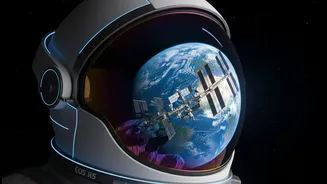
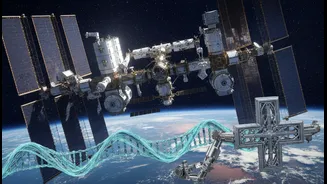
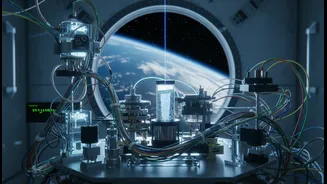
The International Space Station is, first and foremost, a massive orbiting laboratory. Its key feature is a persistent state of microgravity, which allows scientists to study phenomena in ways that are impossible on Earth, where gravity's effects often mask or overwhelm other forces. For over two decades, research on the ISS has spanned fields from life sciences and materials science to astronomy and meteorology. Astronauts are not just passengers; they are highly trained technicians and research subjects, executing complex experiments designed by scientists back on Earth. Menon's mission will continue this tradition, focusing on studies that leverage the unique environment to solve problems both in space and on the ground.
The Medical Frontier in Microgravity
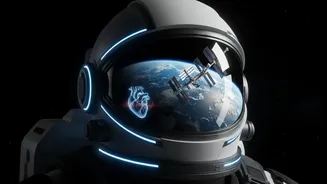
Given Menon’s background, it’s no surprise that a significant portion of his work will focus on human health. Living in space provides a unique model for accelerated aging and certain diseases. For instance, astronauts experience rapid bone loss and muscle atrophy, similar to osteoporosis and conditions caused by a sedentary lifestyle on Earth. Menon's mission includes experiments studying how microgravity affects blood flow, vein structure, and blood composition. Understanding these changes helps develop countermeasures for astronauts on long journeys to the Moon and Mars, while also providing invaluable insights for treating cardiovascular issues and age-related ailments on Earth.
Innovations for Earth and Deep Space
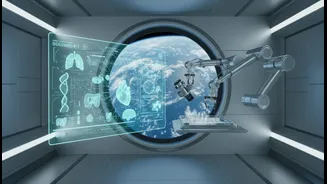
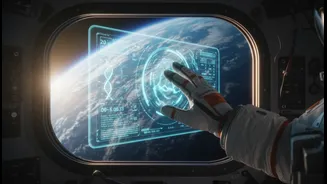
The utility of ISS research extends far beyond medicine. Menon will be involved in testing technologies crucial for future deep-space missions, such as a system for producing intravenous (IV) fluids from the station's own potable water. This could be a life-saving capability on a long journey to Mars where resupply is impossible. He will also perform ultrasound investigations using augmented reality and AI, a step toward creating autonomous medical systems that don't rely on real-time support from Earth. Another key area is materials science. Menon is tasked with continuing research into the production of semiconductor crystals in microgravity, which could lead to breakthroughs in manufacturing components for high-performance computers and advanced medical devices.
The Significance for India
While Menon is a NASA astronaut, his journey carries immense symbolic weight and inspiration for India. His mission highlights the contributions of the Indian diaspora to the frontiers of science and technology. It comes at a time when India’s own space program, led by ISRO, is achieving remarkable feats, including the Chandrayaan-3 lunar landing and the ambitious Gaganyaan human spaceflight program. Menon spent a year in India as a Rotary Scholar supporting polio vaccination efforts, adding a personal layer to his connection. His flight serves as a powerful inspiration for a new generation of Indian scientists and engineers, reinforcing the idea that space is a domain of practical innovation and global collaboration.