



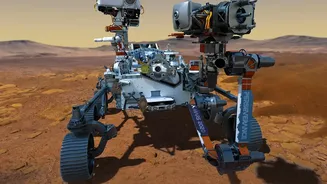
The Tireless Robotic Workforce
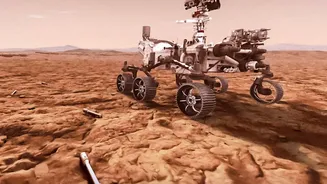
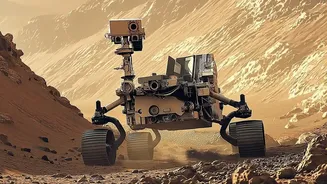
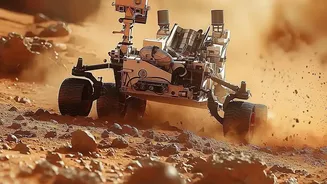
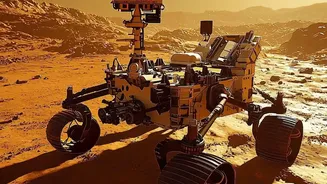
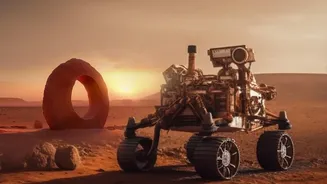
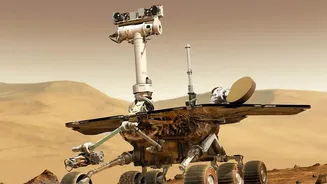
Robots are the undisputed pioneers of modern Mars exploration. Since the first successful landing, a series of rovers like Sojourner, Spirit, Opportunity, Curiosity, and Perseverance have transformed our understanding of the planet. These automated geologists
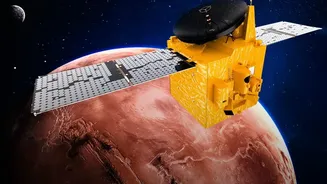
can endure extreme temperatures and radiation, operate for years beyond their initial mission timelines, and conduct precise scientific analyses. Their advantages are clear: they don't need food, water, or a return ticket, and there is no risk to human life if a mission fails. A robotic mission like the Perseverance rover costs under $3 billion, a fraction of the estimated price tag for a human mission, which can run into the hundreds of billions. This cost-effectiveness allows for a more continuous and widespread presence, with multiple orbiters and rovers working simultaneously to map the planet and search for signs of ancient life.
The Immense Challenge of Sending People
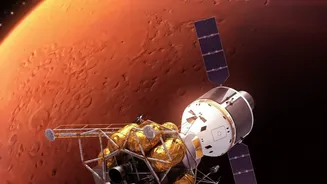
The leap from sending a one-tonne rover to landing humans on Mars is monumental. A crewed mission would be a multi-year endeavour, requiring a spacecraft to not only get astronauts there but also sustain them and bring them home. The logistical hurdles are enormous. Astronauts need life support systems for air and water, vast food supplies, and protection from the vacuum of space. One of the biggest dangers is radiation; without a global magnetic field like Earth's, Mars is bombarded by cosmic rays that can cause severe health problems for astronauts. The psychological toll of a two-to-three-year mission, largely in confinement and isolation with a significant communication delay with Earth, is another major concern. Finally, the 'seven minutes of terror'—the entry, descent, and landing phase—is exponentially more complex and risky with a heavier, human-rated vehicle.
The Unique Human Advantage
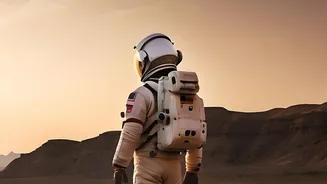
Despite the drawbacks, humans bring something to exploration that even the most advanced AI cannot replicate: intuition, adaptability, and speed. A human geologist can survey a landscape, spot something unusual, and investigate it in minutes—a process that could take a rover days or weeks of careful instruction from Earth due to communication lags. Experts estimate that a human explorer could accomplish in a single minute what a rover does in a day. Humans can improvise, repair broken equipment, and apply a level of critical thinking and conceptual modeling to unexpected discoveries that is far beyond robotic capabilities. In the search for past or present life, the ability to make nuanced judgements, troubleshoot complex instruments on the spot, and perform intricate field science is seen as a significant scientific advantage over automated systems.
More Than Just Science
The push for a human presence on Mars isn't driven solely by scientific returns. It is also about inspiration and the long-term survival of the species. Human exploration has historically been a powerful driver of innovation, inspiring new generations to pursue careers in science, technology, engineering, and maths (STEM). For many, the goal is not just to visit, but to learn how humans can exist far from Earth, a crucial first step toward becoming a multi-planetary species. This ambition carries immense cultural and geopolitical weight, representing a visible benchmark of technological leadership and a shared human endeavour. The Artemis program, which aims to return humans to the Moon, is explicitly framed as a stepping stone to develop the technologies and procedures necessary for an eventual Mars mission.